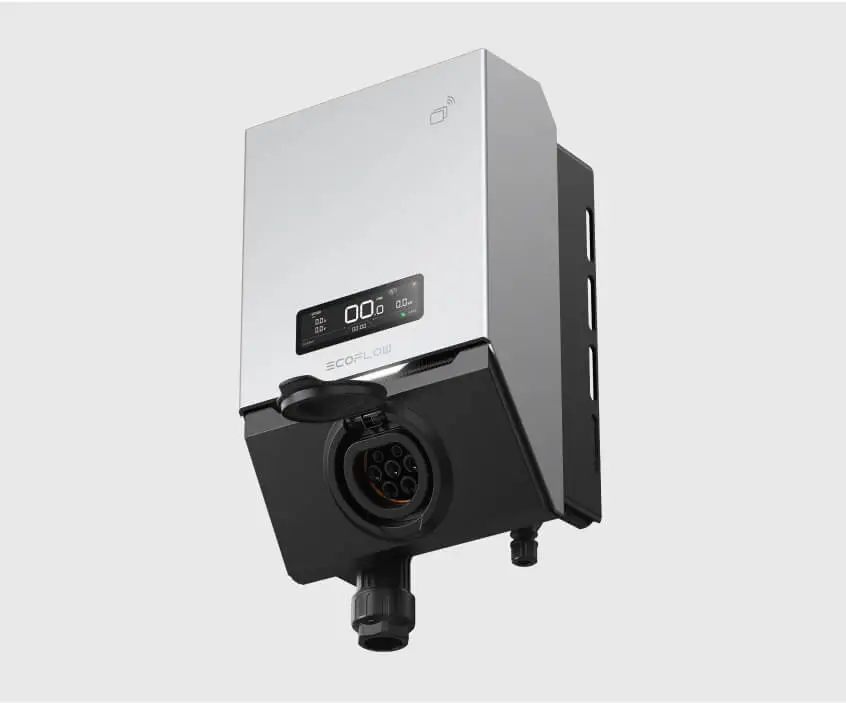
EcoFlow PowerPulse 2
Last updated:
Quick summary: The EcoFlow PowerPulse 2 is a 7kW / 22kW EcoFlow home charger priced from £545 (untethered; tethered 5m also available), with a 3 years warranty and a 4.1/5 rating. Solar and battery ecosystem. Installation costs £400–600 and it's compatible with all Tesla models via the standard Type 2 connector.
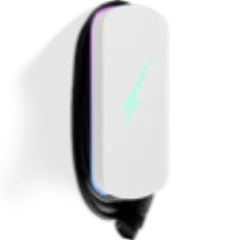
The EcoFlow PowerPulse 2 marks the entry of one of the world's largest portable power brands into the UK home EV charger market — and the result is a charger built around solar and battery integration from the ground up. EcoFlow is best known for its Delta and River portable power stations and its PowerOcean home battery system, and the PowerPulse 2 is designed to slot seamlessly into that ecosystem. Solar Mode automatically prioritises excess solar output from your panels or PowerOcean battery, charging your EV for free whenever surplus energy is available. Smart Mode integrates with dynamic electricity tariffs to charge when grid prices are lowest. The charger supports both single-phase (7kW) and three-phase (up to 22kW) installations — giving it the same flexibility as the Tesla Wall Connector and Simpson & Partners Home 7. Real-time load balancing handles multi-EV households without overloading the circuit, and the built-in LCD display shows charging status without needing to open an app. RFID authentication provides secure access control. At around £545 for the untethered version, it sits in the mid-range of the market — more expensive than the Tesla Wall Connector (£425) and Easee One (£405), but cheaper than the Zappi GLO (£599). The main consideration is that EcoFlow is new to the UK EV charger market, so long-term reliability data and installer network size are still developing. But for owners of EcoFlow solar and battery systems — or anyone prioritising solar-smart charging — the ecosystem integration is unmatched.
Best for: EcoFlow PowerOcean battery owners and solar panel users who want deep ecosystem integration between their home energy system and EV charger.
Installation
The EcoFlow PowerPulse 2 weighs approximately 3.5 kg and measures 333mm x 226mm x 145mm, making it a relatively compact unit. The untethered design means you plug in your own Type 2 cable each time (Tesla supplies one with every vehicle), keeping the wall mount clean. A tethered version with a 5-metre cable is also available. The charger is IP55 rated (IP54 when the cable is not plugged in), providing good weatherproofing for outdoor installation. The unit connects via Wi-Fi to the EcoFlow app, and an RFID card system provides secure access without needing to unlock your phone. The built-in LCD display is a practical touch — you can see charging status, power draw, and session information at a glance without opening the app. Installation requires a dedicated circuit from the consumer unit, and the charger does not include a built-in RCD, so one will need to be fitted during installation. If you have an existing EcoFlow PowerOcean battery system, the PowerPulse 2 communicates directly with it to optimise energy flow between solar panels, battery storage, and your EV — this is the charger's key differentiator. For a full walkthrough of what to expect from installation, see our complete guide to home EV charger installation.
Tariff Compatibility
The EcoFlow PowerPulse 2 supports dynamic tariff optimisation through its Smart Mode feature. You can set energy goals and preferred charging times, and the charger's AI scheduling engine will find the cheapest windows to charge. This works with time-of-use tariffs like Octopus Go and Octopus Intelligent Go, as well as variable-rate tariffs. Solar Mode takes priority over grid charging when surplus solar energy is available — the charger monitors your solar output in real time and diverts excess power to your EV. If your solar production drops below the charging threshold, the charger can seamlessly switch to grid power or pause charging entirely depending on your settings. The OCPP 1.6-J compliance means the charger can connect to third-party energy management platforms if you outgrow the EcoFlow app. For buyers who already have an EcoFlow PowerOcean home battery, the integration goes deeper: the app manages the flow of energy across solar panels, battery storage, home consumption, and EV charging in a single dashboard. Whether the tariff integration matches the depth of the Ohme Home Pro's direct Octopus API link remains to be seen as the product matures, but the foundation is solid. For a full comparison of tariff options, see our best EV charging tariff guide.
Price Breakdown
| Cost element | Amount |
|---|---|
| Unit price (untethered) | £545 |
| Unit price (tethered 5m) | ~£545 |
| Typical installation | £400--600 |
| Total installed cost | £945--1,145 |
| After OZEV grant (renters/flat owners) | £445–645 |
At £545, the EcoFlow PowerPulse 2 is priced between the Tesla Wall Connector (£425) and the Zappi GLO (£599). It is more expensive than the Easee One (£405) and VCHRGD Seven Pro (£445), but cheaper than the Hypervolt Home 3 Pro (£690) and offers three-phase support that neither of those include. The value proposition is strongest for buyers who already own EcoFlow products — the ecosystem integration eliminates the need for third-party solar diverters or separate energy management platforms. For buyers without existing EcoFlow equipment, the solar and tariff features are comparable to the Zappi GLO and VCHRGD Seven Pro at a similar price point.
How It Compares
The EcoFlow PowerPulse 2's closest competitor for solar integration is the Zappi GLO, which offers more mature and sophisticated solar diversion modes (Eco and Eco+) backed by the wider myenergi ecosystem. The Zappi has a much larger install base and a proven track record, but costs £54 more and lacks three-phase support. Against the VCHRGD Seven Pro (£445), the EcoFlow adds three-phase capability and an LCD display but costs £100 more and has even less UK market history. The Tesla Wall Connector (£425) remains £120 cheaper and has unbeatable Tesla app integration, but offers no solar diversion whatsoever. The EcoFlow's unique selling point is its ecosystem — if you have (or plan to buy) a PowerOcean battery, no other charger integrates as tightly with your home energy system. The main risk is brand immaturity in the EV charging space: EcoFlow makes excellent portable power products but has limited history as a wallbox manufacturer in the UK. The 3-year warranty is shorter than competitors like Wallbox (5 years), Zaptec (5 years), and Simpson & Partners (10 years).
Specifications
Pros
- ✓Deep integration with EcoFlow PowerOcean battery and solar ecosystem
- ✓Three-phase capable (up to 22kW) — same flexibility as the Tesla Wall Connector
- ✓Solar Mode and Smart Mode for automated tariff and solar optimisation
- ✓Built-in LCD display shows charging status without needing the app
- ✓Real-time load balancing for multi-EV households
- ✓RFID authentication and OCPP 1.6-J compliance included
Cons
- ✕New to the UK EV charger market — limited long-term reliability data
- ✕3-year warranty is shorter than many competitors (Wallbox 5yr, Zaptec 5yr, Simpson 10yr)
- ✕Ecosystem benefits are strongest for existing EcoFlow product owners
- ✕Smaller UK installer network compared to established brands
- ✕OZEV approval status not yet confirmed — check before purchasing if grant eligibility matters
We’ll handle the installation
We’ll match you with vetted UK electricians — up to 3 free quotes, no obligation.