Updated — Recomputed against the Oct–Dec 2026 Ofgem cap (26.32p/kWh, 0% VAT)
Solar Panels and EV Charging: Free Tesla Miles?
How to
A practical guide to pairing solar panels with your Tesla home charger in the UK — costs, savings, compatible chargers with solar diverting, and whether it's worth the investment.
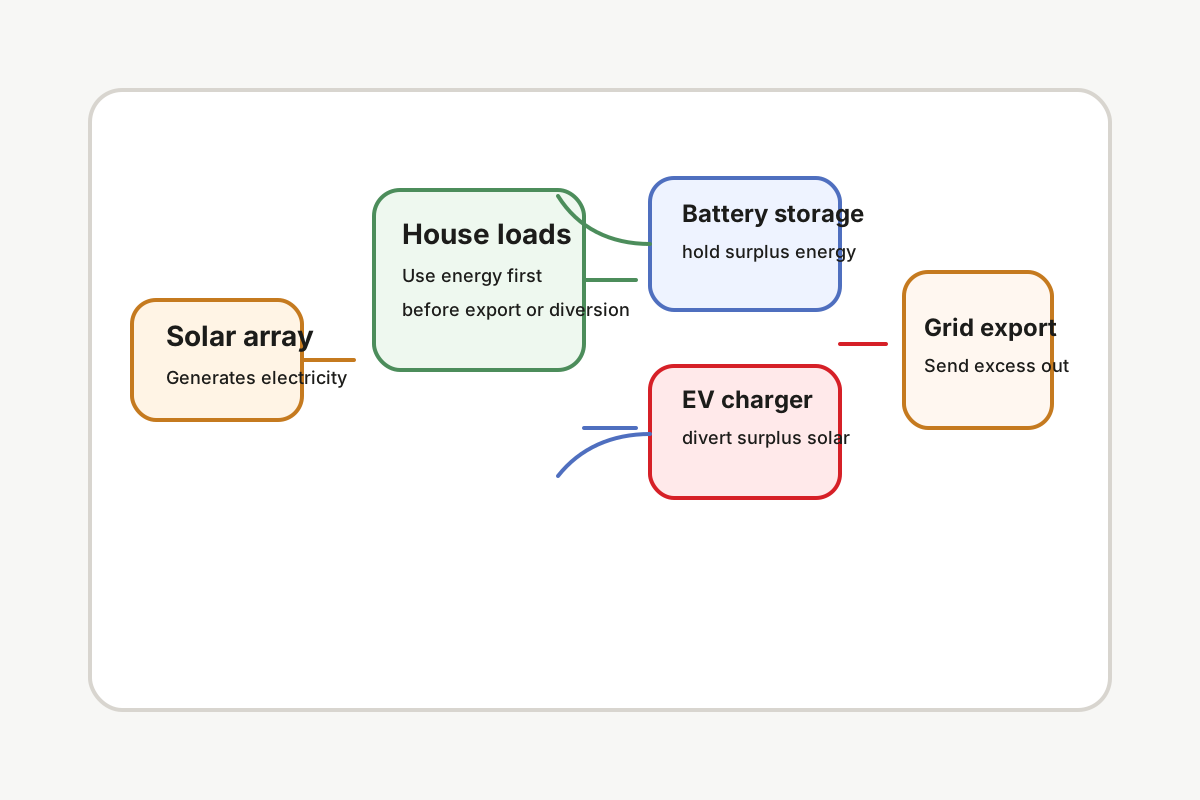
Solar charging decisions depend on whether generation is self-consumed, stored in a battery, diverted to the charger, or exported to the grid.
Free miles from the roof
Solar panels can charge a Tesla without importing that energy from the grid. The electricity is not automatically free in economic terms, because using it in the car can mean giving up an export payment. For a product-by-product decision, start with the best EV chargers for solar panels; this article explains the wider solar, tariff and storage trade-off.
How Solar EV Charging Works
The basic concept is simple: solar panels on your roof generate electricity during the day. Instead of exporting that excess electricity back to the grid (where you'd earn the Smart Export Guarantee rate of ~4–6p/kWh), you divert it to your EV charger.
There are two main approaches:
1. Solar Diverting
A solar-compatible charger has a CT clamp on your meter that monitors generation in real time. When the panels produce more than the house is using, the charger sends the surplus to the car.
In a surplus-only mode, charging typically starts at about 1.4kW of available surplus and pauses when generation falls below the charger's documented threshold. A grid-blended mode can start with less solar by making up the difference from the grid. The result depends on the selected mode, array, household demand and whether the car is home in daylight.
2. Scheduled Daytime Charging
Without solar diverting, you schedule charging for peak sunshine hours (roughly 10am–3pm). It's a blunter tool: the house draws at the same time, and a cloudy day means you pull from the grid.
What Does It Cost?
If You Already Have Solar Panels
The incremental cost is a solar-compatible charger:
| Charger | Price | Solar Feature |
|---|---|---|
| Ohme Home Pro | £559 | Solar Boost on an eligible setup with a working CT clamp |
| Wallbox Pulsar Max | £606 | Solar Charging requires a compatible Wallbox energy meter |
| Tesla Wall Connector | £475 | No native solar diverting |
| myenergi Zappi GLO | £599 | Best-in-class solar diverting |
Add £300–600 for installation, and the total to add solar-compatible EV charging to an existing solar setup lands at £800–1,400.
If You're Starting from Scratch
A full solar + EV charging system costs more upfront, and returns more over time:
| Component | Typical Cost |
|---|---|
| 4kW solar panel system (10 panels) | £5,000–£7,000 |
| 6kW solar panel system (15 panels) | £7,000–£9,000 |
| Battery storage (10kWh) | £4,000–£6,000 |
| Solar-compatible EV charger + install | £800–£1,400 |
| Total (panels + charger, no battery) | £6,000–£10,000 |
| Total (panels + battery + charger) | £10,000–£16,000 |
Solar panels are VAT-free in the UK, which takes £1,000–2,000 off the headline price.
How Much Will You Actually Save?
Three variables set the answer: system size, annual mileage, and when the car is plugged in.
Realistic UK Solar Generation
A typical 4kW system in the UK generates around 3,400 kWh per year. Of that, roughly 40–50% can go into the car; the rest powers the house or gets exported.
That's 1,400–1,700 kWh to the car, which works out to:
| Metric | Value |
|---|---|
| Free miles per year | ~5,600–6,800 |
| Electricity saved | 1,400–1,700 kWh |
| Value at standard rate (26.32p/kWh) | £369–£448/year |
| Value at off-peak rate (8p/kWh) | £112–£136/year |
Key insight: solar savings are far larger on a standard tariff. On an 7.6p/kWh off-peak rate, each kWh of solar only offsets that rate instead of 26.32p/kWh.
A smaller 3kW system can be more cost-effective for EV charging than a 6kW one — the surplus-to-car ratio is often better matched to daily driving of 20–30 miles.
With Battery Storage
A battery stores daytime generation so the car can charge overnight. Solar self-consumption for the car jumps from ~40–50% to ~70–80%.
With a battery, annual EV charging savings against standard rates rise to around £520–£650.
Payback Period
| Setup | Cost | Annual Savings | Payback |
|---|---|---|---|
| Charger only (have panels) | £800–1,400 | £300–475 | 2–4 years |
| Panels + charger | £6,000–10,000 | £600–900 | 7–11 years |
| Panels + battery + charger | £10,000–16,000 | £900–1,300 | 8–12 years |
Savings include both EV charging and general household electricity reduction. Solar panels typically last 25+ years.
Considering solar-compatible charging? See our ranked guide: Best EV Charger for Solar Panels | Get free installation quotes →
Which Chargers Support Solar Diverting?
Not every charger can divert solar. Published product documentation puts the main options into four camps:
Ohme Home Pro — Solar Plus Tariff Automation
The Ohme Home Pro offers Solar Boost on eligible recent installations with a working CT clamp. Its Solar Only mode is subject to app, charger and firmware availability, so confirm what is live for the quoted setup. Its main advantage over solar-first rivals is supplier-led tariff scheduling.
Wallbox Pulsar Max — Solar Charging With a Meter
The Wallbox Pulsar Max offers surplus-only Full Green and grid-blended Eco modes, but only with a compatible Wallbox energy meter installed. Put that additional hardware and labour into the quote.
Tesla Wall Connector — No Native Support
The Tesla Wall Connector has no built-in solar diverting. The Tesla app can schedule daytime charging, but nothing modulates to match generation. True integration needs a Powerwall or a third-party energy manager.
myenergi Zappi GLO — The Solar Specialist
The Zappi GLO is designed around measured import and export. Eco+ prioritises surplus, Eco can blend grid electricity and Fast charges at the available full rate. A single-phase unit is supplied with a grid CT, which still needs correct installer placement and commissioning.
Stacking solar with a smart tariff
The cheapest combined setup is solar panels plus a smart tariff such as Octopus Intelligent Go:
- Daytime: charge from solar (free)
- Overnight: top up on off-peak (8p/kWh)
- Never: pay standard rates (26.32p/kWh)
On that mix, a Tesla Model 3 covering 8,000 miles a year runs to around £80 in annual charging — about a single tank of petrol.
Is It Worth It?
Solar + EV makes sense if:
- You already have solar panels (the charger upgrade is cheap and pays back in 2–4 years)
- You're at home during the day (work from home, retired) so the car is available to charge when the sun is shining
- You're planning to stay in your property for 7+ years (to benefit from the payback period)
- You're on a standard electricity tariff (the savings per kWh are much higher)
It's less compelling if:
- You're already on an 8p/kWh off-peak tariff (the incremental saving from solar is small — see our UK EV Charging Cost Index for full tariff cost data)
- Your car is away from home during daylight hours every day (no car to charge when panels are generating)
- You rent your property (you can't install panels without landlord permission, and you may not stay long enough for payback)
Getting Started
If you're interested in solar EV charging, here's the order to do things:
- Get a smart tariff first — this is free and saves you money immediately
- Install solar panels if you don't have them — get 3 quotes from MCS-certified installers
- Choose a solar-compatible charger — the Ohme Home Pro offers the best value for solar diverting
- Consider battery storage later — it improves solar utilisation but the payback is longer
Your next useful step: see the ranked solar-charger guide.