Updated — Added the charging-session calculator and rechecked the tariff assumptions on 19 July 2026.
How Much Does It Cost to Charge a Tesla at Home in the UK?
Cost answer
Home charging cost is battery energy multiplied by the tariff rate. Compare the current off-peak and standard-rate assumptions, then use your Tesla model in the calculator.
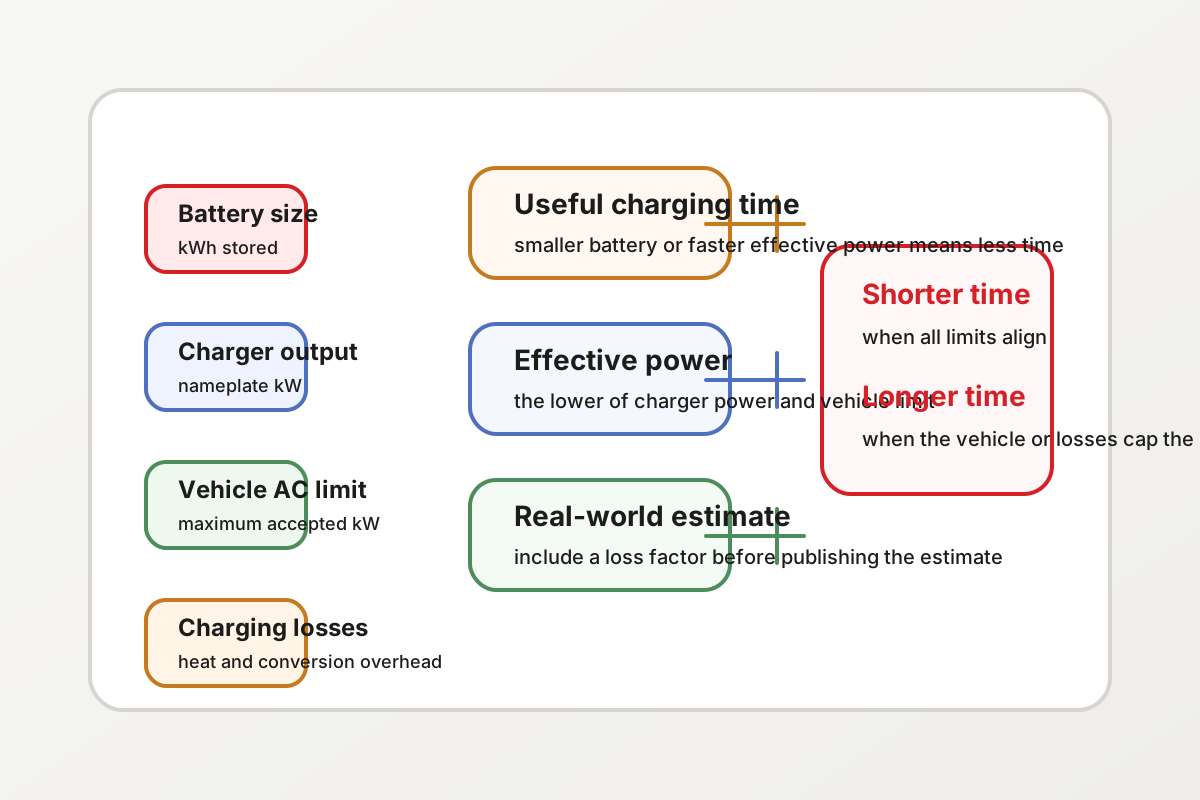
Charging time is capped by the vehicle's AC limit and the real-world losses in the charging path, not just the charger nameplate rating.
Source: Tesla vehicle charging guidance and UK home-charging calculation conventions
The short answer
Charging cost is the energy added to the battery multiplied by the applicable unit rate, with charging losses added. The current representative standard-rate assumption is 26.32p/kWh. Octopus Intelligent Go currently records 7.6p/kWh across its 11:30pm–5:30am base window.
On the site's shared default model — 10,000 miles a year, the default vehicle efficiency, 2,700kWh of non-EV household use and all EV charging placed off-peak — Intelligent Go produces:
- EV electricity: £217 a year
- Whole-home annual total: £1,377
- Difference from the representative standard-rate baseline: £286
Those are model outputs, not a promise. Change the mileage, efficiency, off-peak share, household use or postcode-dependent standing charge and the result changes.
Work out one charging session
Use this formula:
Grid energy drawn (battery energy added ÷ charging efficiency) × unit rate ÷ 100 = electricity cost in pounds
A 20–80% session adds roughly 60% of the usable battery capacity before losses; it is not the same as a full 0–100% charge. The calculator on this page applies the selected Tesla battery and state-of-charge change so a Model 3 top-up is not presented as though it were a Model X full charge.
Charging-session calculator
Put your own top-up through the formula.
Choose a representative battery, then set the charge window and the unit rate on your bill. Battery sizes vary by variant and model year, so the capacity remains editable.
Estimated session
£3.04
Drawn from the grid
40.0 kWh
At 7.4kW
5h 24m
At the current representative standard rate of 26.32p/kWh, the same session is about £10.53.
The estimate allows 10% charging loss and assumes the charger can sustain 7.4kW. Cold weather, battery conditioning, supply limits and charge tapering can move both energy use and time.
Compare the current tariff facts
The tariff is normally the largest running-cost lever, but compare the whole household bill rather than the EV rate alone:
- Octopus Intelligent Go: 7.6p/kWh across 11:30pm–5:30am; recorded peak rate 36.6p/kWh.
- EDF GoElectric: 6.66p/kWh across 11pm–6am; recorded peak rate 27.5p/kWh.
- Octopus Go: 9.5p/kWh across 12:30am–5:30am; recorded peak rate 35.3p/kWh.
- British Gas EV Power: 9.5p/kWh across 12am–5am; recorded peak rate 27.5p/kWh.
Eligibility, supplier terms and managed charging rules can change. Standing charges also vary by postcode, so the tariff comparison separates EV electricity, non-EV household electricity, standing charge and annual total.
Home charging versus public charging
The representative UK PAYG rapid and ultra-rapid assumption is currently 79p/kWh. The illustrative Tesla-owner Supercharger assumption is 45p/kWh, but Tesla site prices vary and the app is the source to check before a journey.
Do not compare a promotional home rate with an invented national public-charging price. Use the actual network or app rate, then apply the same miles and vehicle efficiency to both options. The UK EV Charging Cost Index exposes those assumptions rather than hiding them in a headline saving.
Charger and installation cost
Installed cost varies by both product and property. For orientation, the Tesla Wall Connector currently records £875–£1,075, the Sync Energy Wall Charger 2 £700–£1,000, and the Ohme Home Pro £959–£1,059. These are planning ranges; cable routes, protective equipment, groundwork and consumer-unit work can change the quote. The installation-cost table shows the same basis across the full charger set.
Eligible customers may be able to claim up to £500 through the current chargepoint grant routes, subject to customer, property, charger and installer rules. It is not an automatic deduction for every renter or flat owner.
In short
Use the calculator for the charging session and the annual-cost model for the household decision. An off-peak headline is useful, but the answer the customer needs is the annual total after peak household use and any standing-charge difference.
Your next useful step: compare whole-home tariff costs using the same assumptions.
Already chosen the tariff and charger? .