Updated
Just Got a Tesla? Here’s Your Home Charging Action Plan
How to
A week-by-week plan to go from new Tesla owner to charging at home for pennies. Follow these steps and you’ll be saving money within a month.
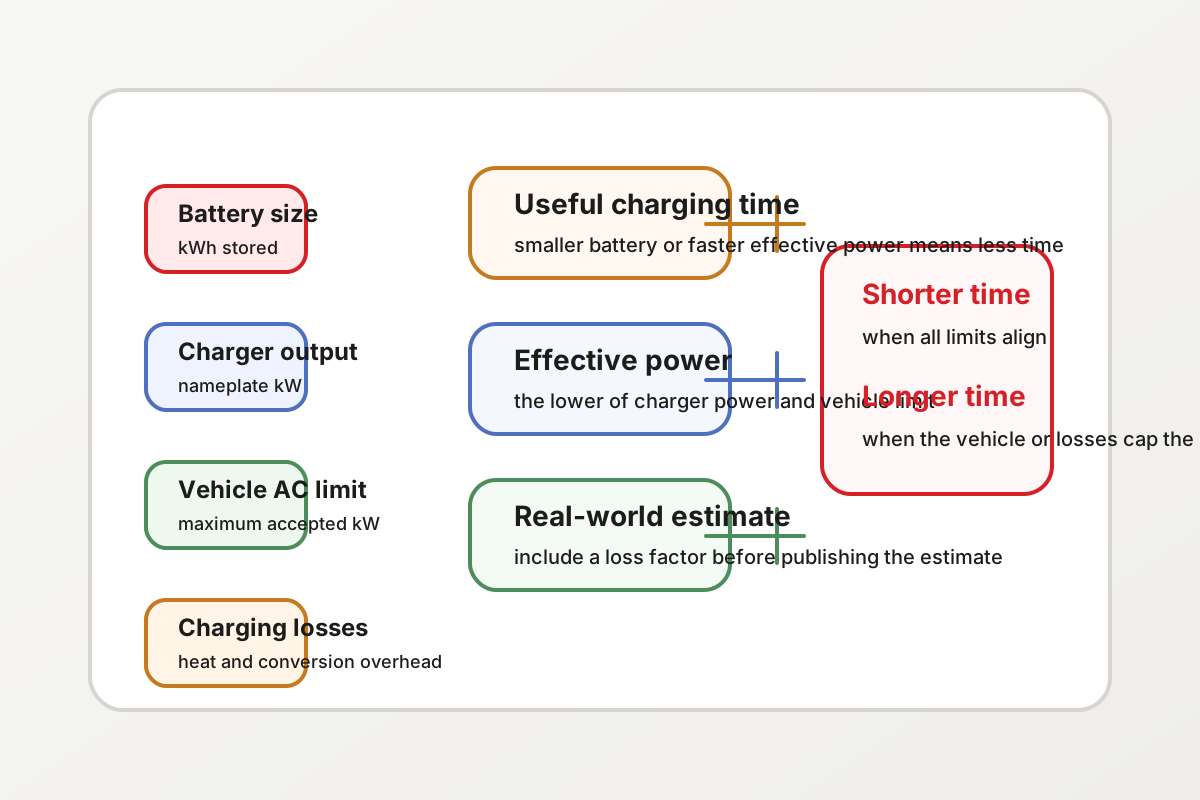
Charging time is capped by the vehicle's AC limit and the real-world losses in the charging path, not just the charger nameplate rating.
Source: Tesla vehicle charging guidance and UK home-charging calculation conventions
After delivery: the charging setup
You’ve just taken delivery of your Tesla. The acceleration is addictive. The tech is impressive. The running costs are... well, they depend entirely on what you do in the next few weeks.
Right now, you’re probably charging at Superchargers, borrowing a friend’s charger, or trickling power through a 3-pin plug at home. All of those work. None of them are optimal.
Here’s your week-by-week plan to get set up properly. Follow it and you’ll be charging at home for £5–6 per full charge within a month.
Week 1: Switch to an EV Tariff
This is the single highest-impact thing you can do — and it costs nothing.
Most UK electricity tariffs charge around 26.32p/kWh (the Ofgem price cap). But EV-specific tariffs offer overnight rates of 7–9p/kWh. That’s a 70% discount on every kWh you use to charge your car.
Your best options:
- EDF GoElectric — 6.66p/kWh overnight across seven hours, the cheapest fixed rate on the market
- Octopus Intelligent Go — 8p/kWh overnight, works directly with your Tesla’s API to schedule charging automatically
- Octopus Go — 8.5p/kWh overnight, works with any charger or the car’s built-in timer
- British Gas EV Power — 9p/kWh overnight, and the gentlest peak rate of the group
Switching takes 5 minutes and usually completes within 2–5 working days. There’s no installation, no engineer visit, and most have no exit fees.
Action: Compare all EV tariffs → or take our tariff quiz for a personalised recommendation.
What this saves you: Switching from 26.32p/kWh to 7.6p/kWh saves £535/year on a Model 3 doing 10,000 miles. That’s about £45/month back in your pocket, starting immediately.
Week 1–2: Choose Your Charger
While your tariff switch processes, it’s time to pick a charger. The models in our directory are recorded as Tesla-compatible, but cable layout, power, tariff control and installation scope still change the decision.
If you want it simple: The Tesla Wall Connector is the obvious choice. £475, smooth app integration, and the longest cable (7.3m).
If you want to save the most: The Ohme Home Pro works directly with smart tariffs to find the cheapest 30-minute slots every night. Pair it with Octopus Intelligent Go and it’s the cheapest possible way to charge.
If you have solar panels: The myenergi Zappi GLO diverts surplus solar into the car. Miles that effectively cost nothing.
Not sure? Take our 30-second charger quiz — it’ll recommend the best one for your situation.
Action: Pick a charger and either buy the unit yourself or let your installer supply it (some prefer to source it for warranty reasons).
Week 2–3: Get Installation Quotes and Book
This is the step most people stall on.
Submitting a request is free. We’ll route it to up to three installation partners that cover your postcode. Ask each partner whether a survey is needed, whether the quote is fixed and whether they can administer the £500 OZEV grant if you’re eligible.
What to expect:
- Typical installation cost: £400–600 for labour (on top of the charger unit)
- OZEV grant: £500 off if you’re a renter or flat owner
- Installation time: 2–4 hours for a standard installation
- Timeline: Most installers can book you in within 1–2 weeks
Action: Get your free installation quotes →
The cost of waiting: relying on Superchargers runs about £17 a week higher than an off-peak home charge, or roughly £74 across the month the install takes.
Week 3–4: Get Installed and Start Saving
Installation day is straightforward:
- Your installer arrives, does any final checks
- They run a dedicated cable from your consumer unit to the charger location
- They mount and wire the charger (usually 2–4 hours)
- They test everything and hand you the certification paperwork
- You plug in your Tesla and set up the app
From this point on, you’re charging at home for £5–6 per full charge (on an 8p/kWh tariff). Your car charges overnight while you sleep. You wake up every morning to a full battery. And you never have to plan a Supercharger stop again.
The Cost of Doing Nothing
Every week without a home charger leaves money on the table.
| Weeks Without Home Charger | Overpaid vs Home Charging |
|---|---|
| 4 weeks | £68 |
| 8 weeks | £136 |
| 3 months | £221 |
| 6 months | £443 |
A home charger costs £800–1,200 fully installed. At the rates above, the install cost is recovered in a matter of months.
Your Checklist
- ] Switch to an EV tariff ([compare tariffs →)
- ] Pick a charger ([take the quiz → or compare all chargers →)
- ] Get installation quotes ([free quotes →)
- [ ] Book your installation
- [ ] Start saving £880+/year
Any home charger on an off-peak tariff beats no home charger on a standard rate by a wide margin. The best moment to install was when the Tesla arrived; the next-best is now.
FAQ
Frequently asked questions.
Your next useful step: compare any two chargers head to head.