Two British Challengers, £50 Apart — But Worlds Apart on Warranty
Neither the Indra Smart PRO nor the Simpson & Partners Home 7 will be the first name on your lips when shopping for a Tesla charger. That's a shame, because both are genuinely interesting propositions from smaller British manufacturers — and they're priced within £50 of each other. The decision between them comes down to what you value: upfront savings on installation, or long-term peace of mind.
In a nutshell:
- Indra Smart PRO (£599): Included SPD and CT clamp make it the lowest total-cost option for solar homes
- Simpson & Partners Home 7 (£649): A 10-year enclosure warranty and premium aluminium build that'll outlast most marriages
Does the Indra Smart PRO's Included SPD Actually Save You Money?
Yes — and it's a bigger deal than it sounds. Current UK regulations require a surge protection device for EV charger installations, and most electricians charge £100–150 to supply and fit one. The Indra bundles it in. That means the effective hardware cost drops to roughly £449–499 when you account for what you'd otherwise pay your installer.
The Indra also includes a CT clamp for solar diversion at no extra charge. If you've got panels on the roof, that's another £50–80 you're not spending. Stack those savings together and the Indra's real-world cost advantage over the Simpson is closer to £200 than £50. For solar households watching the pennies, that's hard to ignore. Our guide to the best EV chargers for solar covers this in more detail.
Is the Simpson & Partners Home 7's 10-Year Warranty Worth £50 More?
A 10-year warranty on any EV charger is extraordinary. For context, the Indra offers 3 years, and even the Tesla Wall Connector only stretches to 6. There is a caveat: Simpson's 10-year cover applies to the enclosure — the anodised aluminium shell — not necessarily every internal component. But given that the enclosure is what takes the brunt of British weather, that's still meaningful protection.
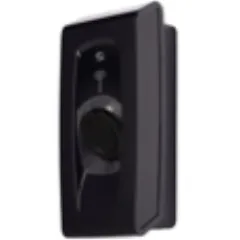
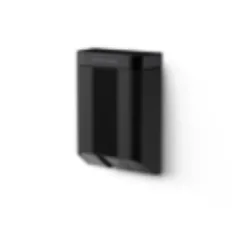
And about that enclosure: it's genuinely premium. Anodised aluminium with multiple finish options, including an Accoya wood variant that looks like it belongs on a Scandinavian cabin rather than bolted to your garage wall. If your charger is visible from the street or garden, the Simpson is the better-looking unit. The Indra is perfectly fine visually — compact at 340mm × 240mm — but it doesn't make a style statement.
Smart Features: Neither Will Blow You Away
Let's be honest — if sophisticated smart tariff automation is your priority, neither of these is the optimal choice. Both support scheduled charging and smart tariff integration, but their apps are functional rather than polished. The Indra connects via Wi-Fi and Bluetooth and works with major UK providers; the Simpson is Wi-Fi only.
For serious smart tariff optimisation — especially on variable-rate tariffs like Octopus Agile — you'd be better served by the options in our best smart EV charger guide. Where both chargers here earn their keep is in doing the basics reliably: scheduled off-peak charging, energy monitoring, and load balancing (the Indra includes dynamic load balancing; the Simpson handles energy monitoring through its app).
One area where the Simpson quietly impresses: three-phase support at 22kW. If you happen to have a three-phase supply — or plan to install one — the Home 7 handles it without needing a different charger. The Indra is single-phase only at 7.4kW. For most buyers this won't matter, but it's a notable technical advantage at this price.
The Indra's V2G Story: Interesting, But Not a Reason to Buy Today
Indra made its name in vehicle-to-grid technology, and the Smart PRO is marketed partly on that heritage. But the Smart PRO itself doesn't support V2G — it's positioned as a stepping stone within the Indra ecosystem for a potential future upgrade. That's fine as a narrative, but don't pay for a promise. Buy the Indra because the included SPD and CT clamp save you real money right now, not because of what might happen in 2026.
Which Should You Buy?
Buy the Indra Smart PRO if:
- You have solar panels and want solar diversion without buying extra hardware
- You want the lowest total installation cost (SPD included saves £100–150)
- You prefer a compact, no-fuss unit that does the job without pretension
- You're intrigued by Indra's V2G roadmap and want to stay in their ecosystem
Buy the Simpson & Partners Home 7 if:
- A 10-year enclosure warranty matters to you — nothing else comes close
- Aesthetics count and you want a charger that looks premium on your wall
- You have (or plan to get) a three-phase supply and want 22kW capability
- You'd rather pay a small premium for build quality that's designed to last a decade
For most Tesla owners on a single-phase supply without solar, the Simpson & Partners Home 7 is the stronger pick. That warranty is a genuine differentiator, and the build quality backs it up. But if you've got panels and want to minimise total spend, the Indra's bundled extras make it the smarter financial choice. Neither will disappoint — these are two of the more underrated options on our charger comparison page, and both deserve a closer look.