Indra Smart PRO vs EcoFlow PowerPulse 2: British Stalwart or Ecosystem Newcomer?
British Stalwart vs Ecosystem Newcomer
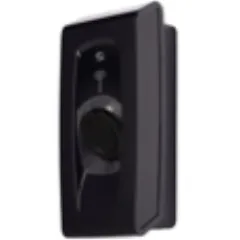
Choosing a home EV charger in 2025 increasingly means choosing an ecosystem — not just a box on the wall. The Indra Smart PRO and the EcoFlow PowerPulse 2 both sit in that sweet spot around £550–£600, both offer solar integration and smart tariff support, and both come from companies with a clear vision of where home energy is heading. But they get there from very different starting points.
Indra is a British manufacturer with deep roots in vehicle-to-grid (V2G) research — the Smart PRO is their mainstream charger, designed as a practical, no-nonsense unit with a few genuinely cost-saving touches like an included surge protection device. EcoFlow, meanwhile, is the portable power and home battery giant now muscling into the UK EV charging market, bringing its PowerOcean solar battery ecosystem along for the ride. If you are weighing up these two, the real question is: do you want a proven, straightforward British charger, or a feature-rich newcomer that could unlock serious whole-home energy management?
In a nutshell:
- Indra Smart PRO (£599): A solid British-made charger whose included SPD saves you £100–150 on installation, making it quietly one of the best-value options at its price point.
- EcoFlow PowerPulse 2 (£545): A feature-packed newcomer with three-phase capability and deep solar battery integration — ideal if you are building an EcoFlow energy ecosystem.
Spec Comparison
| Feature | Indra Smart PRO | EcoFlow PowerPulse 2 |
|---|---|---|
| Price (unit only) | £599 | £545 |
| Max Power Output | 7.4kW (single-phase) | 7kW (single-phase) / 22kW (three-phase) |
| Cable | Tethered, 6m, Type 2 | Untethered, Type 2 (tethered 5m also available) |
| Smart Tariff Support | Yes — major UK providers | Yes — dynamic tariff optimisation (Smart Mode) |
| Solar Integration | Yes — CT clamp included | Yes — Solar Mode (prioritises surplus solar) |
| Connectivity | Wi-Fi, Bluetooth | Wi-Fi, RFID |
| Display | App only | Built-in LCD + app |
| OCPP Support | Not specified | OCPP 1.6-J |
| IP Rating | IP54 | IP55 (IP54 untethered) |
| Weight | ~5.0 kg | ~3.5 kg |
| Warranty | 3 years | 3 years |
| OZEV Approved | Yes | Not yet confirmed |
Smart Tariff Integration
Both chargers support smart tariff scheduling, which is where the real savings lie for most UK EV drivers. On a tariff like Octopus Intelligent Go (~7p/kWh off-peak) or Octopus Go (7.5p/kWh between 00:30 and 04:30), charging a 60kWh Tesla Model 3 battery from near-empty costs roughly £4.20 instead of £15+ at standard rates. Over a year of typical UK mileage (around 7,400 miles), that difference adds up to hundreds of pounds.
The Indra Smart PRO integrates with major UK energy providers through its app, letting you set schedules that align with off-peak windows. It is straightforward and does the job, though electriccarguide.co.uk notes the app is functional rather than flashy. The EcoFlow PowerPulse 2 takes a slightly more ambitious approach with its dedicated Smart Mode, which dynamically optimises charging based on tariff rates — potentially useful if you are on a variable tariff like Octopus Agile, where prices shift every 30 minutes. The inclusion of OCPP 1.6-J on the EcoFlow also means it could, in theory, work with third-party energy management platforms down the line.
For most drivers on a straightforward off-peak tariff, both will do the job. If you are on Agile or another variable tariff and want more granular automation, the EcoFlow's Smart Mode has a slight edge.
Solar Diversion
This is where the two chargers diverge most meaningfully. The Indra Smart PRO includes a CT clamp as standard — no extra hardware to buy — so it can monitor your solar generation and divert surplus energy to your car. For a household with a typical 4kW solar array, this can mean genuinely free miles during sunny months. Indra's solar matching feature has been a consistent strength across their range, as noted by electriccarguide.co.uk.
The EcoFlow PowerPulse 2 also offers a Solar Mode that prioritises surplus solar, but the real magic happens if you already own — or plan to buy — an EcoFlow PowerOcean home battery. In that scenario, you get unified control of solar panels, battery storage, home consumption, and EV charging from a single app. That is a genuinely compelling proposition: your battery stores cheap overnight electricity or daytime solar, and the system intelligently decides when to charge your car, power your home, or export to the grid.
If you have solar panels but no battery, both chargers handle solar diversion competently. If you are building a full home energy system around EcoFlow products, the PowerPulse 2 is the obvious choice.
Power and Charging Speed
On a standard UK single-phase supply, the Indra Smart PRO delivers 7.4kW and the EcoFlow PowerPulse 2 delivers 7kW. In practice, that 0.4kW difference is negligible — we are talking about 8.1 hours versus 8.6 hours to charge a 60kWh battery from empty, a difference you will never notice overnight.
Where the EcoFlow pulls ahead is its three-phase capability: up to 22kW if your property has a three-phase supply. At 22kW, that same 60kWh battery fills in roughly 2.7 hours. Three-phase is rare in UK homes (fewer than 5% have it), but it is more common in rural properties, new builds, and commercial premises. If you have it — or plan to upgrade — the EcoFlow is one of very few chargers at this price point that can take advantage. The Indra Smart PRO is single-phase only, with no upgrade path.
Build Quality and Installation
The Indra Smart PRO is the heavier unit at around 5 kg, with an IP54 weatherproof rating — perfectly adequate for a sheltered wall or garage, though not as robust as some IP65-rated competitors. It is British-designed and manufactured, which means local support and a brand with skin in the UK market. Crucially, it includes a surge protection device (SPD) as standard. Since the 18th Edition wiring regulations, an SPD is required for most EV charger installations, and electricians typically charge £100–150 to supply and fit one separately. That included SPD effectively knocks the Indra's real cost down to around £449–499.
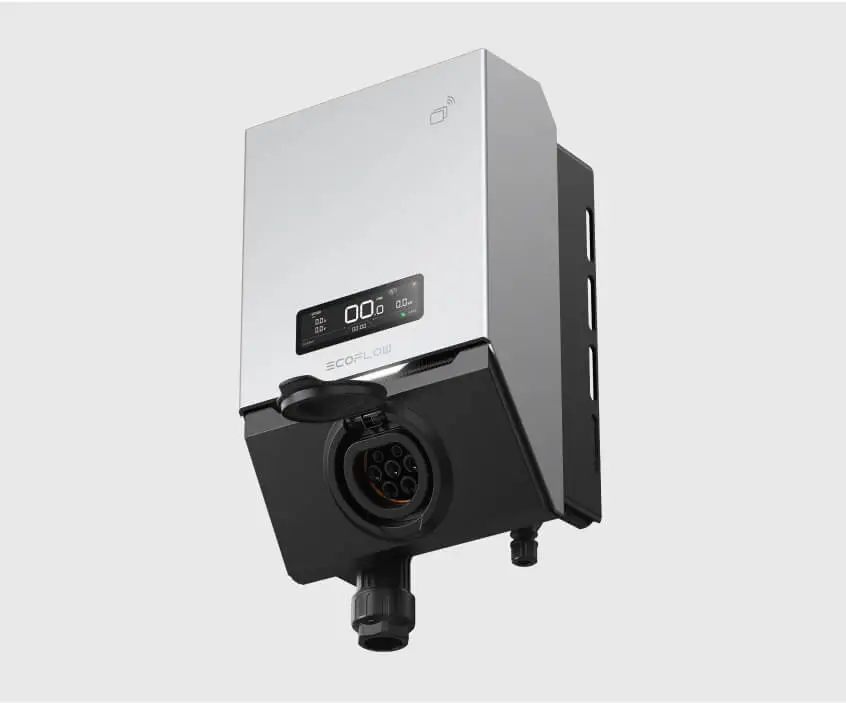
The EcoFlow PowerPulse 2 is lighter at 3.5 kg and slightly better protected at IP55. It features a built-in LCD display — a small but genuinely useful touch that lets you check charging status at a glance without reaching for your phone. However, EcoFlow is new to the UK EV charger market, which means a smaller installer network and limited long-term reliability data. Its OZEV grant approval status is also unconfirmed at the time of writing, which matters if you are an eligible renter or flat owner hoping to claim the £500 grant.
Price and Value
| Cost | Indra Smart PRO | EcoFlow PowerPulse 2 |
|---|---|---|
| Unit price | £599 | £545 |
| Standard installation | £400–600 | £400–600 |
| Total installed cost | £949–1,199 | £945–1,145 |
| After OZEV grant (if eligible) | £449–699 | £445–645* |
*EcoFlow OZEV eligibility not yet confirmed — verify before purchasing.
On paper, the EcoFlow is £54 cheaper at the unit level. But factor in the Indra's included SPD — saving you £100–150 on installation — and the Indra may actually work out cheaper once your electrician has finished. That is a genuinely meaningful saving that does not show up in headline prices. Both chargers carry a 3-year warranty, which is adequate but behind the 5-year cover offered by brands like Wallbox and Pod Point.
Who Should Buy Which?
Buy the Indra Smart PRO if:
- You want a straightforward, British-made charger with proven reliability
- The included SPD matters to you (it should — it saves real money on installation)
- You have solar panels and want solar diversion with no extra hardware cost
- You are interested in Indra's V2G roadmap and want to stay in their ecosystem
- You prefer a tethered charger with a generous 6m cable
Buy the EcoFlow PowerPulse 2 if:
- You already own or plan to buy EcoFlow solar panels or a PowerOcean battery
- You have (or plan to install) a three-phase supply and want 22kW charging
- You want an untethered socket for flexibility with multiple EVs or cable lengths
- Dynamic tariff optimisation on variable tariffs like Octopus Agile appeals to you
- You value a built-in LCD display and OCPP 1.6-J future-proofing
Our recommendation: For the typical UK homeowner on a single-phase supply who simply wants a reliable, well-priced smart charger, the Indra Smart PRO is the safer bet. The included SPD makes it genuinely cheaper to install than its sticker price suggests, it is made by a British company with a growing track record, and its solar and smart tariff features cover the essentials without fuss. However, if you are building a whole-home energy system around EcoFlow products — or you are one of the lucky few with three-phase power — the EcoFlow PowerPulse 2 offers a level of ecosystem integration and charging flexibility that the Indra simply cannot match. Just confirm OZEV eligibility before you commit if the grant matters to your budget.
Read our full Indra Smart PRO review or EcoFlow PowerPulse 2 review.
We’ll handle the installation
We’ll match you with vetted UK electricians — up to 3 free quotes, no obligation.