GivEnergy EV Charger vs Sync Energy Wall Charger 2: Battery Storage vs Budget Value
The Battery Specialist vs the Budget All-Rounder
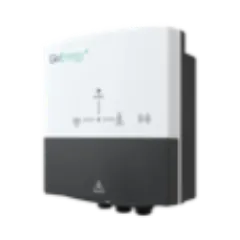
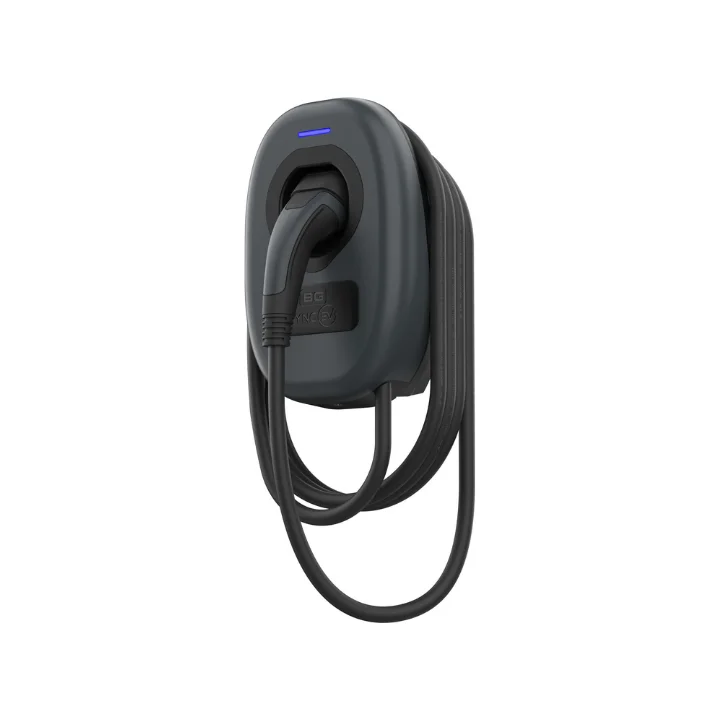
These two chargers sit at the affordable end of the UK smart charger market, but they arrive there from very different directions. The GivEnergy EV Charger (£478) is purpose-built for homes with battery storage, offering a genuinely unique trick: charging your EV from energy stored in your home battery, not just live solar. The Sync Energy Wall Charger 2 (from £362) takes a broader approach, packing in solar diversion, dynamic load balancing, OCPP compliance, and built-in PEN fault protection at a price that undercuts almost everything else on the market.
If you already have — or are planning — a home battery system, the GivEnergy is a compelling specialist. But if you want a well-featured smart charger at the lowest possible outlay, the Sync Energy makes a surprisingly strong case. Let's dig into where each one earns its keep and where it falls short.
In a nutshell:
- GivEnergy EV Charger (£478): The only charger at this price that can charge your Tesla from stored battery energy — a genuine game-changer for battery storage households.
- Sync Energy Wall Charger 2 (£362): A feature-rich budget charger with built-in PEN protection, solar diversion, and OCPP future-proofing, all backed by UK-listed company Luceco PLC.
Spec Comparison
| Feature | GivEnergy EV Charger | Sync Energy Wall Charger 2 |
|---|---|---|
| Price | £478 | From £302 (tethered) / £362 (socketed) |
| Power | 7kW | 7.4kW |
| Cable Length | 5 metres (tethered) | 7.5 metres (tethered) |
| Type | Tethered only | Tethered and untethered options |
| Smart Tariff Support | Limited | TariffSense scheduling |
| Solar Features | Solar divert + battery-to-EV | SolarCharge (CT clamp solar diversion) |
| Connectivity | Wi-Fi | Wi-Fi, Ethernet, Bluetooth |
| OCPP Support | No | OCPP 1.6J |
| PEN Fault Protection | Not built-in | Built-in |
| IP Rating | IP65 | IP65 + IK10 |
| Warranty | 3 years | 3 years |
| Rating | 4.3/5 | 4.1/5 |
Solar and Battery Integration
This is where the GivEnergy charger genuinely stands apart. Both units offer solar diversion — routing surplus solar generation directly to your EV rather than exporting it to the grid. But the GivEnergy goes a crucial step further with its battery-to-EV charging mode. If you have a home battery (and it works with any brand, not just GivEnergy's own), you can store cheap overnight electricity or daytime solar in your battery, then discharge it to your car whenever you like. That's a level of energy flexibility that no other charger at this price offers.
The Sync Energy's SolarCharge feature uses a CT clamp to measure your solar surplus and divert it to the car. It's a solid implementation and works well for homes with solar panels but no battery. For the growing number of UK households combining solar panels with battery storage, though, the GivEnergy's whole-home energy management through its monitoring portal is genuinely compelling. As evenergyhub.com notes, matching your charger to your energy ecosystem is far more important than chasing headline specs.
Smart Tariff Integration and Scheduling
Here's where the balance shifts firmly towards the Sync Energy. Smart tariff integration is arguably the single most valuable feature in a home charger — as viablepower.co.uk highlights, a smart charger that automatically shifts charging to off-peak windows can save hundreds of pounds annually. On tariffs like Octopus Intelligent Go (around 7p/kWh off-peak) or Octopus Go (7.5p/kWh between 00:30 and 04:30), the difference versus daytime rates is enormous.
The Sync Energy's TariffSense scheduling is designed to work with time-of-use tariffs, automatically optimising when your car charges. It's not as deeply integrated as the Ohme Home Pro's direct API link to Octopus, but it's a meaningful step up from basic timer-based scheduling. The GivEnergy, by contrast, offers only limited smart tariff integration — you can schedule charging, but it lacks the tariff-aware intelligence that makes a real difference to your electricity bill. If you don't have a home battery to offset this, you're potentially leaving significant savings on the table.
App, Connectivity, and Future-Proofing
The GivEnergy monitoring portal provides a useful whole-home energy dashboard, especially if you're already in the GivEnergy ecosystem with batteries and an inverter. But as a standalone EV charger app, it's basic compared to rivals like Ohme, Tesla, or Hypervolt. Wi-Fi is the only connectivity option, which can be a problem if your charger is mounted far from your router.
The Sync Energy offers Wi-Fi, Ethernet, and Bluetooth for setup — a notably more flexible connectivity suite. The Ethernet option is a genuine advantage for anyone whose Wi-Fi signal is patchy near the driveway, though it's worth noting that voltsmonster.com and user reviews have flagged some Wi-Fi reliability issues with the Sync Energy at range. The inclusion of OCPP 1.6J is a quiet but important win for future-proofing — it means the charger can talk to third-party energy management platforms, which could prove valuable as the UK's smart energy landscape evolves. The GivEnergy lacks OCPP support entirely.
Installation Considerations
The Sync Energy has a clear practical advantage here: built-in PEN fault protection. In the UK, most EV charger installations require PEN fault detection, and if your charger doesn't include it, your installer will need to fit an earth rod or additional protective device — typically adding £50–£150 to the installation bill. The Sync Energy eliminates this cost and complexity entirely, as evergy.co.uk notes is increasingly expected in modern charger designs.
Cable length is another practical differentiator. The GivEnergy's 5-metre tethered cable is adequate for many setups but can be tight if your consumer unit isn't on the same wall as your parking spot. The Sync Energy's 7.5-metre cable offers considerably more flexibility — and it's available in both tethered and untethered variants, giving you a choice the GivEnergy simply doesn't offer.
Price and Value
| Cost Element | GivEnergy EV Charger | Sync Energy Wall Charger 2 |
|---|---|---|
| Unit price | £478 | From £302 (tethered) / £362 (socketed) |
| Typical installation | £400–£600 | £300–£600 |
| Total installed cost | £878–£1,078 | £602–£962 |
| After OZEV grant (if eligible) | £378–£578 | £102–£462 |
The pricing gap is significant. At its cheapest, the Sync Energy tethered variant comes in at £302 — a full £176 less than the GivEnergy. Factor in the Sync Energy's built-in PEN protection saving you potentially another £50–£150 on installation, and the total cost difference could stretch beyond £200. For a charger that also offers more connectivity options, a longer cable, OCPP support, and better tariff scheduling, that's a compelling value proposition.
The GivEnergy's higher price is only justified if you're actively using its battery-to-EV feature. Without a home battery, you're paying more for fewer smart features.
Who Should Buy Which?
Buy the GivEnergy EV Charger if:
- You already have a home battery system (GivEnergy or otherwise) and want to charge your EV from stored energy
- You're building a full GivEnergy solar and battery ecosystem and want seamless integration via their monitoring portal
- Battery-to-EV charging is a priority and you value the energy independence it provides
- You want RFID card access for added security
- You prefer a proven, focused product that does one thing exceptionally well
Buy the Sync Energy Wall Charger 2 if:
- You want the lowest possible total installed cost without sacrificing smart features
- You need built-in PEN fault protection to simplify installation and reduce costs
- Smart tariff scheduling matters to you and you're on a time-of-use tariff like Octopus Go
- You want the flexibility of tethered or untethered options and a longer 7.5m cable
- Future-proofing via OCPP 1.6J is important to you
Our recommendation: For most UK Tesla owners without a home battery, the Sync Energy Wall Charger 2 is the better buy. It's cheaper, more feature-rich in day-to-day use, and the built-in PEN protection makes installation simpler and less expensive. The TariffSense scheduling and OCPP compliance give it a meaningful edge in the smart charging stakes. However, if you have a home battery — particularly a GivEnergy system — the GivEnergy EV Charger becomes a genuinely unique proposition. Charging your Tesla from stored solar energy is a capability that no other charger at this price can match, and for the right household it transforms the economics of EV ownership entirely.
For the full specs-level breakdown, see our GivEnergy EV Charger vs Sync Energy Wall Charger 2 comparison page.
Read our full GivEnergy EV Charger review or Sync Energy Wall Charger 2 review.
If you have solar panels, see our best EV charger for solar panels guide.
For total installed cost rankings, see our cheapest EV charger guide.
We’ll handle the installation
We’ll match you with vetted UK electricians — up to 3 free quotes, no obligation.