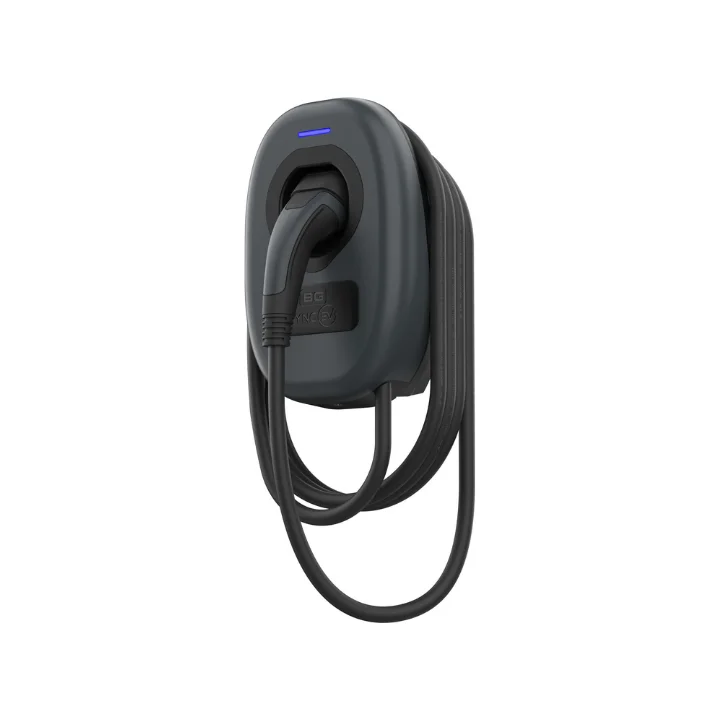
Sync Energy Wall Charger 2
Last updated:
Quick summary: The Sync Energy Wall Charger 2 is a 7.4kW Sync Energy home charger priced from £362 (socketed Wi-Fi/LAN; tethered from £302), with a 3 years warranty and a 4.1/5 rating. Best budget tethered charger. Installation costs £300–600 and it's compatible with all Tesla models via the standard Type 2 connector.
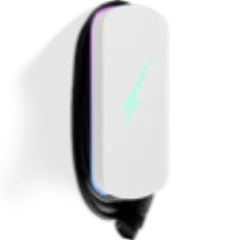
The Sync Energy Wall Charger 2 is the best-value tethered smart charger you can buy in the UK right now. At approximately £360 for the unit with a 7.5-metre cable, it undercuts every other smart charger on this list by a significant margin while still delivering a genuinely capable feature set. Sync Energy is the EV charging brand of Luceco PLC, a UK-listed electrical products company, so despite the relatively low brand awareness in the EV space, there is a substantial business behind the product. The Wall Charger 2 includes features that you would expect to pay £500+ for elsewhere: TariffSense smart scheduling, SolarCharge solar diversion with a CT clamp, dynamic load balancing, OCPP 1.6J compliance, and energy monitoring. The 7.5-metre tethered cable is the longest on this list (even longer than the Tesla Wall Connector's 7.3 metres), and the IP65 plus IK10 ratings mean it is both fully weatherproof and impact-resistant. One of the more distinctive features is the interchangeable fascia plate system: the front panel clips off and can be swapped for one of nine different colour options, letting you match the charger to your property without committing to a colour at the point of purchase. For Tesla owners on a budget who still want meaningful smart features, the Sync Energy Wall Charger 2 is hard to beat on pure value.
Best for: Budget-conscious buyers who want a fully-featured smart charger with the longest cable on the market, solar compatibility, and the flexibility of interchangeable colour fascias.
Installation
The Sync Energy Wall Charger 2 weighs approximately 2.5 kg (without cable) and measures 305mm x 201mm x 115mm, making it a compact and lightweight unit that most installers will find straightforward to mount. The 7.5-metre tethered cable is a genuine installation advantage -- it is the longest cable of any charger on this list, giving you maximum flexibility in where the charger is positioned relative to your parking spot. The IP65 rating means it is fully weatherproof for exposed outdoor mounting, and the IK10 impact resistance rating (the highest possible) means it can withstand significant knocks without damage -- useful if mounted near a driveway where it might get bumped. A critical installation benefit is the built-in PEN fault protection: the Wall Charger 2 includes PEN fault detection as standard, which means your installer does not need to fit a separate earth rod in most cases. This can save £50--100 on installation costs and avoids the need to drill into concrete or tarmac to install a rod. The charger requires a dedicated 32A circuit from the consumer unit. It does not include a built-in RCD, so a Type A RCD (minimum) will need to be added. Bluetooth is used for initial setup and pairing with the Sync Energy app, after which the charger communicates via Wi-Fi or Ethernet. For a full walkthrough of the installation process, see our complete guide to home EV charger installation.
Tariff Compatibility
The Sync Energy Wall Charger 2 uses its TariffSense feature to schedule charging around your energy tariff's off-peak hours. You set your off-peak window in the app, and the charger restricts charging to those hours. This works well for simple two-rate tariffs like Octopus Go (00:30--04:30 off-peak) where the off-peak window is fixed. However, the Wall Charger 2 does not have direct API integration with energy providers in the way the Ohme does. It cannot communicate with Octopus to request additional off-peak slots on Intelligent Go, and it cannot dynamically optimise for variable pricing on Octopus Agile. The SolarCharge feature is where the Sync Energy adds more value: with a CT clamp fitted to your meter tails, the charger can detect surplus solar generation and divert it to your car. This is not as sophisticated as the Zappi's three-mode solar system, but it provides meaningful free charging on sunny days and is included in the price rather than being a premium feature. The OCPP 1.6J compliance also future-proofs the charger for potential integration with third-party energy management platforms. For a full comparison of which tariffs work best with which chargers, see our best EV charging tariff guide.
Price Breakdown
| Cost element | Amount |
|---|---|
| Unit price (7.5m tethered) | ~£360 |
| Typical installation | £300--600 |
| Total installed cost | £660--960 |
| After OZEV grant (renters/flat owners) | £160–460 |
At approximately £360, the Sync Energy Wall Charger 2 is comfortably the cheapest smart charger on this list. It is £65 cheaper than the Tesla Wall Connector (£425), £175 cheaper than the Ohme Home Pro (£535), and significantly less than the Zappi GLO (£599). The total installed cost of £660--960 is the lowest on this list for a fully-featured smart charger, and if you are eligible for the OZEV grant, the installed cost could drop to as little as £160 -- which is extraordinary value. The built-in PEN fault protection can also reduce installation costs by eliminating the need for a separate earth rod. The question is not whether the Sync Energy is good value -- it clearly is. The question is whether its Wi-Fi reliability and app maturity match the more established brands.
How It Compares
The Sync Energy Wall Charger 2 competes primarily on value. Against the Tesla Wall Connector (£425), the Sync Energy is £65 cheaper, has a longer cable (7.5m vs 7.3m), and includes solar diversion -- features the Tesla lacks. The Tesla wins on app polish, brand recognition, and its 4-year warranty versus Sync Energy's 3 years. Against the Ohme Home Pro (£535), the Sync Energy saves £175 but cannot match the Ohme's smart tariff depth -- if you are on Octopus Intelligent Go or Agile, the Ohme's API integration will save you far more in running costs than the upfront saving on the Sync Energy. The most relevant comparison is with the GivEnergy EV Charger, which occupies a similar budget-smart-charger niche. Both are competitively priced with solar features, but the Sync Energy undercuts GivEnergy on price while offering a longer cable and interchangeable fascias. The main concern with the Sync Energy is app maturity: the brand transitioned its app platform from Monta, which caused some confusion among early adopters, and Wi-Fi connectivity issues have been reported in user reviews. For buyers who prioritise rock-bottom price and are comfortable with a less established app ecosystem, the Sync Energy is the standout choice.
Specifications
Pros
- ✓No earth rod required — built-in PEN fault protection saves installation cost and complexity
- ✓Integrated solar charging with CT clamp via SolarCharge feature
- ✓Very competitive pricing at approximately £360 for a tethered unit with 7.5m cable
- ✓OCPP 1.6J compliant — future-proofed for third-party energy management platforms
- ✓Interchangeable colour fascia plates with 9 options to match your property
- ✓UK-designed and supported by Luceco PLC, a listed UK electrical products company
Cons
- ✕Wi-Fi connectivity issues reported in some user reviews — can be unreliable at range
- ✕Conservative design aesthetic — functional rather than eye-catching
- ✕App platform transition from Monta caused confusion among early users
- ✕4G connectivity not available on the base model — need the GG variant for cellular
- ✕3-year warranty is shorter than Tesla (4 years) and some rivals (5 years)
We’ll handle the installation
We’ll match you with vetted UK electricians — up to 3 free quotes, no obligation.