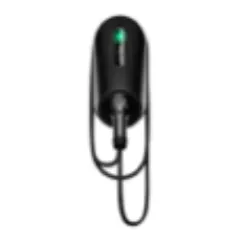
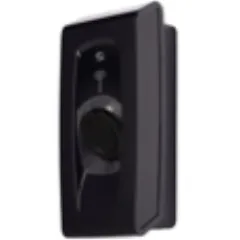
Same Price, Completely Different Chargers
The myenergi Zappi GLO and Indra Smart PRO both cost £599. They're both tethered Type 2 units with 3-year warranties. On paper, they look like near-identical choices. In practice, they're aimed at entirely different buyers.
In a nutshell:
- myenergi Zappi GLO: The UK's best solar EV charger, with three diversion modes and a growing energy ecosystem
- Indra Smart PRO: A practical, no-nonsense charger that saves real money on installation thanks to its included surge protection
The deciding factor here isn't software polish or app design — it's whether you have solar panels on your roof.
Does the Zappi GLO's Solar Diversion Justify the Price?
If you have solar panels: absolutely, without question. The Zappi GLO's Eco+ mode charges your car using only surplus solar energy. That's free miles. The standard Eco mode blends solar with grid power to speed things up, and Fast mode ignores solar entirely. No other charger on the UK market gives you that level of control.
Beyond the charger itself, myenergi's wider ecosystem — the eddi hot water diverter and libbi home battery — means you can build a complete home energy management system over time. If you're serious about maximising your solar investment, this is the platform to be on. Our guide to the best EV chargers for solar panels covers this in more detail.
If you don't have solar panels, none of this matters. You're paying £599 for a charger whose headline features you'll never touch.
The Indra's Hidden Cost Advantage
Here's where the Indra gets interesting. It includes a surge protection device (SPD) as standard — something most other chargers don't. Your electrician would typically charge £100–150 to supply and fit one separately, which is required under current wiring regulations.
That means the Indra's effective cost is closer to £449–499 when you factor in the installation saving. At that price, it undercuts most of the competition. It also includes a CT clamp for basic solar diversion, so if you have a small solar array and just want some solar awareness without the full myenergi ecosystem, the Indra covers that at no extra cost.
Dynamic load balancing is included too, which protects your home's electrical supply from overloading. It's a sensible, well-thought-out package from a smaller British manufacturer.
Where Does Each Charger Fall Short?
The Zappi GLO dropped the on-unit screen that some owners liked on the older Zappi 2.1. Everything now runs through the myenergi app, which has improved but still feels a step behind the slicker interfaces from Ohme and Tesla. There's no 4G backup either — if your Wi-Fi drops, you lose smart functionality until it reconnects.
The Indra's weaknesses are different. Its app is basic compared to market leaders, and its installer network is smaller than myenergi's or Ohme's, which could mean longer waits or fewer local options. Indra talks a lot about V2G (vehicle-to-grid) as part of its brand story, but the Smart PRO itself doesn't actually support V2G. That's a future promise, not a current feature.
The IP ratings tell a small but real story too: the Zappi GLO is rated IP65 (fully dust-tight and protected against water jets), while the Indra sits at IP54. Both will handle British weather, but the Zappi is the more robust outdoor installation if your charger is exposed to the elements.
Can Either Charger Save You Money on Smart Tariffs?
Both chargers support smart tariff integration. The Zappi GLO is compatible with Intelligent Octopus Go, and the Indra connects with major UK providers too. Neither is as seamless at tariff optimisation as the Ohme Home Pro, which remains the gold standard for automated cheap-rate charging. If smart tariff savings are your primary motivation and you don't have solar, check out our EV tariff comparison — you might find a different charger suits you better.
That said, both units will let you schedule charging around off-peak windows. You'll just be doing a bit more manual setup than you would with an Ohme.
Which Should You Buy?
Buy the myenergi Zappi GLO if:
- You have solar panels and want to charge for free from surplus energy
- You're building (or plan to build) a myenergi home energy ecosystem
- You need three-phase support for faster charging
- Your charger is fully exposed outdoors and you want IP65 protection
Buy the Indra Smart PRO if:
- You don't have solar panels and want to minimise your total installed cost
- The included SPD saving of £100–150 matters to your budget
- You want a straightforward British-made charger without paying for features you won't use
- Basic solar awareness (via the included CT clamp) is enough for your needs
For most Tesla owners without solar, the Indra Smart PRO is the more rational purchase. That included surge protection device makes it genuinely cheaper to get up and running, and it does everything a typical home charger needs to do. But if you've got panels on your roof, there's no contest — the Zappi GLO is the best solar EV charger you can buy in the UK, and the ecosystem around it is unmatched. For a broader view of your options, our best Tesla home charger guide covers the full field.