Wallbox Pulsar Max vs Indra Smart PRO: A £103 Gap That Might Not Be What It Seems
On paper, this looks straightforward. The Wallbox Pulsar Max costs £496, the Indra Smart PRO costs £599. That's a clear £103 difference. But the Indra bundles in hardware that Wallbox charges extra for — or that your installer will add to the bill — so the real-world gap depends entirely on your setup.
In a nutshell:
- Wallbox Pulsar Max: Smaller, cheaper upfront, 5-year warranty, three-phase capable
- Indra Smart PRO: Included SPD and solar CT clamp, smart tariff integration, British-made
Does the Indra's Included SPD Actually Save You Money?
This is the single most important question in this comparison. Since 2022, UK installations require a surge protection device. Most chargers don't include one, so your electrician adds it — typically £100–150 on top of the install cost.
The Indra Smart PRO has an SPD built in. That means its effective hardware cost drops to roughly £449–499 once you account for the SPD you won't need to buy separately. Suddenly that £103 gap shrinks to almost nothing — or disappears entirely.
The Pulsar Max doesn't include an SPD. So when you're comparing quotes, make sure you're looking at the total installed price, not just the charger sticker price. Ask your installer explicitly what they charge for surge protection. If it's £150, the Indra is essentially the same price as the Wallbox once everything's fitted on the wall.
Which Is Better for Solar: Pulsar Max or Indra Smart PRO?
If you've got panels on the roof, the Indra has a clear edge here. It ships with a CT clamp for solar diversion — plug it in, configure the app, and your excess generation goes straight into the car. No additional hardware to buy.
The Wallbox Pulsar Max does offer solar integration through its Eco-Smart feature, but you'll need to purchase a separate Wallbox Power Meter. That's another expense and another device for your electrician to install. If solar charging is a priority, check out our best EV charger for solar guide — but between these two specifically, the Indra wins on out-of-the-box solar readiness.
Size, Build, and Living With It Day-to-Day
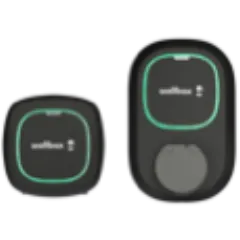
The Pulsar Max is tiny. At 198mm × 201mm × 99mm and just 4.2kg, it's one of the smallest home chargers you can buy. If your charger needs to sit on a narrow wall, beside a front door, or anywhere aesthetically sensitive, the Wallbox is hard to beat. Six colour options help too — most chargers give you black or white and call it a day.
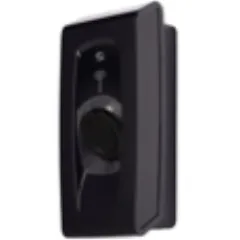
The Indra is noticeably larger at 340mm × 240mm × 115mm. Not enormous, but nearly double the footprint. It's also heavier at 5kg. Neither charger will win any beauty contests against the Tesla Wall Connector, but the Pulsar Max gets closer.
Build quality tilts toward the Wallbox as well. IK10 impact resistance means it can take a knock from a car door, a football, or whatever else life throws at it. The Indra has standard IP54 weatherproofing but no IK impact rating.
Smart Features and Tariff Integration
Neither charger is the smartest on the market — that crown belongs to the Ohme Home Pro — but they take different approaches to intelligence.
The Indra Smart PRO integrates directly with major UK smart tariffs, automatically shifting your charging to cheaper rate windows. If you're on a tariff like Octopus Go, that's a meaningful feature. The Wallbox Pulsar Max relies on scheduled charging through the myWallbox app — you set the times manually. It works, but it means you need to know your off-peak window and programme it yourself. For a deeper look at tariff options, see our EV tariff comparison.
The Wallbox counters with voice control through Alexa and Google Assistant, which the Indra lacks. Whether that matters depends on how deeply you've bought into the smart home ecosystem.
One shared weakness: neither charger has 4G connectivity. Both rely on Wi-Fi and Bluetooth, so if your router is far from the charger location, you may need a Wi-Fi extender.
Which Should You Buy?
Buy the Wallbox Pulsar Max if:
- You want the most compact charger possible
- A 5-year warranty matters to you (vs Indra's 3 years)
- You have or plan to install three-phase power
- You prefer to manage charging schedules yourself
Buy the Indra Smart PRO if:
- You want the lowest total installed cost (once SPD savings are factored in)
- You have solar panels and want diversion without buying extra kit
- Smart tariff automation is important to you
- You'd rather support a British manufacturer
For most Tesla owners without solar panels, the Pulsar Max is the sharper buy. It's cheaper, smaller, tougher, and carries a warranty two years longer than the Indra's. But if you've got panels on the roof and your installer quotes £150 for an SPD, the Indra Smart PRO quietly becomes the more cost-effective package. Run the numbers on your specific installation before you decide — the headline prices don't tell the whole story.