
A Compact All-Rounder vs a Battery Storage Specialist
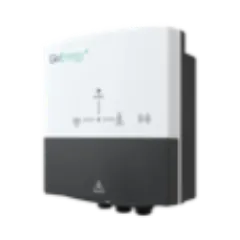
These two chargers sit within £18 of each other, but they're aimed at fundamentally different buyers. The Wallbox Pulsar Max at £496 is a polished, feature-rich charger that tries to do everything well. The GivEnergy EV Charger at £478 is more focused — it's built to slot into a home energy ecosystem, and its headline trick is charging your EV from a home battery.
If you don't have a battery storage system, this comparison is straightforward. If you do, things get more interesting.
In a nutshell:
- Wallbox Pulsar Max: Best for most homes — tiny footprint, 5-year warranty, three-phase ready, voice control
- GivEnergy EV Charger: Best if you have a home battery and want to charge your Tesla from stored solar or cheap overnight energy
Does the GivEnergy's Battery-to-EV Feature Actually Matter?
It matters a lot — if you have the right setup. Most EV chargers with solar features only divert surplus energy in real time: the sun's out, your panels are generating, the car gets the excess. The GivEnergy charger goes further. It can pull energy from a home battery, meaning you can store cheap overnight electricity (or solar from earlier in the day) and feed it to your Tesla whenever you want.
That's a genuine capability gap. The Pulsar Max does offer solar integration through its Eco-Smart mode, but you need an additional Wallbox Power Meter to make it work, and there's no battery-to-EV pathway at all. If you're running a GivEnergy battery (or any compatible home battery system), the GivEnergy charger turns your entire home energy setup into one joined-up system through its monitoring portal. For a deeper look at solar-optimised options, see our best EV charger for solar panels guide.
Without a home battery, though, this feature is irrelevant — and the GivEnergy charger becomes a fairly basic 7kW unit with a limited app.
Is the Wallbox Pulsar Max Worth £18 More?
Easily. For that tiny premium you get a meaningfully better package in almost every measurable dimension.
Start with size. The Pulsar Max measures just 198 × 201 × 99mm — roughly the footprint of a large hardback book. The GivEnergy unit is noticeably bigger at 320 × 220 × 115mm. If your charger is going on a front wall or in a tight garage, the Wallbox practically disappears. It also comes in six colour options, which is a small detail that matters when the charger's on permanent display.
Then there's the warranty: five years from Wallbox versus three from GivEnergy. Over the typical ownership period of an EV charger, those extra two years of coverage are worth real money.
The smart features gap is significant too. The myWallbox app offers Power Boost — dynamic load balancing that adjusts charge speed to prevent your main fuse from tripping — plus Alexa and Google voice control. The GivEnergy charger has RFID access and scheduled charging, but its app experience is basic by modern standards. Neither charger offers the kind of native smart tariff integration you get from an Ohme, but the Wallbox at least gives you more scheduling flexibility.
And if you ever move to a property with three-phase power, the Pulsar Max scales to 22kW. The GivEnergy is locked at 7kW with no upgrade path.
How Do They Compare on Connectivity and Everyday Use?
Both chargers connect via Wi-Fi, but the Pulsar Max adds Bluetooth as a backup — handy if your Wi-Fi signal is weak at the charger's location. Neither offers 4G, which means both depend on a solid home network. The GivEnergy charger's Wi-Fi-only setup isn't a dealbreaker, but the Bluetooth fallback on the Wallbox is a practical advantage.
Day-to-day, the Wallbox feels like the more refined product. Scheduled charging, energy monitoring, and voice control create a slick experience through the myWallbox app. The GivEnergy monitoring portal is functional but designed primarily for managing your whole-home energy system — the EV charger is one component within it, not the star of the show. If you're already deep in the GivEnergy ecosystem, that integration is a strength. If you're not, it can feel like using a sledgehammer to crack a nut.
For a broader view of the smartest chargers available, our best smart EV charger guide covers the full field.
Which Should You Buy?
Buy the Wallbox Pulsar Max if:
- You want the most compact charger possible for a clean wall-mount
- A 5-year warranty matters to you
- You might benefit from three-phase charging now or in the future
- You value voice control and a polished app experience
Buy the GivEnergy EV Charger if:
- You have a home battery system (GivEnergy or otherwise) and want battery-to-EV charging
- You're already using the GivEnergy monitoring portal for solar and storage
- Whole-home energy management is more important to you than charger-specific features
- You want RFID access for shared or semi-public use
For the majority of Tesla owners without home battery storage, the Wallbox Pulsar Max is the stronger buy. It's better built, better warranted, and more capable as a standalone charger. The £18 premium over the GivEnergy is negligible.
But if you've invested in a home battery setup, the GivEnergy EV Charger does something no other charger at this price can do — and that capability can save you hundreds of pounds a year by charging your Tesla from stored energy rather than live grid power. In that specific scenario, it's the obvious choice. For everyone else, go Wallbox.