Two Chargers, Two Ways to Save Money
This comparison comes down to a simple question: where do you want your savings — on installation day, or on every electricity bill for years to come?
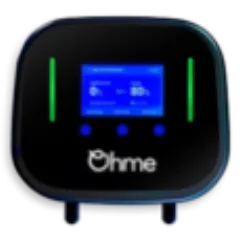
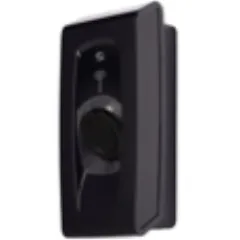
The Ohme Home Pro is the UK's go-to charger for squeezing every penny from smart energy tariffs. The Indra Smart PRO takes a different approach, bundling a surge protection device and CT clamp into the box to reduce what your electrician charges on day one.
Both deliver 7.4kW, both carry a 3-year warranty, and both are OZEV-approved. The differences are in the details — and those details matter.
In a nutshell:
- Ohme Home Pro: The smart tariff king. Automates off-peak charging to slash running costs.
- Indra Smart PRO: The pragmatist's pick. Included SPD and CT clamp cut installation costs by up to £150.
Does the Indra's Included SPD Actually Make It Cheaper?
On paper, yes. The Indra Smart PRO costs £599 versus the Ohme's £535 — a £64 premium. But since the Indra includes a surge protection device as standard, and most electricians charge £100–150 to supply and fit one separately, the Indra's total installed cost could be lower. With standard installation, Indra quotes from £949 versus Ohme's from £999.
That's a genuine saving. But it's a one-time saving. The Ohme's advantage compounds month after month.
If you're on Octopus Intelligent Go at roughly 7p/kWh off-peak, you could charge a Tesla Model 3 Long Range from 20% to 80% for about £2.80. On a standard variable tariff at 24p/kWh, that same charge costs around £9.60. Over a year of typical driving, the difference runs to hundreds of pounds. The Ohme automates this seamlessly — it's the officially recommended charger for Intelligent Go, and it connects directly to Octopus, OVO, and other providers without you fiddling with schedules.
The Indra offers smart tariff integration too, but it's not in the same league. The app is more basic, the provider partnerships less deep, and the automation less refined. If smart tariff savings are your priority, the Ohme wins outright.
Which Is Better for Solar Panel Owners?
Both chargers support solar diverting, which is increasingly important as more Tesla owners pair their cars with rooftop solar. The Indra has a slight edge here: it ships with a CT clamp in the box, ready to monitor your solar export and divert surplus energy into your car. No extra purchase needed.
The Ohme Home Pro also does solar diverting, and its software implementation is solid. But the Indra's all-in-one-box approach means fewer surprises at installation. If solar integration is your primary concern, check our best EV charger for solar panels guide — but between these two, the Indra makes the process marginally smoother.
The Ohme's Connectivity Edge
One underrated advantage: the Ohme Home Pro includes a 4G SIM with three years of data. If your charger is mounted in a garage with patchy Wi-Fi, it stays connected regardless. The Indra relies on Wi-Fi and Bluetooth only. Lose your Wi-Fi signal and you lose your smart features.
The Ohme also has a colour display on the unit itself — handy for a quick glance at charging status without pulling out your phone. The Indra has no on-unit display. Minor? Perhaps. But these quality-of-life details add up.
On cable length, the Indra offers 6 metres versus the Ohme's 5 metres. If you need more reach from the Ohme, an 8-metre version is available at extra cost. Neither is a deal-breaker, but the Indra's extra metre out of the box is a small win.
Indra's V2G Promise: Exciting, But Not Here Yet
Indra markets itself as a V2G pioneer, and that's true — they've been at the forefront of vehicle-to-grid technology in the UK. But the Smart PRO does not support V2G. Buying one positions you in Indra's ecosystem, which could matter if they offer upgrade paths in future. Could. Might. Possibly. That's not a reason to choose a charger today.
Buy hardware for what it does now, not what it might do later.
Which Should You Buy?
Buy the Ohme Home Pro if:
- You're on a smart tariff (or switching to one) and want automated off-peak charging
- You want the best app experience and deepest energy provider integration
- Your charger location has unreliable Wi-Fi — the built-in 4G keeps things running
- You want to minimise long-term running costs above all else
Buy the Indra Smart PRO if:
- You have solar panels and want a charger with the CT clamp included
- You want to minimise upfront installation costs (the included SPD saves £100–150)
- You prefer buying British-designed and manufactured
- You're not on a smart tariff and don't plan to be
For most Tesla owners reading this, the Ohme Home Pro is the stronger recommendation. The money it saves on electricity dwarfs the Indra's installation savings within the first year. But if you're not interested in smart tariffs and you have solar panels, the Indra Smart PRO is a sensible, cost-effective alternative. Check our best Tesla home charger guide if neither quite fits.