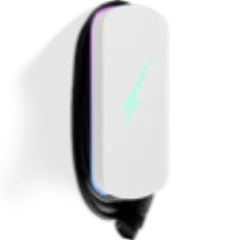
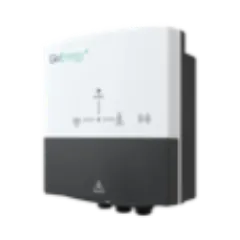
A £212 Gap — But These Two Chargers Aren't Really Competing
On paper, the Hypervolt Home 3 Pro and the GivEnergy EV Charger look like straightforward rivals: both tethered, both single-phase, both OZEV-approved. But they're designed for fundamentally different households. The Hypervolt is a do-everything smart charger built for the mainstream. The GivEnergy is a specialist — affordable and capable, but built around one killer trick: charging your car from a home battery.
In a nutshell:
- Hypervolt Home 3 Pro (£690): The best all-rounder with smart tariffs, solar, and bombproof build quality
- GivEnergy EV Charger (£478): The budget pick that becomes exceptional if you have home battery storage
Do You Have a Home Battery? That's the Whole Decision
Let's be blunt: if you own a home battery — GivEnergy or otherwise — the GivEnergy EV Charger does something almost no competitor at this price can do. It pulls stored energy from your battery to charge your Tesla. That means solar energy captured at midday can flow into your car at midnight, without touching the grid. Pair it with a cheap overnight tariff to top up the house battery, and you've got a genuinely efficient energy loop.
The Hypervolt Home 3 Pro has solar diversion via its included CT clamp, but it only diverts *live* surplus generation. No battery in the chain means no time-shifting. If the sun isn't producing while you're charging, the Hypervolt draws from the grid like any other charger. For homes with solar panels but no battery, that's still useful — see our solar charger guide for a deeper dive — but it's a different proposition entirely.
Without a home battery, the GivEnergy loses its main advantage and becomes a competent but unremarkable 7kW charger with a basic app. At that point, the £212 saving over the Hypervolt starts looking less compelling, because you're giving up quite a lot.
What Does the Hypervolt's Extra £212 Actually Buy You?
Quite a bit, frankly. Start with power: 7.4kW versus 7kW. That's a small difference in percentage terms, but over a year of nightly charging, the Hypervolt consistently tops up a few extra miles. More significant is the smart tariff integration. The Hypervolt connects to tariffs like Octopus Go and Intelligent Go to schedule charging automatically at the cheapest rates — check our tariff comparison for current prices. The GivEnergy's scheduled charging is more rudimentary, with limited smart tariff support.
Then there's build quality. The Hypervolt is IP66 and IK10 rated — that IK10 impact resistance is the highest you'll find on any home charger. The GivEnergy's IP65 is perfectly weatherproof, but it won't shrug off a stray football or a clumsy ladder the same way. If your charger lives on an exposed driveway, the Hypervolt's toughness matters.
Cable length is another practical win. The Hypervolt offers 5m, 7.5m, or 10m options at purchase. The GivEnergy comes with 5m only. If your parking spot isn't right next to the consumer unit, that 10m option could save you from a more expensive installation with cable routing.
And the warranty: both start at three years, but Hypervolt lets you extend to five for £100. GivEnergy doesn't offer an extension.
Is the GivEnergy App Good Enough for Tesla Owners?
The GivEnergy monitoring portal is decent for tracking whole-home energy flows — consumption, generation, battery state. If you're already a GivEnergy battery customer, you probably use it daily and it'll feel familiar. But as a standalone EV charger app, it's thin. No sophisticated smart tariff automation, no energy cost tracking per session, no load management.
The Hypervolt app isn't the best in class either (the Ohme Home Pro still owns that crown), but it covers the essentials: energy tracking, scheduling, automatic load management, and smart tariff support. For a Tesla owner who wants to set and forget, the Hypervolt app does the job without needing you to cross-reference another platform.
Which Should You Buy?
Buy the Hypervolt Home 3 Pro if:
- You don't have a home battery and want the best all-round charger
- Smart tariff savings matter to you — it handles off-peak scheduling natively
- You need a longer cable (7.5m or 10m options)
- You want the toughest physical build on the market (IP66 + IK10)
Buy the GivEnergy EV Charger if:
- You have a home battery system and want battery-to-EV charging
- You're already in the GivEnergy ecosystem and value unified monitoring
- Budget is the priority and you don't need advanced smart tariff features
- You want a solid, simple charger for under £500
For most Tesla owners without battery storage, the Hypervolt Home 3 Pro is the stronger buy. It costs more, but it does more — and the build quality, support, and warranty extension make it easy to recommend. If you're weighing it against other all-rounders, our best Tesla home charger guide covers the full field. But if you've got a GivEnergy battery on the wall and you want your solar to power your commute, the GivEnergy charger at £478 is a no-brainer.