Battery Storage vs V2G: Two Chargers Betting on Different Futures
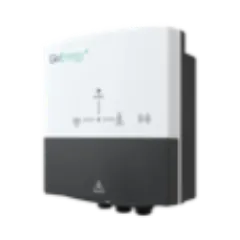
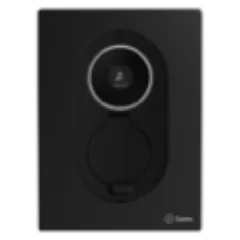
These two chargers look like they're in the same category — mid-range, smart-ish, UK-approved — but they're actually built around completely different philosophies. The GivEnergy EV Charger at £478 is designed to slot into a home energy ecosystem where a battery does the heavy lifting. The Zaptec Go 2 at £707 is a bet on vehicle-to-grid technology that hasn't fully arrived yet.
Neither is a general-purpose crowd-pleaser. Both reward a specific type of buyer.
In a nutshell:
- GivEnergy EV Charger: Best if you already own (or plan to buy) a home battery. Charges your Tesla from stored solar energy for pennies.
- Zaptec Go 2: Best if you want a future-proofed, untethered charger with V2G readiness and a 5-year warranty.
Does the GivEnergy Charger Make Sense Without a Home Battery?
Frankly, no. Strip away the battery-to-EV and solar divert features and you're left with a £478 tethered charger with a 5-metre cable, basic app, and limited smart tariff support. That's not terrible, but it's not competitive either. For pure value at this price, the Easee One undercuts it, and the Ohme Home Pro runs circles around it on smart charging.
But pair it with a GivEnergy battery — or any compatible home battery — and the picture changes entirely. Storing cheap overnight electricity or excess solar generation, then pushing that into your Tesla the next day, is a genuinely different proposition. You're not just scheduling when you charge; you're controlling where the energy comes from. If you've already invested in a home battery setup, the GivEnergy charger completes the loop for under £500. Check our best EV charger for solar guide for more on this.
Is the Zaptec Go 2's V2G Worth Paying £229 More?
That depends on your time horizon. V2G over AC is still in its infancy in the UK. Very few cars support it, and the regulatory and tariff frameworks are still being built. Paying a premium today for a feature you might use in two or three years is a gamble.
That said, the Zaptec isn't a one-trick pony. You also get subscription-free 4G connectivity — meaning it works reliably without needing your home Wi-Fi to reach the garage — a MID-approved energy meter for accurate cost tracking, and OCPP 1.6J compliance so it plays nicely with third-party energy management platforms. The 5-year warranty is two years longer than GivEnergy's, which matters on a product bolted to your wall and exposed to British weather.
The untethered design is a love-it-or-hate-it choice. You'll need your own Type 2 cable, which adds £100-200, but it keeps your wall tidy and lets you use different cable lengths. If you prefer the plug-in-and-forget convenience of a tethered cable, the GivEnergy wins on that front.
App and Smart Tariff Experience Compared
Neither charger is best-in-class here, and that's worth being honest about. The GivEnergy monitoring portal is powerful if you're managing a whole-home energy system with batteries and solar, but as a standalone EV charging app it feels utilitarian. Smart tariff integration is limited — you won't get the seamless Octopus Intelligent Go experience you'd find with an Ohme Home Pro.
The Zaptec app handles scheduling and monitoring competently, and the MID-approved meter gives you precise energy data. But it's similarly basic compared to the best smart chargers. If optimising every penny on a variable tariff is your priority, neither of these is the right answer — head to our smart EV charger guide instead.
Both chargers support scheduled charging, which is enough to take advantage of fixed off-peak rates like Octopus Go's 7.5p/kWh window. You just won't get the automatic price-chasing that fancier apps provide.
Build Quality and Practicalities
The Zaptec Go 2 is noticeably smaller (240 × 180 × 106mm vs 320 × 220 × 115mm) and lighter at 3.2kg versus roughly 4.5kg. Its Scandinavian design is minimal and unobtrusive. The GivEnergy has a higher IP65 weatherproof rating compared to the Zaptec's IP54, which could matter if your charger is fully exposed to rain rather than sheltered under an overhang.
The GivEnergy's 5-metre tethered cable is adequate for most driveways but not generous. The Zaptec's untethered socket means you choose your own cable length — useful if your parking spot is further from the wall.
Which Should You Buy?
Buy the GivEnergy EV Charger if:
- You have a home battery (GivEnergy or compatible) and want to charge your EV from stored energy
- You're building a solar-plus-storage system and want everything in one ecosystem
- Budget matters and you don't need advanced smart tariff features
- You prefer a tethered charger with a fixed cable
Buy the Zaptec Go 2 if:
- You want the longest warranty at 5 years and a charger built for the long haul
- V2G readiness matters to you, even if it's a future bet
- Your charger location has poor Wi-Fi and you need built-in 4G
- You prefer an untethered socket for a cleaner installation
For most Tesla owners without a home battery, honestly, neither of these should be your first choice. Both are specialist tools. But if you're in the market for one of these specific capabilities — stored energy charging or V2G future-proofing — they each do their thing well. The GivEnergy delivers tangible savings today if you have the right setup. The Zaptec is the more versatile, better-warranted product that asks you to be patient.