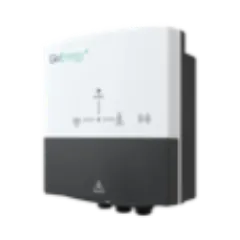

GivEnergy EV Charger vs Pod Point Solo 3S: A Specialist Tool Against an All-Rounder
These two chargers serve fundamentally different buyers. The GivEnergy EV Charger at £478 is built around a single killer feature: charging your EV from a home battery. The Pod Point Solo 3S at £999 installed is the opposite — a mainstream, no-decisions-required package where someone else handles everything.
Neither is objectively better. But one of them is almost certainly better *for you*, and the deciding factor is straightforward.
In a nutshell:
- GivEnergy EV Charger: Best if you have (or plan to get) a home battery system. Battery-to-EV charging at a bargain price.
- Pod Point Solo 3S: Best if you want a turnkey installation with a long warranty and don't want to think about it.
Does the GivEnergy's Battery-to-EV Feature Justify the Hype?
Absolutely — if you have the right setup. Most EV chargers with solar divert mode can send surplus solar generation straight to your car. The GivEnergy goes further: it can pull energy from your home battery to charge the EV, even after the sun's gone down. You store cheap overnight electricity or daytime solar in your battery, then transfer it to your Tesla whenever you like.
This is genuinely useful for households already running a GivEnergy battery (or any compatible system). You're decoupling your EV charging from both the grid price and the weather. Combined with the GivEnergy monitoring portal, you get whole-home energy management in one ecosystem. For anyone serious about energy independence, there's nothing else at £478 that comes close. Our best EV charger for solar guide covers this in more detail.
Strip away the battery, though, and the picture changes. The GivEnergy app is basic. Smart tariff integration is limited — nowhere near what you'd get from an Ohme Home Pro. At that point, you're paying £478 plus £400–600 for installation for a fairly unremarkable 7kW charger.
Is the Pod Point Solo 3S Worth £999 for a Simple Charger?
The headline number looks steep, but context matters. That £999 includes professional installation. A GivEnergy at £478 plus a typical install at £400–600 lands you at £878–1,078 — essentially the same ballpark, possibly more. If you're eligible for the OZEV grant (up to £350 off for qualifying renters and flat owners), the Pod Point drops to £649 installed, which is hard to argue with.
What you get is a 7.4kW charger (fractionally faster than GivEnergy's 7kW, though you'll barely notice day-to-day), a 5-year warranty, and the backing of one of the UK's most established charging brands. Pod Point has installed hundreds of thousands of chargers. They know the process.
The trade-off is control. You cannot buy the unit separately and use your own electrician. Pod Point assigns an installer from their network, and you have no say in who turns up. For most people this is fine. For anyone who's particular about tradespeople — or who already has a trusted sparky — it's frustrating.
The app is functional but unexciting. Scheduled charging works. Adaptive load management protects your home's supply. But there's no smart tariff integration, so if you're on Octopus Go or a similar time-of-use tariff, you'll be managing off-peak schedules manually through the app rather than having the charger optimise automatically. Check our EV tariff comparison to see how much that could cost you over a year.
Smart Features: Neither Charger Leads the Pack
Let's be blunt — if smart features are your priority, neither of these should be your first choice. Both lack proper smart tariff integration. Both have apps that do the basics and little more. If you want a charger that automatically finds the cheapest half-hour slots on Octopus Agile or seamlessly integrates with Intelligent Go, look at our best smart EV charger guide instead.
The GivEnergy's intelligence lives in its energy ecosystem, not its EV app. The Pod Point's intelligence is... minimal. RFID on the GivEnergy is a nice security touch if your charger is on a shared driveway, but that's a niche benefit.
Which Should You Buy?
Buy the GivEnergy EV Charger if:
- You already have a home battery system (GivEnergy or otherwise)
- You want to charge your EV from stored solar or cheap overnight energy
- You have a trusted installer lined up
- You're building a whole-home energy management setup
Buy the Pod Point Solo 3S if:
- You don't have a home battery and don't plan to get one
- You want installation included with no sourcing hassle
- A 5-year warranty matters to you
- You qualify for the OZEV grant, bringing the price to £649
For the majority of Tesla owners without a home battery, the Pod Point is the safer, simpler choice — though I'd encourage you to also consider the cheapest EV chargers before committing, since the Pod Point's locked-in installation model means you're paying a premium for convenience. But if you're running a battery at home, the GivEnergy isn't just the better option in this comparison — it's one of the best-value chargers on the market, full stop.