EO Mini Pro 3 vs Indra Smart PRO: Which Mid-Range Charger Actually Delivers More Value?
These two sit in the same pricing bracket — £550 for the EO Mini Pro 3, £599 for the Indra Smart PRO — and on paper they look like similar propositions. Both are tethered Type 2 chargers with solar diversion, smart tariff support, and three-year warranties. Both are British-designed. Both are perfectly competent at the one job that actually matters: charging your car overnight.
But the real cost difference isn't in the sticker price. It's in what happens when the electrician arrives.
In a nutshell:
- EO Mini Pro 3: The smallest charger on the market. Buy it when wall space is the deciding factor.
- Indra Smart PRO: Includes surge protection as standard, effectively undercutting the EO on total installed cost.
Does the Indra's Included Surge Protection Actually Save You Money?
Yes, and it's not a trivial saving. Current UK regulations (18th Edition Amendment 2) require surge protection on most new EV charger installations. If your electrician has to supply and fit a separate SPD in your consumer unit, expect to add £100–150 to your install bill.
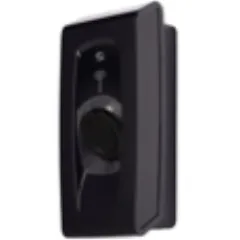
The Indra Smart PRO has this built in. So while it costs £49 more than the EO upfront, it's potentially £50–100 *cheaper* once installed. That's a meaningful difference when both chargers are targeting the same mid-range buyer. The Indra also includes dynamic load balancing, which protects your home's electrical supply — another feature that can occasionally add cost with other chargers.
The EO doesn't include an SPD. At £550 plus a separate surge protector, you're looking at a true installed cost that's higher than the Indra's despite the lower headline price. Always check with your installer, but for most homes, the Indra wins the value calculation.
Is the EO Mini Pro 3's Size Worth Paying More For?
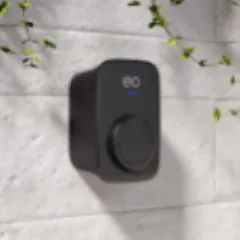
The EO Mini Pro 3 measures 215mm × 140mm × 100mm. That's genuinely tiny — about the size of a paperback novel. At 2.5kg, it's half the weight of the Indra (5kg) and takes up roughly a quarter of the wall space. If you're mounting a charger in a narrow passageway, inside a garage with limited clearance, or anywhere aesthetics matter, nothing else comes close.
Size aside, the EO also has a connectivity advantage. It offers Ethernet alongside Wi-Fi and Bluetooth, with an optional 4G add-on for properties with poor signal. The Indra is limited to Wi-Fi and Bluetooth. If your charger is mounted far from your router — common with detached garages — the EO's wired Ethernet option is a genuine problem-solver.
Smart Features: Neither Charger Leads the Pack
Let's be honest: if smart tariff optimisation is your primary concern, neither of these is the best choice. Both support scheduled charging and have presets for tariffs like Octopus Go, but neither offers the deep, automatic integration you get from an Ohme Home Pro, which connects directly to your energy supplier and adjusts session-by-session without you lifting a finger. Check our EV tariff comparison if maximising off-peak savings is your priority.
That said, both chargers handle the basics fine. The EO has an interesting angle with British Gas/Hive Power+ integration — if you're already in the Hive ecosystem, you can get 25% of charging costs credited back. That's a decent ongoing saving, though it locks you into a specific energy provider. The Indra counters with RFID lock functionality, which is useful if your charger is accessible to the public or shared with neighbours.
For solar diversion, both include a CT clamp as standard — no extra hardware to buy. Neither is as sophisticated as a dedicated solar charger, but both will divert surplus generation to your car competently enough. The EO runs at 7.2kW versus the Indra's 7.4kW; the difference is negligible in real-world charging but worth noting if you're the sort who likes to optimise everything.
Which Should You Buy?
Buy the EO Mini Pro 3 if:
- Wall space is genuinely constrained — nothing else this small exists
- You need Ethernet or 4G connectivity for a difficult Wi-Fi location
- You're a British Gas/Hive customer who can benefit from the 25% Power+ credit
- Aesthetics matter and you want the most discreet possible installation
Buy the Indra Smart PRO if:
- You want the lowest total installed cost (thanks to the built-in SPD)
- You value dynamic load balancing for peace of mind
- You want a longer cable (6m vs 5m) for more flexible parking
- You're interested in Indra's V2G ecosystem for potential future upgrades
For most buyers who don't have a specific space constraint, the Indra Smart PRO is the better deal. That included surge protection makes the maths work in its favour, and you get a slightly faster charger with a longer cable. But if you've measured your wall and you're wincing, the EO Mini Pro 3 does something no other charger can. Have a look at our best Tesla home charger guide if neither quite fits the bill.