Andersen A3 vs Indra Smart PRO: Is Beautiful Worth £400 More?
These two British-designed chargers sit at opposite ends of the same market. The Andersen A3 is the charger you buy when you care deeply about how your home looks. The Indra Smart PRO is the charger you buy when you care deeply about not overspending. Both deliver 7.4kW, both work with every Tesla sold in the UK, and both support smart tariff scheduling. The difference is almost entirely about what surrounds that core functionality.
In a nutshell:
- Andersen A3: Unmatched design with 247 finishes, hidden cable storage, and a 7-year warranty — but at £995, it's a serious premium
- Indra Smart PRO: Practical value at £599 with included surge protection and solar CT clamp, cutting real money from your installation bill
Does the Andersen A3's Design Actually Justify £995?
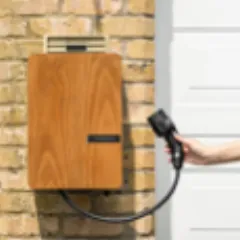
Here's the uncomfortable truth: no charger at 7.4kW is doing anything electrically complex. The A3 charges your Tesla at the same speed as the Indra, with the same Type 2 connector. What Andersen has done is wrap that commodity function in genuinely beautiful hardware — anodised aluminium, 247 colour and material combinations spanning metals and woods, and a hidden cable system that tucks 5.5 metres of cable inside the unit when you're done.
If your charger sits beside your front door or on the face of a period property, that matters. The A3 looks like a piece of architectural hardware, not a plastic box bolted to your wall. But if your charger lives in a garage, down a side passage, or anywhere guests won't see it, you're spending nearly double for something only you'll notice. At £995 before installation, the A3 is the most expensive mainstream home charger in the UK. That's a lot of money for aesthetics.
Where the Indra Smart PRO Claws Back Real Value
The Indra's headline number is £599, but the real story is what's included in the box. It ships with a surge protection device (SPD) as standard — something most other chargers require your installer to fit separately, typically adding £100–150 to the installation bill. It also includes a CT clamp for solar diversion, which competitors like the Ohme Home Pro charge extra for or don't offer at all.
Factor those savings in, and the Indra's effective cost drops to roughly £449–499 compared to chargers that need aftermarket SPDs and solar hardware. Against the Andersen's £995, that gap becomes enormous — potentially £500+ once you account for the A3 needing a separate SPD at install. For anyone running solar panels, the Indra's included CT clamp makes it worth a close look alongside options in our best EV charger for solar guide.
Andersen's 7-Year Warranty vs Indra's 3: Does It Matter?
The A3 comes with a 7-year warranty — the longest of any UK home charger. The Indra offers 3 years, which is standard but unremarkable. Over a typical ownership period, that extra four years of cover has tangible value, particularly on a premium product with moving parts (the hidden cable mechanism). If something fails in year five, Andersen has you covered; Indra doesn't.
That said, EV chargers are fundamentally simple devices. Failure rates are low across the board, and most issues surface within the first year or two. The warranty gap is a genuine differentiator for the Andersen, but it's not a reason on its own to spend an extra £400. Think of it as a nice bonus that comes with the design premium, not a standalone justification for it.
Smart Features: Neither Leads the Pack
Both chargers support smart tariff scheduling and work with providers like Octopus. Both connect over Wi-Fi and offer app-based control. Neither is exceptional at it. The Andersen app is competent; the Indra app is basic. If squeezing every penny from a variable tariff like Octopus Agile is your goal, you'd be better served by a dedicated smart charger — our smart EV charger guide covers the strongest options.
The Indra does add dynamic load balancing and RFID security, which the Andersen lacks. These are useful if you share a driveway or want to restrict access, but they're minor advantages for most Tesla owners charging at home.
Which Should You Buy?
Buy the Andersen A3 if:
- Your charger is prominently visible on your property's exterior
- You want it to complement specific materials or colours on your home
- The 7-year warranty gives you meaningful peace of mind
- Budget is secondary to how the finished installation looks
Buy the Indra Smart PRO if:
- You want the lowest total cost of ownership including installation
- You have or plan to add solar panels and want the CT clamp included
- Your charger location is functional rather than decorative
- You'd rather put the £400 saving toward your energy tariff or something else
For the majority of Tesla owners, the Indra Smart PRO is the better buy. It delivers the same charging performance, includes hardware that genuinely reduces your installation bill, and leaves several hundred pounds in your pocket. The Andersen A3 is a beautiful object — arguably the best-looking charger money can buy — but beauty is the only reason to choose it. If that reason matters to you, it's worth every penny. If it doesn't, it isn't.