Tesla Wall Connector (Gen 3) vs EcoFlow PowerPulse 2: Ecosystem Showdown
The Established Icon vs the Solar-Smart Newcomer
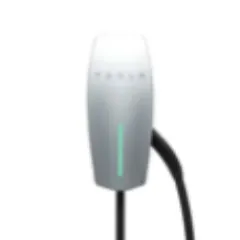
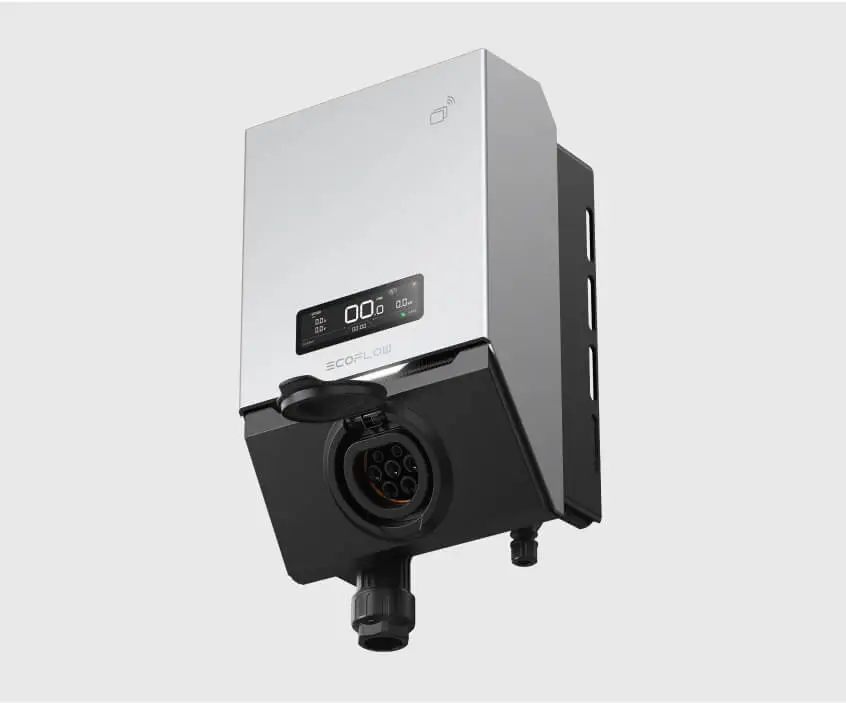
These two chargers represent very different philosophies. The Tesla Wall Connector (Gen 3) is the official home charger from the world's biggest EV brand — refined over three generations, competitively priced, and deeply woven into the Tesla app experience. The EcoFlow PowerPulse 2, on the other hand, arrives from a company best known for portable power stations and home solar batteries, bringing genuine solar diversion and dynamic tariff optimisation to a market segment Tesla largely ignores.
You're likely choosing between these two if you own (or are about to own) a Tesla, and you're wondering whether the brand-matched charger is really the best option — or whether a smarter, more feature-rich alternative from EcoFlow could save you more money in the long run. Both support three-phase power (up to 22kW) for the lucky few with that setup, and both work with any Type 2 EV. But the details diverge quickly once you look beneath the surface.
In a nutshell:
- Tesla Wall Connector (Gen 3) (£425): The slickest Tesla app integration on the market, with a 4-year warranty and the lowest unit price of any premium home charger.
- EcoFlow PowerPulse 2 (£545): Built-in solar diversion, dynamic tariff optimisation, and deep integration with EcoFlow's home battery ecosystem — the most feature-packed newcomer in years.
Spec Comparison
| Feature | Tesla Wall Connector (Gen 3) | EcoFlow PowerPulse 2 |
|---|---|---|
| Price | £425 | £545 |
| Max Power | 7.4kW (single-phase) / 22kW (three-phase) | 7kW (single-phase) / 22kW (three-phase) |
| Type | Tethered (Type 2) | Untethered (Type 2); tethered 5m also available |
| Cable Length | 7.3 metres | Untethered (5m tethered option) |
| Smart Tariff Support | No built-in integration | Yes — Smart Mode with dynamic tariff optimisation |
| Solar Diversion | No (requires additional hardware) | Yes — Solar Mode prioritises surplus solar |
| Connectivity | Wi-Fi | Wi-Fi, RFID |
| Display | None (app only) | Built-in LCD status display |
| OCPP Support | No | OCPP 1.6-J |
| Warranty | 4 years | 3 years |
| IP Rating | IP44 | IP55 (IP54 untethered) |
| Weight | 5.3 kg | ~3.5 kg |
| OZEV Approved | No | Not yet confirmed |
Smart Tariff Integration
This is where the EcoFlow PowerPulse 2 pulls decisively ahead. Its Smart Mode is designed to work with dynamic tariffs — think Octopus Agile with its half-hourly price slots, or Octopus Intelligent Go with its ~7p/kWh off-peak rate. The charger can automatically shift your charging sessions to the cheapest windows, potentially saving hundreds of pounds a year without you lifting a finger.
The Tesla Wall Connector, by contrast, has no built-in smart tariff integration. You can set a scheduled charge time via the Tesla app — say, 00:30 to 04:30 to catch the Octopus Go off-peak window at 7.5p/kWh — but it's a manual affair. There's no awareness of real-time pricing, and no automatic optimisation. Tesla does offer its own Tesla Energy plan in the UK, but if you're on Octopus Agile or another variable tariff, you'll be doing the maths yourself.
For a driver covering the UK average of 7,400 miles per year in a Tesla Model 3 (roughly 2,114 kWh annually at 3.5 miles per kWh), the difference between charging at a flat standard rate of ~24p/kWh versus an optimised off-peak average of ~7p/kWh is around £360 per year. Both chargers can achieve this with manual scheduling, but only the EcoFlow automates it.
Solar Diversion
If you have rooftop solar panels, the EcoFlow PowerPulse 2 is the far more capable choice. Its Solar Mode actively prioritises surplus solar generation, diverting free energy into your EV rather than exporting it to the grid at the Smart Export Guarantee rate (typically 4–15p/kWh). If you're already in the EcoFlow ecosystem — particularly with a PowerOcean home battery — you can manage solar generation, battery storage, home consumption, and EV charging from a single app. That's a genuinely compelling proposition.
The Tesla Wall Connector offers no native solar diverting capability. You'd need additional hardware (such as a Powerwall or a third-party solar diverter) to achieve anything similar. If you already have a Tesla Powerwall, the Wall Connector does integrate with it via the Tesla app, but that's a significantly larger investment. For homes with solar panels and no existing Tesla energy products, the EcoFlow is the more practical route to maximising self-consumption.
App Experience and Connectivity
Here's where the Tesla Wall Connector claws back ground. If you drive a Tesla, the app experience is simply unmatched. Your charging history, schedules, energy costs, and vehicle status all live in one place. There's no second app to install, no separate account to create. It just works — and it gets better over time thanks to over-the-air updates.
The EcoFlow app is functional and covers the basics — scheduling, real-time monitoring, solar and smart mode configuration — but it's a separate app from your car's ecosystem. The PowerPulse 2 does add a built-in LCD display, which is a nice touch: you can glance at charging status without reaching for your phone. It also supports RFID authentication, handy if you want to restrict access (useful for driveways accessible from the street), and OCPP 1.6-J compliance, which future-proofs the unit for potential integration with third-party energy management platforms.
The Tesla Wall Connector supports power sharing across up to six units on a single circuit, which is a genuine advantage for households with multiple EVs or for small businesses. The EcoFlow offers real-time load balancing, which serves a similar purpose but through a different mechanism.
Build Quality and Installation
Both chargers are rated for outdoor installation, though the EcoFlow edges ahead on paper with an IP55 rating versus the Tesla's IP44. In practical terms, both will handle British weather without complaint, but the higher IP rating gives the PowerPulse 2 better protection against water jets — relevant if your charger faces an exposed driveway.
The Tesla Wall Connector comes with a generous 7.3-metre tethered cable, which is longer than most competitors and means you rarely need to worry about reaching your charge port. The EcoFlow is untethered by default (a tethered 5m version is available), which offers flexibility if you charge different vehicles with different port positions, but means you'll need to carry and store a separate cable.
One important caveat: the Tesla Wall Connector is not OZEV-approved, so you cannot claim the £500 government grant on it. The EcoFlow PowerPulse 2's OZEV approval status is also not yet confirmed — so neither charger currently offers confirmed grant eligibility, which is a significant consideration if you are a renter or flat owner. EcoFlow is also newer to the UK installer network, so finding a local certified installer may require more legwork compared to the well-established Tesla installation ecosystem, as noted by electriccarguide.co.uk.
Price and Value
| Cost | Tesla Wall Connector (Gen 3) | EcoFlow PowerPulse 2 |
|---|---|---|
| Unit price | £425 | £545 |
| Typical installation | £400–£600 | £400–£600 |
| Total installed cost | £825–£1,025 | £945–£1,145 |
| After OZEV grant (if eligible) | Not eligible | Not yet confirmed |
The Tesla Wall Connector is £120 cheaper at the unit level. Neither charger currently has confirmed OZEV approval, so the grant is not a factor in this comparison. For a straightforward, well-integrated home charger, it represents excellent value — arguably the best pound-for-pound option for Tesla owners.
The EcoFlow PowerPulse 2 costs more upfront, but its smart tariff optimisation and solar diversion features could recoup that difference within a year if you're on a variable tariff or have solar panels. The question is whether you value those automated savings enough to pay the premium and accept a shorter warranty (3 years versus 4) from a less-established brand.
Who Should Buy Which?
Buy the Tesla Wall Connector (Gen 3) if:
- You drive a Tesla and want the cleanest, most seamless app experience
- You prefer a tethered charger with a long 7.3m cable
- You want the longest warranty (4 years) and a proven, well-supported product
- You value a proven, well-supported product with a large UK installer network
- You're happy to schedule off-peak charging manually
Buy the EcoFlow PowerPulse 2 if:
- You have solar panels and want built-in solar diversion without extra hardware
- You're on Octopus Agile or another dynamic tariff and want automated optimisation
- You already own EcoFlow products (especially the PowerOcean battery)
- You want RFID access control and OCPP compliance for future flexibility
- You prefer an untethered charger for multi-vehicle flexibility
Our recommendation: For most Tesla owners in the UK, the Tesla Wall Connector (Gen 3) remains the default choice — it's cheaper, better integrated, and longer warranted. It's the charger that disappears into your routine. Note that neither charger is currently confirmed as OZEV-approved, so if grant eligibility is important to you, consider an alternative like the Ohme Home Pro or Wallbox Pulsar Max. But if you have solar panels or you're committed to squeezing every penny from a dynamic tariff, the EcoFlow PowerPulse 2 offers genuinely useful features that the Tesla simply doesn't match — just be prepared to be an early adopter of a brand still proving itself in this space.
Read our full Tesla Wall Connector (Gen 3) review or EcoFlow PowerPulse 2 review.
We’ll handle the installation
We’ll match you with vetted UK electricians — up to 3 free quotes, no obligation.