Hypervolt Home 3 Pro vs EcoFlow PowerPulse 2: Proven All-Rounder vs Ecosystem Newcomer
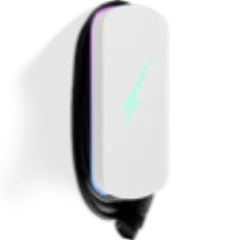
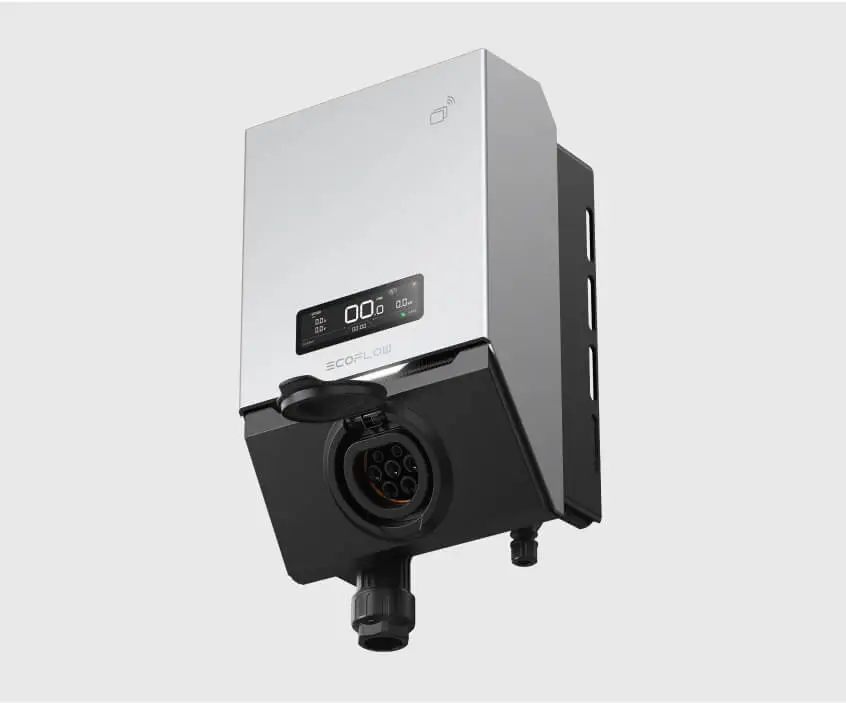
The Proven All-Rounder vs the Ecosystem Newcomer
These two chargers represent very different philosophies. The Hypervolt Home 3 Pro is a UK-designed and manufactured charger that has spent years building a reputation as the do-everything smart charger — solid on tariffs, solid on solar, solid on build quality, solid on support. The EcoFlow PowerPulse 2 is the new kid, arriving from a company best known for portable power stations and home battery systems, bringing three-phase capability, an LCD display, and deep integration with EcoFlow's solar and battery ecosystem at a lower price.
If you already own EcoFlow kit — particularly the PowerOcean home battery — the PowerPulse 2 could be a genuinely exciting addition. If you want a charger with a proven track record, outstanding durability, and the reassurance of UK-based customer support, the Hypervolt is the safer bet. The £145 price difference makes this a fascinating comparison. Let us break it down properly.
In a nutshell:
- Hypervolt Home 3 Pro (£690): The best all-rounder on the UK market — smart tariff support, built-in solar integration, and the toughest build quality of any home charger.
- EcoFlow PowerPulse 2 (£545): A feature-packed newcomer with three-phase support and unmatched integration with EcoFlow's solar and battery ecosystem.
Spec Comparison
| Feature | Hypervolt Home 3 Pro | EcoFlow PowerPulse 2 |
|---|---|---|
| Price (inc. VAT) | £690 | £545 |
| Max Power | 7.4kW (single-phase) | 7kW (single-phase) / 22kW (three-phase) |
| Type | Tethered | Untethered (tethered 5m also available) |
| Cable Length | 5m / 7.5m / 10m options | Untethered (bring your own cable) |
| Smart Tariff Support | Yes — smart tariff integration | Yes — Smart Mode with dynamic tariff optimisation |
| Solar Diversion | Yes — CT clamp included | Yes — Solar Mode (prioritises surplus solar) |
| Connectivity | Wi-Fi + Bluetooth | Wi-Fi + RFID |
| Display | LED status ring | Built-in LCD display |
| OCPP Support | No | Yes — OCPP 1.6-J |
| Warranty | 3 years (extendable to 5 for £100) | 3 years |
| IP Rating | IP66 + IK10 | IP55 (IP54 without cable) |
| OZEV Approved | Yes | Not yet confirmed |
Smart Tariff Integration
Both chargers offer smart tariff optimisation, but they approach it differently. The Hypervolt Home 3 Pro has well-established smart tariff integration that works with popular UK tariffs like Octopus Go (7.5p/kWh between 00:30 and 04:30) and Octopus Intelligent Go (~7p/kWh off-peak). You set your departure time and desired charge level in the app, and the charger schedules around the cheapest rates. According to viablepower.co.uk, smart tariff optimisation is one of the Hypervolt's standout features, and it has had years of real-world refinement.
The EcoFlow PowerPulse 2 offers what it calls Smart Mode, which provides dynamic tariff optimisation and scheduled charging. On paper, this matches the Hypervolt's capability. The question mark is maturity — EcoFlow is newer to the UK EV charging market, and we have less long-term data on how reliably its tariff integration performs across different energy suppliers and tariff structures.
For a driver covering the UK average of 7,400 miles per year in a Tesla Model 3 (~2,114 kWh annually), the difference between charging at a standard 24p/kWh rate and an off-peak 7p/kWh rate is roughly £359 per year. Both chargers can unlock these savings, but the Hypervolt has the more proven track record.
Solar Diversion
Both chargers include solar diversion features, and this is where the comparison gets genuinely interesting. The Hypervolt Home 3 Pro includes a CT clamp in the box — no extra hardware needed — and offers solar integration that diverts surplus generation to your car. As noted by heatable.co.uk, it provides three solar modes (Boost, Eco, and Super Eco) for granular control over how much grid electricity you are willing to mix in. It works well, though it is worth noting that its solar diversion is not quite as sophisticated as the Zappi's dedicated Eco/Eco+ modes.
The EcoFlow PowerPulse 2 has a Solar Mode that prioritises surplus solar energy for EV charging. Where it gets really compelling is if you own EcoFlow's PowerOcean home battery. In that scenario, you can store surplus solar during the day and discharge it to your car in the evening — something the Hypervolt simply cannot do on its own. For a household with a 5kWp solar array generating roughly 4,200 kWh per year, the ability to time-shift that energy via a battery could meaningfully increase the proportion of free solar miles you drive.
However, if you do not have (or plan to buy) EcoFlow battery storage, the Hypervolt's included CT clamp and proven solar modes make it the more straightforward choice.
Build Quality and Design
This is where the Hypervolt Home 3 Pro flexes hardest. Its IP66 plus IK10 rating makes it the toughest home charger on the UK market — IP66 means it is fully sealed against dust and powerful water jets, while IK10 means it can withstand 20 joules of impact (roughly equivalent to a 5kg weight dropped from 40cm). As electriccarguide.co.uk noted in their review, "it's pretty hard to damage." It is available in three colours (UltraWhite, Space Grey, UltraBlack) with interchangeable covers, and the LED status ring adds a premium touch. According to topcharger.co.uk, the polycarbonate and nylon casing is genuinely durable.
The EcoFlow PowerPulse 2 is rated IP55 — adequate for outdoor installation but a clear step down. IP55 protects against low-pressure water jets from any direction, which covers normal UK rain, but it is less reassuring if your charger is exposed to direct weather or in a position where it might take a knock. On the plus side, the PowerPulse 2 has a built-in LCD display showing charging status without needing to open the app, and at roughly 3.5kg it is lighter than the Hypervolt.
Power and Charging Speed
On a standard UK single-phase supply, the Hypervolt delivers 7.4kW versus the EcoFlow's 7kW — a negligible difference in practice. Both will add roughly 25 miles of range per hour to a Tesla Model 3 and fully charge a 60kWh battery overnight in around 8-9 hours.
Where the EcoFlow stands apart is three-phase support. If you are one of the small percentage of UK homes with a three-phase supply, the PowerPulse 2 can deliver up to 22kW, cutting a full charge to around 2.7 hours. The Hypervolt is single-phase only. For the vast majority of UK homeowners this is irrelevant, but for those with three-phase power it is a genuine advantage.
Price and Value
| Hypervolt Home 3 Pro | EcoFlow PowerPulse 2 | |
|---|---|---|
| Unit price | £690 | £545 |
| Typical installation | £400–£600 | £400–£600 |
| Total installed cost | £1,090–£1,290 | £945–£1,145 |
| After OZEV grant (if eligible) | £590–£790 | £445–£645 |
The EcoFlow is £145 cheaper at the unit level, which is meaningful. However, if you opt for the untethered version, you will also need to budget for a Type 2 charging cable (typically £100–£200 for a decent one), which narrows the gap. The tethered 5m version keeps things simpler but offers no cable length choice, whereas the Hypervolt lets you pick 5m, 7.5m, or 10m.
One important caveat: the EcoFlow PowerPulse 2's OZEV approval status is not yet confirmed. If you are an eligible renter or flat owner counting on that £500 grant, verify approval before purchasing. The Hypervolt is fully OZEV approved.
The Hypervolt's warranty can be extended to 5 years for £100 — a worthwhile investment that brings the effective price gap down further. The EcoFlow offers 3 years with no extension option currently available.
Who Should Buy Which?
Buy the Hypervolt Home 3 Pro if:
- You want a proven, well-supported charger with years of real-world reliability data
- Build quality matters — you need IP66 + IK10 toughness for an exposed installation
- You want flexible cable lengths (up to 10m) without buying a separate cable
- You value UK-based customer support with rapid response times
- You want confirmed OZEV grant eligibility
Buy the EcoFlow PowerPulse 2 if:
- You already own or plan to buy EcoFlow solar panels or a PowerOcean home battery
- You have a three-phase supply and want 22kW charging speeds
- You prefer an untethered charger for multi-vehicle flexibility
- You want OCPP 1.6-J compliance for future-proofing or third-party energy management
- Budget is a priority and you want strong smart features for under £550
Our recommendation: For most UK homeowners, the Hypervolt Home 3 Pro remains the smarter buy. It does everything well, it is built like a tank, and it comes from a company with an established UK support network. The £145 premium over the EcoFlow buys you proven reliability, superior weatherproofing, cable length choice, and the peace of mind of a charger that thousands of UK drivers already depend on daily. However, if you are building an EcoFlow energy ecosystem — solar, battery, and now EV charging all managed from one app — the PowerPulse 2 is a genuinely compelling proposition that no other charger can replicate. Just confirm OZEV approval status before you commit.
Read our full Hypervolt Home 3 Pro review or EcoFlow PowerPulse 2 review.
We’ll handle the installation
We’ll match you with vetted UK electricians — up to 3 free quotes, no obligation.