GivEnergy EV Charger vs EcoFlow PowerPulse 2: Battery Ecosystem Battle
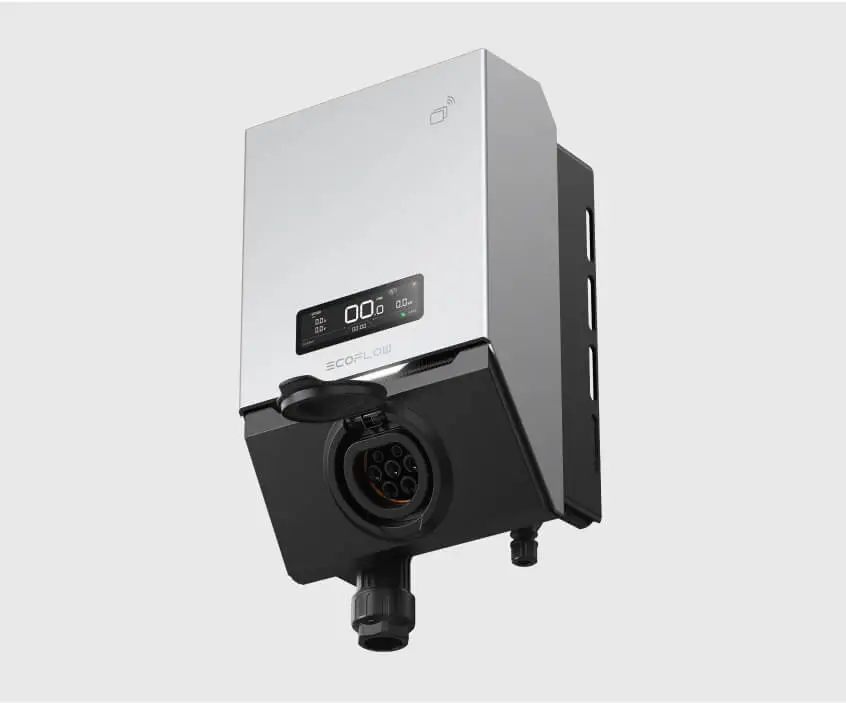
The Battery Ecosystem Battle: Two Chargers Built for Solar and Storage Homes
If you have solar panels on your roof and a home battery in your garage, you are not a typical EV charger buyer. You do not just want a box that pushes 7kW into your car overnight — you want a charger that talks to your entire energy system, prioritises free solar electricity, and can even drain stored battery energy into your Tesla when the sun has long set.
That is exactly the niche these two chargers occupy. The GivEnergy EV Charger and the EcoFlow PowerPulse 2 are both built by companies whose primary expertise is solar inverters and home battery storage, not EV charging. They have each designed chargers that slot neatly into their respective ecosystems — and that is both their greatest strength and their most important limitation.
The question is: which ecosystem charger deserves a spot on your wall?
In a nutshell:
- GivEnergy EV Charger (£478): The cheapest way to charge your EV directly from a GivEnergy home battery — a genuinely unique battery-to-EV feature at a very competitive price.
- EcoFlow PowerPulse 2 (£545): A more feature-rich charger with three-phase support, dynamic tariff optimisation, and deep integration with EcoFlow's PowerOcean battery ecosystem.
Spec Comparison
| Feature | GivEnergy EV Charger | EcoFlow PowerPulse 2 |
|---|---|---|
| Price | £478 | £545 (untethered; tethered also available) |
| Power | 7kW (single-phase only) | 7kW single-phase / 22kW three-phase |
| Cable | Tethered, 5m Type 2 | Untethered (tethered 5m version available) |
| Smart Tariff Support | Limited | Smart Mode with dynamic tariff optimisation |
| Solar Features | Solar divert mode + battery-to-EV | Solar Mode (prioritises surplus solar) |
| Connectivity | Wi-Fi | Wi-Fi, RFID, OCPP 1.6-J |
| Display | None | Built-in LCD status display |
| Warranty | 3 years | 3 years |
| IP Rating | IP65 | IP55 (IP54 without cable) |
| Type | Tethered only | Untethered (tethered option available) |
Solar and Battery Integration: The Real Reason You Are Here
This is the headline comparison, and both chargers approach it differently. The GivEnergy EV Charger offers two solar-related features: a solar divert mode that sends surplus panel generation directly to your car, and — critically — a battery-to-EV mode that lets you charge your Tesla from energy stored in your home battery. That second feature is genuinely rare. Most chargers, including the Zappi, can only divert live solar generation. GivEnergy lets you store cheap overnight electricity or afternoon sunshine in your home battery, then push it into your EV whenever you like. If you already own a GivEnergy battery system, this integration is seamless through the GivEnergy monitoring portal.
The EcoFlow PowerPulse 2 takes a similar ecosystem approach but through the EcoFlow app and PowerOcean battery system. Its Solar Mode prioritises surplus solar energy for EV charging, and the broader EcoFlow platform lets you manage solar, battery, home loads, and EV charging from a single interface. However, the data provided does not confirm an equivalent battery-to-EV feature — the emphasis is on solar surplus diversion and smart scheduling rather than actively discharging a home battery into your car.
For GivEnergy battery owners, the GivEnergy charger's battery-to-EV capability is the killer feature. For EcoFlow PowerOcean owners, the PowerPulse 2 offers tighter whole-system management. Neither charger shines quite as brightly outside its home ecosystem, which is worth remembering if you are still deciding on your battery brand.
Smart Tariff Integration
This is where the EcoFlow PowerPulse 2 pulls ahead convincingly. Its Smart Mode offers dynamic tariff optimisation, automatically scheduling your charging sessions around the cheapest electricity slots. For drivers on tariffs like Octopus Agile (with its variable 30-minute pricing slots) or Octopus Go (7.5p/kWh between 00:30 and 04:30), this kind of automated scheduling can save hundreds of pounds a year. As renewablesexcellence.co.uk notes, smart tariff integration is now one of the most important differentiators between chargers — more so than charging speed, which is effectively identical across 7kW units.
The GivEnergy EV Charger, by contrast, has limited smart tariff integration. It offers scheduled charging, so you can manually set it to start at midnight, but it lacks the deep API-level tariff connections that chargers like the Ohme Home Pro or the PowerPulse 2 provide. If you do not have a home battery and are relying purely on cheap overnight electricity, this is a meaningful gap. As warmzilla.co.uk highlights, smart scheduling that integrates with agile tariffs can drastically reduce running costs — and the GivEnergy charger simply does not compete on this front.
Power and Charging Speed
On a standard UK single-phase supply, both chargers deliver 7kW — roughly 30 miles of range per hour, or about 8.5 hours for a full charge on a typical 60kWh battery. No difference there.
Where the EcoFlow PowerPulse 2 stands apart is its three-phase capability, offering up to 22kW. This is only relevant if your home has a three-phase electricity supply, which fewer than 5% of UK homes do. But if you are one of those lucky few — or you are installing in a commercial setting — the PowerPulse 2 can fully charge a 60kWh battery in roughly 2.7 hours. The GivEnergy charger is locked to 7kW with no three-phase option whatsoever.
For the vast majority of UK Tesla owners, this will not matter. But it is worth noting that the PowerPulse 2 offers future-proofing that the GivEnergy unit simply cannot match.
App, Connectivity, and Build Quality
The EcoFlow app is more feature-rich, with real-time load balancing for multi-EV households, OTA firmware updates, and OCPP 1.6-J compliance — the open protocol standard that allows the charger to work with third-party energy management platforms. A built-in LCD display also means you can check charging status at a glance without reaching for your phone. The PowerPulse 2 also supports both tethered and untethered configurations, giving you flexibility the GivEnergy charger does not offer.
The GivEnergy charger's app is described as basic compared to rivals like Ohme, Tesla, or Hypervolt. It connects via Wi-Fi and integrates with the GivEnergy monitoring portal, which is excellent for whole-home energy management if you are already in that ecosystem — but as a standalone EV charging app, it is limited. RFID access is included on both units, which is useful if your charger is in a shared or accessible location.
On weatherproofing, the GivEnergy charger edges ahead with an IP65 rating (fully protected against water jets from any direction), compared to the PowerPulse 2's IP55 rating. Both will survive British weather comfortably, but the GivEnergy unit is technically more robust for exposed installations. As evenergyhub.com points out, real-world factors like Wi-Fi signal strength to your driveway often matter more than spec-sheet differences.
Price and Value
| Cost Element | GivEnergy EV Charger | EcoFlow PowerPulse 2 |
|---|---|---|
| Unit price | £478 | £545 |
| Typical installation | £400–£600 | £400–£600 |
| Total installed cost | £878–£1,078 | £945–£1,145 |
| After OZEV grant (if eligible) | £378–£578 | £445–£645 |
The GivEnergy charger is £67 cheaper at the unit level, which is a meaningful saving on a budget purchase. However, the EcoFlow PowerPulse 2 packs in considerably more: dynamic tariff optimisation, three-phase support, load balancing, an LCD display, OCPP compliance, and the choice of tethered or untethered configurations. For the extra outlay, you are getting a more versatile charger.
Note that the EcoFlow's OZEV approval status is not yet confirmed — if you are a renter or flat owner eligible for the £500 grant, verify this before purchasing. The GivEnergy charger is OZEV approved.
Who Should Buy Which?
Buy the GivEnergy EV Charger if:
- You already own a GivEnergy home battery and want seamless battery-to-EV charging
- You want the cheapest ecosystem charger with solar divert capability
- You prefer a tethered charger with the cable always ready to go
- You value a higher IP65 weatherproofing rating for an exposed installation
- You need confirmed OZEV grant eligibility
Buy the EcoFlow PowerPulse 2 if:
- You own or plan to buy EcoFlow PowerOcean battery and solar products
- You want dynamic smart tariff optimisation for Octopus Agile, Go, or similar
- You have (or may upgrade to) a three-phase supply and want 22kW charging
- You want the flexibility of tethered or untethered configurations
- You need real-time load balancing for a multi-EV household
Our recommendation: For the general buyer without an existing battery ecosystem, the EcoFlow PowerPulse 2 is the stronger charger. Its smart tariff integration, three-phase option, and broader feature set justify the modest price premium. However, if you already have a GivEnergy home battery, the GivEnergy EV Charger's unique battery-to-EV charging feature is a genuine game-changer that no other charger at this price can replicate. That single feature — charging your Tesla from stored solar energy at 2am — makes it worth every penny for the right household. Outside of that specific scenario, the PowerPulse 2 is the more capable and future-proof choice, though its relative newness to the UK market means you are taking a small bet on long-term support and installer availability.
Read our full GivEnergy EV Charger review or EcoFlow PowerPulse 2 review.
We’ll handle the installation
We’ll match you with vetted UK electricians — up to 3 free quotes, no obligation.