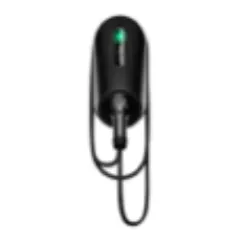
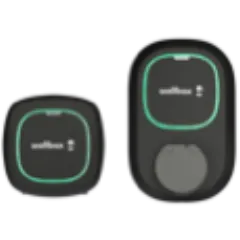
myenergi Zappi GLO vs Wallbox Pulsar Max

myenergi Zappi GLO
myenergi Zappi GLO
£779
VS
Wallbox Pulsar Max
Wallbox Pulsar Max
£699

The myenergi Zappi GLO wins on higher rated, smart tariff integration, while the Wallbox Pulsar Max excels at more affordable, longer warranty.

Quick Stats

myenergi Zappi GLO
Wallbox Pulsar Max
Price
£779
£699
Power
7kW / 22kW
7.4kW / 22kW
Warranty
3 years
5 years
Rating
4.6/5
4.5/5
Install Cost
£400–600
£400–600
Type
Tethered (Type 2)
Tethered (Type 2)

Full Specs Comparison

Specificationmyenergi Zappi GLOWallbox Pulsar Max
Max Power Output7kW (single-phase) / 22kW (three-phase)7.4kW (single-phase) / 22kW (three-phase)
Cable Length6.5 metres (tethered version)5 metres
ConnectorType 2 (tethered or untethered)Type 2 (tethered or untethered)
ConnectivityWi-Fi, BluetoothBluetooth, Wi-Fi
Dimensions439mm × 282mm × 130mm198mm × 201mm × 99mm
Weight~5.4 kg~4.2 kg
IP RatingIP65 (fully weatherproof)IP54 + IK10 (weatherproof + impact-resistant)
CertificationOLEV/OZEV approvedOLEV/OZEV approved

Price & Value

The Wallbox Pulsar Max is £80 cheaper at £699 compared to the myenergi Zappi GLO at £779.

When you factor in professional installation (typically £400–£600), the total installed cost for the myenergi Zappi GLO is approximately £1179–£1379, while the Wallbox Pulsar Max comes in at around £1099–£1299. Fully installed, the Wallbox Pulsar Max remains the more affordable option.

If you're eligible for the OZEV grant (available to renters and flat owners), you can claim £350 off the installation cost. That would bring the effective unit-plus-install price down to roughly £829–£1029 for the myenergi Zappi GLO and £749–£949 for the Wallbox Pulsar Max. Both chargers are OZEV-approved, so eligibility depends on your living situation rather than the charger itself.

Looking at overall value, the Wallbox Pulsar Max offers a compelling combination of price and features at £699. The myenergi Zappi GLO at £779 may still be the better buy if its specific feature set — such as solar diverting (eco / eco+ modes) — is important for your setup. The best value depends on which features you'll actually use day-to-day.

Power & Charging Speed

Both the myenergi Zappi GLO (7kW / 22kW) and Wallbox Pulsar Max (7.4kW / 22kW) support three-phase charging, offering up to 22kW on a three-phase supply. On a standard UK single-phase supply, both deliver around 7kW — more than enough for overnight charging.

On a standard UK single-phase supply, both will charge a Tesla Model 3 Long Range (75kWh battery) from 20% to 80% in approximately 5–6 hours overnight. Even a Tesla Model Y with its larger battery completes a typical daily top-up well within an overnight window. For the vast majority of UK Tesla owners, single-phase 7kW charging is more than sufficient — you'll wake up to a full battery every morning.

Cable length is an often-overlooked consideration. The myenergi Zappi GLO comes with a 6.5 metres (tethered version) cable, while the Wallbox Pulsar Max has a 5 metres cable. A longer cable gives you more flexibility for driveway positioning — particularly useful if your charger is mounted on a side wall but your Tesla's charge port is on the rear left. Measure your likely cable run before buying to ensure the cable reaches comfortably without being fully stretched.

For most Tesla owners who plug in when they get home, both chargers provide more than enough power for a full overnight charge. The real-world difference between 7kW and 7.4kW is negligible — roughly 20 minutes over a full charge cycle. Unless you have a three-phase supply and regularly need rapid top-ups during the day, charging speed should not be the deciding factor between these two chargers.

Smart Features

The myenergi Zappi GLO offers: Solar diverting (Eco / Eco+ modes), myenergi app, Smart tariff support, RFID access (126 users), myenergi ecosystem (eddi, libbi), Wi-Fi & Bluetooth. The Wallbox Pulsar Max offers: myWallbox app, Scheduled charging, Power Boost (dynamic load balancing), Bluetooth & Wi-Fi, Eco-Smart (solar integration), Voice control (Alexa/Google).

Breaking these down by category: for connectivity, the myenergi Zappi GLO uses Wi-Fi & Bluetooth, while the Wallbox Pulsar Max uses Bluetooth & Wi-Fi. For energy management, the myenergi Zappi GLO provides basic monitoring, compared to the Wallbox Pulsar Max's Power Boost (dynamic load balancing). Solar and scheduling features are covered in the dedicated sections below.

The most meaningful differentiators: the myenergi Zappi GLO uniquely offers Solar diverting (Eco / Eco+ modes), myenergi app, Smart tariff support, RFID access (126 users), myenergi ecosystem (eddi, libbi), Wi-Fi & Bluetooth, while the Wallbox Pulsar Max exclusively provides myWallbox app, Scheduled charging, Power Boost (dynamic load balancing), Bluetooth & Wi-Fi, Eco-Smart (solar integration), Voice control (Alexa/Google). These unique features often determine which charger is the better fit — if a feature on one charger's exclusive list is a must-have for you, that should heavily influence your decision.

The app experience matters as much as the feature list — you'll use it daily. The myenergi app has improved significantly but is still considered less polished than competitors like Tesla and Ohme. The Wallbox app is feature-rich with a global user base, though UK-specific features like smart tariffs are more limited. Both apps are available on iOS and Android, but user reviews suggest the day-to-day experience can vary significantly between brands.

Solar Compatibility

Both the myenergi Zappi GLO and Wallbox Pulsar Max support solar integration, allowing you to charge your Tesla using surplus solar energy rather than drawing from the grid. The implementation and sophistication of solar diversion differs between the two, which can significantly affect how much free charging you actually get.

The myenergi Zappi GLO uses a CT clamp on your meter tails to measure real-time surplus generation, enabling its Eco and Eco+ modes for partial or 100% solar charging. The Wallbox Pulsar Max uses its Eco-Smart feature with a power meter sensor to detect surplus solar and adjust charging power in real time. The key difference is how precisely each charger tracks surplus generation — CT clamp-based systems typically offer more responsive diversion than those relying on smart meter data, which can have a slight delay.

For home battery pairing, the myenergi Zappi GLO pairs with the myenergi libbi battery for storing surplus solar during the day and using it for overnight EV charging. The Wallbox Pulsar Max can work alongside a home battery system, though the integration may require additional configuration. A home battery lets you store daytime solar surplus and charge your EV overnight at zero cost — effectively eliminating the limitation of only being able to solar-charge while the sun is shining.

A typical 4kW solar array in the UK can provide approximately 1,400–1,700 kWh of free EV charging per year, worth £390–£475 at standard electricity rates (around 28p/kWh). For context, the average UK Tesla owner drives around 8,000 miles per year, requiring roughly 2,400 kWh — so solar could cover 60–70% of your annual charging needs. Over the charger's lifetime, solar diversion can save thousands of pounds and significantly reduce your carbon footprint.

Smart Tariff Support

The myenergi Zappi GLO integrates with smart energy tariffs, automatically charging at the cheapest off-peak rates. The Wallbox Pulsar Max doesn't have built-in smart tariff integration — you'd need to set manual charging schedules or rely on your car's built-in timer. If you're on (or considering) a smart tariff, this gives the myenergi Zappi GLO a meaningful advantage in running costs.

The myenergi Zappi GLO supports Octopus Intelligent Go (~7p/kWh) and Octopus Go (~8.5p/kWh) through its Intelligent Octopus integration, as well as other time-of-use tariffs. The most popular UK EV tariffs include Octopus Intelligent Go (~7p/kWh), Octopus Go (~8.5p/kWh), OVO Charge Anytime (~14p/kWh), and British Gas EV Power+ (~7.9p/kWh). Check compatibility with your specific energy provider before making a decision.

The myenergi Zappi GLO communicates with Octopus via the Intelligent Octopus integration, allowing the energy provider to dynamically schedule sessions within off-peak windows. Without this integration, the Wallbox Pulsar Max can still charge off-peak using manual schedules or your Tesla's built-in timer — but you lose the automatic optimisation and any extended off-peak windows that provider integration unlocks.

The financial impact is substantial. Switching from a standard variable tariff (~28p/kWh) to Octopus Intelligent Go (~7p/kWh) saves approximately £400–£600 per year for a typical Tesla owner driving 8,000–10,000 miles annually. Even moving to Octopus Go (~8.5p/kWh) or British Gas EV Power+ (~7.9p/kWh) delivers savings of £350–£500 per year. A charger with smart tariff integration ensures you capture these savings automatically, every single night, without having to remember to set timers.

Warranty & Build Quality

The myenergi Zappi GLO comes with a 3 years warranty, while the Wallbox Pulsar Max offers 5 years. The Wallbox Pulsar Max offers 2 years more coverage, giving you added peace of mind. Both are OZEV-approved and suitable for outdoor installation — a longer warranty provides more peace of mind for a product that lives outside year-round and is exposed to British weather.

For weatherproofing, the myenergi Zappi GLO is rated IP65 (fully weatherproof) (jet-proof — protected against water jets from any direction), while the Wallbox Pulsar Max is rated IP54 + IK10 (weatherproof + impact-resistant) (splash-proof — protected against splashing water from any direction). A higher IP rating means better protection against rain, hose water, and dust. In practical terms, any rating of IP54 or above is suitable for a UK outdoor installation, but a higher rating provides extra confidence in extreme weather — particularly relevant if your charger is exposed rather than sheltered under a car port.

Build quality is reflected in the materials and construction. The myenergi Zappi GLO weighs ~5.4 kg with dimensions of 439mm × 282mm × 130mm, while the Wallbox Pulsar Max weighs ~4.2 kg with dimensions of 198mm × 201mm × 99mm. A heavier charger typically indicates more robust construction, though modern chargers use high-quality polycarbonate housings that are both lightweight and impact-resistant. If your charger is in a location where it might get bumped by car doors or footballs, look for IK10 impact resistance in the specs — this is the highest rating and means it can withstand 20 joules of impact (equivalent to a 5kg weight dropped from 40cm).

For extended protection: the myenergi Zappi GLO is backed by myenergi's UK-based support team, and as a British manufacturer, parts availability and service are straightforward. The Wallbox Pulsar Max comes with a standard 5 years warranty from Wallbox. When comparing warranties, also check what's covered — most warranties cover manufacturing defects and component failure, but may not cover damage from incorrect installation or extreme weather events. Having your charger installed by an OZEV-approved installer typically ensures the warranty remains valid.

Which Should You Buy?

myenergi Zappi GLO
myenergi Zappi GLO

Buy the myenergi Zappi GLO if overall quality and user satisfaction matter most, or you're on a smart energy tariff like Octopus Intelligent Go, or you want the best for solar.

Wallbox Pulsar Max
Wallbox Pulsar Max

Buy the Wallbox Pulsar Max if you want the best value for money, or long-term peace of mind is a priority, or most compact.

Our Verdicts

If you have solar panels, buy the Zappi GLO. Full stop. No other charger matches its solar diversion capabilities, and the myenergi ecosystem lets you build a complete home energy system over time. If you don't have solar panels, this charger is overpriced — the Ohme Home Pro or Tesla Wall Connector are better choices for grid-only charging.

The Wallbox Pulsar Max makes sense if space is tight or you need three-phase charging. It's compact, well-built, and the 5-year warranty shows confidence from Wallbox. However, at £699 the Tesla Wall Connector (£475) offers better value for most Tesla owners, and the Ohme beats it on smart tariff features. Choose the Pulsar Max for its size, three-phase capability, or if you want voice control.