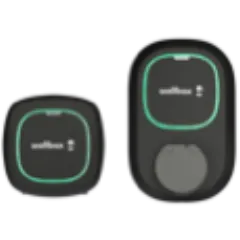
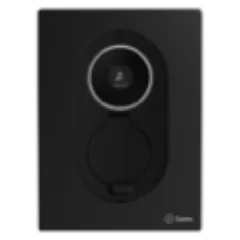
A £211 Gap: Is the Zaptec Go 2's Future Tech Worth It Over the Wallbox Pulsar Max?
These two chargers match on paper — both deliver 7.4kW on single-phase, both scale to 22kW on three-phase, and both carry a reassuring 5-year warranty. But the Wallbox Pulsar Max costs £496 while the Zaptec Go 2 asks £707. That £211 difference buys you a bet on the future of vehicle-to-grid technology. Whether that bet is worth placing right now is the real question.
In a nutshell:
- Wallbox Pulsar Max: Compact, tethered, well-priced, and does everything most Tesla owners need today
- Zaptec Go 2: V2G-ready with free 4G and a MID-approved meter — built for what's coming, not just what's here
What Does V2G-Ready Actually Mean for Your Tesla?
The Zaptec Go 2 is marketed as the UK's first V2G-ready AC home charger, and that sounds exciting. The idea — your car feeds energy back to the grid during peak hours, earning you money — is genuinely transformative. But here's the reality check: V2G requires your car to support it too, and Tesla hasn't enabled bidirectional AC charging on any current UK model. Even when the technology matures, regulatory and tariff frameworks are still being hammered out.
You're paying a premium now for hardware that might become useful in two, three, maybe five years. If you're the type who keeps a charger for a decade and wants to be ready the moment V2G arrives, that's a legitimate reason to spend more. But if you'd rather save £211 today and upgrade when V2G is actually operational, the Pulsar Max makes far more financial sense.
Tethered vs Untethered: More Than a Cable Question
The Pulsar Max comes tethered with a 5-metre Type 2 cable permanently attached. The Zaptec Go 2 is untethered only — no tethered option exists. For most Tesla owners charging at home, tethered is simply more convenient. You pull up, grab the cable, plug in. No rummaging in the boot, no coiling a cable back up afterwards.
Untethered has its advantages if multiple EVs with different connector needs use the same charger, or if you prefer a cleaner wall-mounted look. But Tesla uses Type 2 across its UK range, so connector flexibility isn't a factor here. Unless you have a specific reason to want untethered, the Pulsar Max's tethered setup wins on daily usability.
Connectivity and Smart Features: Where the Zaptec Claws Back
One area where the Zaptec Go 2 clearly leads is connectivity. It includes subscription-free 4G alongside Wi-Fi and Bluetooth. If your charger is in a garage or on a wall far from your router, that 4G fallback is valuable — no need to buy a Wi-Fi extender or hope Bluetooth range holds up. The Pulsar Max offers only Wi-Fi and Bluetooth, which is fine if your signal is strong at the charger location but a headache if it isn't.
The Zaptec also packs a MID-approved energy meter, useful if you ever need certified energy readings — for claiming business mileage, for example, or for future smart tariff integrations. And its OCPP 1.6J compliance means it can talk to third-party energy management systems, giving you more flexibility down the line.
The Pulsar Max counters with voice control via Alexa and Google Assistant, Power Boost dynamic load balancing, and Eco-Smart solar integration (though the latter needs a separate Wallbox Power Meter at extra cost). Neither charger offers native smart tariff integration like the Ohme — you'll be relying on your car's built-in scheduling or manual timer settings with either unit.
Does the Wallbox Pulsar Max's Size Actually Matter?
At 198mm × 201mm × 99mm and 4.2 kg, the Pulsar Max is one of the most compact chargers on the market. The Zaptec Go 2 is lighter at 3.2 kg but slightly larger in footprint at 240mm × 180mm × 106mm. In practice, both are small enough that they won't dominate your wall. The Pulsar Max also boasts IK10 impact resistance — the highest rating — which matters if your charger sits on a driveway wall where it might catch a car door or a wayward football. The Zaptec's IP54 rating handles weather fine but doesn't match that impact toughness.
If aesthetics matter, the Pulsar Max comes in six colours. The Zaptec offers clean Scandinavian minimalism. Both look good; it's a matter of taste.
Which Should You Buy?
Buy the Wallbox Pulsar Max if:
- You want the best value — £496 is hard to argue with for a 5-year warranty charger
- You prefer tethered convenience for daily plug-in-and-go charging
- Your Wi-Fi reaches your charger location without issues
- You'd rather save money now and upgrade when V2G actually works
Buy the Zaptec Go 2 if:
- V2G readiness matters to you and you plan to keep this charger long-term
- You need 4G connectivity because your Wi-Fi doesn't reach the charger
- You want a MID-approved meter for certified energy tracking
- You prefer an untethered socket for multi-vehicle flexibility
For most Tesla owners buying a home charger today, the Wallbox Pulsar Max is the smarter purchase. It costs significantly less, the tethered cable adds genuine daily convenience, and it covers every practical charging need. The Zaptec Go 2 is a solid piece of hardware aimed at early adopters willing to pay for tomorrow's features — but tomorrow isn't here yet. If you're also weighing other options, our best Tesla home charger guide covers the full field.