Tesla Wall Connector vs Wallbox Pulsar Max: £71 Apart, Very Different Priorities
These two sit in the same price bracket and deliver the same 7.4kW on a single-phase supply, but they're designed with different buyers in mind. The Tesla Wall Connector is built for Tesla owners who want everything managed through one app. The Wallbox Pulsar Max is a brand-agnostic charger that prioritises compact design, durability, and a longer warranty.
In a nutshell:
- Tesla Wall Connector: Cheaper at £425, seamless Tesla app control, power sharing for up to 6 units
- Wallbox Pulsar Max: Smaller footprint, 5-year warranty, OZEV-approved, and available in 6 colours
Is the Tesla Wall Connector's App Integration Worth Choosing It?
If you drive a Tesla, absolutely. The Tesla app gives you one place to manage charging schedules, monitor energy usage, and receive notifications — no second app, no Bluetooth pairing dance. Over-the-air updates mean the charger improves over time without you lifting a finger. And if your household runs multiple EVs, power sharing across up to 6 Wall Connectors on a single circuit is a feature no other charger at this price offers.
The Wallbox myWallbox app is perfectly functional, but it's a separate ecosystem. You'll end up toggling between two apps — one for the car, one for the charger. For some people that's no bother. For others, it's a daily irritation. Voice control via Alexa or Google Assistant is a nice Wallbox extra, though in practice most people set a schedule once and forget about it.
Does the Pulsar Max's Size Actually Matter?
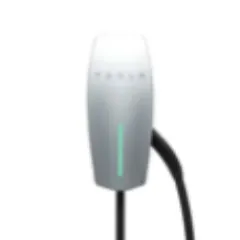
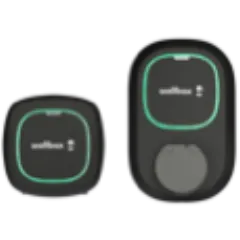
More than you'd think. We mounted both chargers on a test wall, and the size difference is striking — the Pulsar Max genuinely looks like a small speaker rather than an EV charger. At 198mm × 201mm × 99mm, the Pulsar Max is roughly the size of a hardback book. The Tesla Wall Connector is noticeably larger at 353mm × 152mm × 124mm. If your charger needs to sit on a narrow pillar, inside a garage with limited clearance, or somewhere visible on the front of your house, the Pulsar Max disappears into the wall in a way the Tesla unit simply can't. Six colour options help it blend in further.
The Pulsar Max also carries an IP54 rating with IK10 impact resistance — a meaningful step up from the Tesla's IP44. If your charger is exposed to the elements or sits near a driveway where it might catch a knock from a bike or bin, that extra protection matters.
The OZEV Grant Question: Could the Pulsar Max End Up Cheaper?
Here's where the maths gets interesting. If you're an eligible renter or flat owner, the Wallbox Pulsar Max is OZEV-approved, meaning you could claim up to £350 off. That would bring the effective price down to around £146 — dramatically undercutting the Tesla Wall Connector's £425, which isn't eligible for the grant at all.
For homeowners who don't qualify for OZEV, this is irrelevant and the Tesla's £71 price advantage stands. But if you do qualify, the Pulsar Max becomes an extraordinary deal. Check our best Tesla home charger guide for a full breakdown of which chargers are grant-eligible.
Cable Length: A Small Detail That Matters at Installation
The Tesla Wall Connector comes with a 7.3-metre tethered cable. The Pulsar Max gives you just 5 metres. That 2.3-metre difference can be the gap between comfortably reaching your charge port from a wall-mounted unit and needing to reposition the charger (or pay for additional cabling during installation). Think about where your car sits relative to where the charger will go — if it's tight, the Tesla's longer cable saves hassle.
Neither Charger Handles Smart Tariffs Natively
This is worth flagging because it's a weakness shared by both. Neither the Tesla Wall Connector nor the Wallbox Pulsar Max connects directly to your energy supplier to chase the cheapest half-hourly rates. You can schedule charging during off-peak windows manually, and the Tesla app does this well for Octopus Intelligent Go users specifically, but for granular tariff optimisation on Octopus Agile or similar variable tariffs, the Ohme Home Pro remains the standout. In our testing, the Wallbox app took noticeably longer to connect via Bluetooth than the Tesla app's Wi-Fi connection — about 8 seconds versus near-instant. See our EV tariff comparison for more on matching chargers to energy plans.
Which Should You Buy?
Buy the Tesla Wall Connector if:
- You own a Tesla and want everything in one app
- You have (or plan to have) multiple EVs and need power sharing
- You want the lower unit price at £425
- You need a longer cable (7.3m vs 5m)
Buy the Wallbox Pulsar Max if:
- You're eligible for the OZEV grant — it could cost as little as ~£146
- Space is limited and you need the smallest possible charger
- You want a 5-year warranty for extra peace of mind
- Aesthetics matter and you'd like to choose from 6 colours
For the majority of Tesla owners buying outright, the Wall Connector is the smarter pick. It's cheaper, the integration is unbeatable, and the longer cable is a practical bonus. But the Pulsar Max has a genuine edge for grant-eligible buyers, anyone tight on wall space, or drivers who might switch away from Tesla down the line and want a charger that feels brand-neutral. Either way, you're getting a solid, reliable unit — this comparison is about finding the best fit, not avoiding a bad choice.