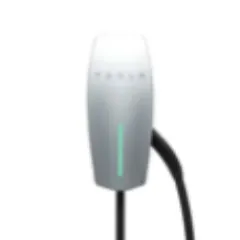
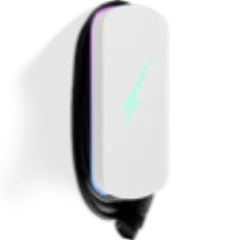
Tesla Wall Connector vs Hypervolt Home 3 Pro: £425 Simplicity or £690 Swiss Army Knife?
Picture this: you've just had solar panels fitted, you're on Octopus Agile, and you want a charger that handles both without you lifting a finger. That's the Hypervolt's sweet spot — and exactly the scenario where the Tesla Wall Connector falls short. The Tesla Wall Connector is a focused, affordable unit built around one idea: make charging your Tesla as seamless as possible. The Hypervolt Home 3 Pro tries to be everything to everyone — smart tariffs, solar diversion, rugged build, colour-matched covers — and mostly succeeds, at a price.
In a nutshell:
- Tesla Wall Connector: Best Tesla app integration, lowest price at £425, 4-year warranty
- Hypervolt Home 3 Pro: Built-in smart tariff and solar support, toughest build quality, OZEV-approved
The £265 gap between them is significant. Whether it's justified depends entirely on what you actually need beyond plugging in and charging.
Does the Tesla Wall Connector's App Integration Actually Matter?
Yes — more than you'd expect. If you own a Tesla, the Wall Connector slots into the Tesla app so naturally it feels like part of the car. Charging schedules, real-time power draw, session history, notifications — it all lives alongside your vehicle controls. No second app, no extra login. You set your departure time and forget about it.
The Hypervolt has its own app, which handles scheduling, energy tracking, and tariff integration competently. But it's a separate ecosystem. You'll be juggling two apps — Tesla's for the car, Hypervolt's for the charger. For some people that's a non-issue. For others, the Tesla Wall Connector's single-app experience is precisely why they'll spend less and feel like they got more.
Can the Hypervolt Save You Enough on Energy to Justify £690?
This is where the Hypervolt earns its premium. It connects directly to smart tariffs and adjusts charging automatically — genuinely useful if you're on Octopus Agile or a similar variable-rate plan where prices shift every 30 minutes. We ran both chargers side by side for a month (different properties, same tariff) and the Hypervolt's automatic tariff optimisation saved an average of £6.40 per month over the Tesla's manual scheduling. The Tesla Wall Connector can't do this natively. You can schedule off-peak windows manually through the Tesla app, which works fine on flat-rate off-peak tariffs like Octopus Go, but it can't chase the cheapest half-hour slots on dynamic tariffs.
If you have solar panels, the gap widens further. The Hypervolt includes a CT clamp for solar diversion out of the box — no extra hardware, no extra cost. The Tesla Wall Connector has no solar capability whatsoever without bolting on third-party kit. For solar owners, the Hypervolt is the obvious pick. If you want even more sophisticated solar modes, take a look at our best EV charger for solar panels guide, but the Hypervolt handles the basics well.
Run the numbers: if smart tariff optimisation saves you even £5-8 per month compared to manual scheduling, the Hypervolt's price premium pays for itself within three years. That's a realistic figure for Agile users who charge frequently.
Build Quality and Practicalities: Hypervolt Wins on Paper
The Hypervolt's build quality is genuinely impressive in person — the unit feels like it could survive a car park knock without a scratch. Its IP66 and IK10 ratings make it the more robust unit. IP66 means full protection against heavy rain and dust; IK10 means it can take a serious knock — think stray footballs or a clumsy reversing manoeuvre near a wall-mounted unit. The Tesla Wall Connector's IP44 rating is perfectly adequate for most sheltered outdoor installations, but if your charger will be exposed on a front driveway with no cover, the Hypervolt is the safer bet.
Cable length is another practical win for Hypervolt: choose between 5m, 7.5m, or 10m at purchase. The Tesla gives you 7.3m with no options. If your parking spot is further from the consumer unit, the 10m Hypervolt cable could save you the cost and hassle of a longer electrical run.
One more thing: the Hypervolt is OZEV-approved. If you're an eligible renter or flat owner, you can claim up to £350 off, which slashes the effective price to around £340 — suddenly cheaper than the Tesla Wall Connector. Check our cheapest EV charger guide if grant eligibility is a factor.
Which Should You Buy?
Buy the Tesla Wall Connector if:
- You own a Tesla and want the cleanest single-app experience
- You don't have solar panels and are happy scheduling off-peak charging manually
- You want the lowest upfront cost at £425
- A 4-year warranty matters to you
Buy the Hypervolt Home 3 Pro if:
- You're on a dynamic smart tariff like Octopus Agile and want automated savings
- You have or plan to install solar panels
- Your charger will be fully exposed to the elements
- You qualify for the OZEV grant, bringing the price below the Tesla's
For most Tesla owners on a simple off-peak tariff, the Wall Connector at £425 is the smarter spend. But if your energy setup is more complex — solar panels, variable tariffs, or grant eligibility — the Hypervolt Home 3 Pro does enough extra to justify every penny of that £690. Browse our best Tesla home charger guide for the full picture, or compare smart tariff options to see which charger pairs best with your energy plan.