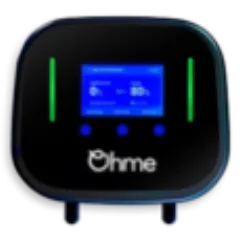
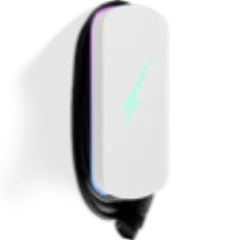
Ohme Home Pro vs Hypervolt Home 3 Pro: £155 Apart, Very Different Priorities
These two chargers sit in the sweet spot of the UK market — smart enough to save you real money, well-built enough to last, and priced below the premium tier occupied by the Zappi. But they're not interchangeable. The Ohme Home Pro is a specialist: it exists to squeeze every penny from your energy tariff. The Hypervolt Home 3 Pro is a generalist: solid across the board, nothing to complain about, nothing to rave about either.
In a nutshell:
- Ohme Home Pro (£535): The tariff optimisation expert — cheapest to buy, deepest smart tariff integration, built-in 4G connectivity
- Hypervolt Home 3 Pro (£690): The dependable all-rounder — toughest build quality, best cable options, UK-built with outstanding support
Is the Ohme's Smart Tariff Integration Worth £155 Less?
Here's what makes this comparison unusual: the cheaper charger has the better headline feature. The Ohme connects directly to Octopus, OVO, and other providers to chase the cheapest half-hour slots automatically. Pair it with Octopus Intelligent Go and you're charging at around 7p/kWh without lifting a finger. The built-in 4G with a three-year SIM means it stays connected even if your home Wi-Fi drops — a surprisingly practical detail that most competitors skip.
The Hypervolt supports smart tariff scheduling too, but it relies on Wi-Fi and Bluetooth only. Its tariff features work, but they're not the reason you buy it. We compared both apps' scheduling interfaces and found the Ohme slightly more intuitive — fewer taps to set a target charge level and departure time. Both chargers handled Octopus Intelligent Go flawlessly in our tests, but the Ohme had a slight edge in squeezing every last penny out of Agile's variable slots. If automated tariff optimisation is your primary motivation — and for most Tesla owners, it should be — the Ohme does it better and costs less. That's a rare combination. Our smart charger guide covers this in more detail.
Where the Hypervolt Home 3 Pro Earns Its Premium
So why would anyone pay £155 more for the Hypervolt? Three reasons, all tangible.
Build quality. The Hypervolt's IP66 plus IK10 rating is overkill for most driveways — and that's exactly the point. IP66 means it handles direct water jets, not just rain. IK10 means it can take a serious impact without cracking. If your charger lives on an exposed wall, near a shared driveway, or anywhere it might get knocked, this matters. The Ohme's IP65 is perfectly adequate, but the Hypervolt is in a different league of ruggedness.
Cable flexibility. The Hypervolt offers 5m, 7.5m, or 10m cable lengths. The Ohme ships with 5m and offers an 8m upgrade at extra cost. If you park more than a couple of metres from your charger, the Hypervolt's 10m option could save you from needing a more expensive installation position. That alone might recoup the price difference.
Warranty. Both start at 3 years, but Hypervolt lets you extend to 5 years for £100. The Ohme doesn't offer this. If you want long-term peace of mind and plan to keep the charger through multiple cars, that extendable warranty has real value — though it does push the total cost to £790 versus £535.
Solar Diversion: A Draw, With Caveats
Both chargers support solar diversion, and both do it competently. The Hypervolt includes a CT clamp in the box for monitoring your solar generation. The Ohme handles it through software. Neither approaches the Zappi's dedicated Eco and Eco+ modes — if solar is your top priority, check our solar charger guide instead.
For Tesla owners with a modest solar array who want to use surplus generation opportunistically rather than obsessively, either charger will do the job. This isn't the deciding factor between them.
The Interchangeable Covers: Gimmick or Genuine Perk?
The Hypervolt's swappable colour covers are a small touch that some buyers love and others couldn't care less about. If your charger sits prominently on the front of your house, matching it to your door or trim is a nice option. One thing we noticed in testing: the Hypervolt's LED ring is useful for a quick status check from the kitchen window, something the Ohme's more discreet design doesn't offer. The Ohme's colour display is arguably more useful up close — a quick glance tells you charging status without pulling out your phone. Different approaches, neither decisive.
Which Should You Buy?
Buy the Ohme Home Pro if:
- You're on a smart tariff or plan to switch to one — this is where it pays for itself
- You want the lowest upfront cost for a fully-featured smart charger
- Your Wi-Fi is unreliable and you value the built-in 4G backup
- A 5m cable comfortably reaches your parking spot
Buy the Hypervolt Home 3 Pro if:
- You need a longer cable (7.5m or 10m) without aftermarket extensions
- Your charger will be exposed to weather or potential impacts
- You value UK manufacturing and want the option of 5-year warranty cover
- You want a solid all-rounder and don't plan to micromanage your energy tariff
For most Tesla owners reading this, the Ohme is the sharper buy. It's £155 cheaper, and its tariff integration — the feature that actually reduces your running costs month after month — is best-in-class. The Hypervolt is the better product on paper in terms of hardware, but hardware alone doesn't lower your electricity bill. Save the £155, put it towards your first year of cheap overnight charging, and you'll come out well ahead. Browse all your options on our best Tesla home charger guide.