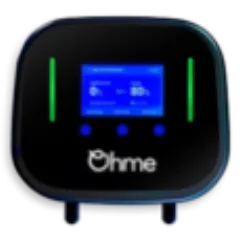
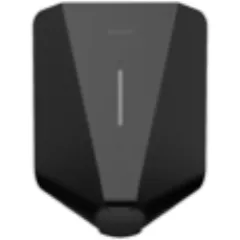
Ohme Home Pro vs Easee One: Start With Who Should NOT Buy Each
Before we compare specs, let's save some of you the trouble of reading further.
Don't buy the Ohme Home Pro if: you have patchy Wi-Fi and no plans to fix it (the 4G SIM lasts only three years), you're not on a smart tariff and don't intend to switch to one, or you want the absolute lowest upfront price.
Don't buy the Easee One if: smart tariff savings are your priority, you want the most sophisticated charging algorithm, or you need a charger that talks directly to your energy provider to unlock special EV rates.
Still here? Then the details matter. Both chargers deliver identical power — 7.4kW on single-phase — and carry the same 3-year warranty. On paper, they look like close rivals. In practice, they're designed for completely different buyers.
The Ohme Home Pro is a smart tariff machine. It talks directly to your energy provider and hunts for the cheapest electricity, automatically. The Easee One couldn't care less about your tariff. It's the lightest, cheapest charger you can buy, with a lifetime 4G eSIM and an installation so simple your electrician might think they've missed a step.
In a nutshell:
- Ohme Home Pro (£535): The money-saver — automates smart tariff charging to cut your running costs dramatically
- Easee One (£405): The minimalist — lowest upfront cost, lightest unit, tidiest wall mount
Is the Ohme's Smart Tariff Integration Worth £130 More?
This is the entire decision, really. If you're on Octopus Intelligent Go, Octopus Agile, OVO, or any other variable-rate tariff, the Ohme connects directly and schedules charging around the cheapest slots — no input from you required. On Intelligent Go, that means charging at roughly 7p/kWh. On Agile, it gets even cleverer, picking the cheapest 30-minute windows overnight.
The Easee One supports basic scheduled charging, so you can tell it to run between midnight and 5am. That works fine on flat off-peak tariffs like Octopus Go. But it can't react to half-hourly price changes on Agile, and it doesn't integrate with your provider to unlock special EV rates. We used the Ohme for three months on Octopus Intelligent Go and it saved roughly £14/month compared to manual scheduling — that's real money, not theoretical. If you're charging a Tesla Model Y with a 75kWh battery, the difference between 7p/kWh (automated smart tariff) and a standard rate of 24p/kWh is roughly £12 per full charge. Over a year, that adds up fast — and the Ohme's £130 premium disappears within a few months. Check our EV tariff comparison to see what you'd save on your specific plan.
Tethered vs Untethered: Does It Actually Matter?
The Ohme comes with a 5-metre cable permanently attached. The Easee has a clean Type 2 socket — you bring your own cable. For Tesla owners, this is barely an issue since every Tesla ships with a Type 2 cable. But there's a practical difference worth considering.
A tethered charger means you grab the cable, plug in, and walk away. No boot rummaging, no coiling a dirty cable back into your car. If your charger is on a side wall and your driveway is tight, the Ohme's 5-metre reach might feel short — an 8-metre version is available at extra cost. The Easee's untethered design keeps the wall mount looking clean (it weighs just 1.5kg, barely bigger than a router), and you can use any length of Type 2 cable you like.
Neither approach is objectively better. But if convenience in the rain matters to you, tethered wins. If aesthetics matter, untethered wins.
Which Charger Is Better for Solar Panels?
No contest here. The Ohme Home Pro has built-in solar diverting, so excess generation from your panels flows into your car rather than back to the grid. The Easee One doesn't offer this at all. If you've got solar — or you're planning an installation — the Ohme is the obvious pick. Our guide to the best EV chargers for solar covers this in more detail.
The Connectivity Question: 4G for Life vs 4G for Three Years
Both chargers have built-in cellular connectivity, which is a relief if your Wi-Fi doesn't reach the driveway. But there's a meaningful difference: the Easee One includes a lifetime 4G eSIM at no ongoing cost. The Ohme Home Pro includes a 3G/4G SIM for three years. After that, you'll need Wi-Fi or potentially a paid SIM renewal. The Easee's lifetime 4G is a feature you don't appreciate until you need it. During a router swap, our Easee kept charging on schedule while the Ohme sat idle for two days. For most people with decent home Wi-Fi, this won't matter. But if your charger sits at the far end of a detached garage, the Easee's lifetime connectivity is a genuine edge.
Which Should You Buy?
Buy the Ohme Home Pro if:
- You're on a smart tariff (or willing to switch to one) — this is where it earns its keep
- You have solar panels and want to divert excess energy into your car
- You prefer a tethered cable for grab-and-go convenience
- You want per-session cost tracking in the app
Buy the Easee One if:
- You want the lowest possible upfront cost — £405 is hard to argue with
- You prefer a clean, untethered wall mount
- Lifetime 4G connectivity matters (weak Wi-Fi at the charger location)
- You might add a second or third charger later — the Easee supports load balancing across up to three units
For most Tesla owners who are willing to switch to a smart tariff, the Ohme Home Pro is the smarter investment. The £130 premium pays for itself quickly, and the automated savings compound month after month. But if you're on a standard tariff with no plans to change, the Easee One delivers everything you need for less money. See our cheapest EV charger guide for a full breakdown of installed costs across both options.