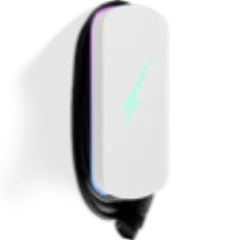
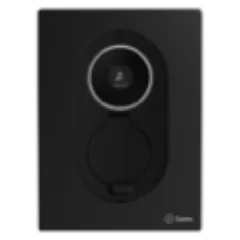
Hypervolt Home 3 Pro vs Zaptec Go 2: A Practical Pick or a Future Bet?
These two chargers cost almost the same — £690 for the Hypervolt Home 3 Pro, £707 for the Zaptec Go 2 — but they represent completely different philosophies. The Hypervolt wants to be the best charger you can buy today: tethered, robust, feature-complete. The Zaptec is banking on tomorrow, headlining V2G readiness as its reason to exist. The question for your wallet is whether tomorrow's promise is worth choosing over today's polish.
In a nutshell:
- Hypervolt Home 3 Pro: The do-everything UK-built all-rounder with the best build quality in its class
- Zaptec Go 2: A compact, V2G-ready untethered charger with built-in 4G and a MID-approved meter
Is the Zaptec Go 2's V2G Worth £707 Right Now?
Let's be blunt: V2G on AC home chargers is nowhere close to mainstream in the UK. The technology exists in pilot schemes, and the Zaptec Go 2 is technically ready for it, but your car almost certainly isn't. Even when V2G does arrive more broadly, there's no guarantee the standards won't shift. Paying for V2G readiness today is like buying a 5G phone in 2018 — forward-thinking, but you might be waiting a while to use it.
If you're the type who keeps a charger for a decade and wants to be first in line when vehicle-to-grid tariffs emerge, the Zaptec makes a case for itself. For everyone else, it's a feature that looks great on a spec sheet and does precisely nothing on your driveway in 2024.
Tethered vs Untethered: A Bigger Deal Than You Think
This is where the daily experience diverges sharply. The Hypervolt Home 3 Pro comes tethered with cable length options of 5m, 7.5m, or 10m — you walk up, grab the cable, plug in, done. The Zaptec Go 2 is untethered only. That means carrying your own Type 2 cable, plugging both ends in, and storing it somewhere when you're done.
For a Tesla parked on a driveway, tethered wins every time. It's faster, cleaner, and you never forget your cable at a public charger because you only own one. The untethered approach has its fans — particularly people who share a socket between multiple vehicles with different cable lengths — but for most single-car households, it's an inconvenience dressed up as flexibility.
Build Quality and Weather Protection: The Hypervolt's Quiet Advantage
The Hypervolt Home 3 Pro carries an IP66 + IK10 rating. That's the highest combined weather and impact resistance you'll find on any home charger. Rain, hail, a stray football — it can take it. The Zaptec Go 2 manages IP54, which is adequate for outdoor use but noticeably less protected. If your charger lives on an exposed wall or near a busy driveway, that gap matters.
The Hypervolt also weighs in at around 4.5 kg versus the Zaptec's 3.2 kg, reflecting a more substantial construction. And those interchangeable colour covers are a small touch that makes a surprising difference to kerb appeal — something the minimalist Scandinavian Zaptec doesn't offer.
Where the Zaptec Go 2 Fights Back
Credit where it's due: the Zaptec has a couple of genuine edges. Its subscription-free 4G connectivity means it works perfectly without Wi-Fi — ideal if your garage is at the bottom of the garden and your router signal dies at the back door. The Hypervolt relies on Wi-Fi and Bluetooth only, which can be frustrating in weak-signal spots.
The Zaptec also comes with a 5-year warranty as standard, versus the Hypervolt's 3 years (extendable to 5 for an extra £100). And its MID-approved energy meter provides billing-grade accuracy, which could matter if you're claiming business mileage or splitting costs with a housemate. The Hypervolt tracks energy usage through its app, but it's not MID-certified.
Finally, the Zaptec supports up to 22kW on three-phase, making it a stronger choice if you ever move to a commercial property or a home with a three-phase supply. The Hypervolt is single-phase only, capped at 7.4kW regardless.
Which Should You Buy?
Buy the Hypervolt Home 3 Pro if:
- You want a tethered charger that's ready to use out of the box
- Build quality and weather resistance are priorities
- You have solar panels and want built-in CT clamp integration — see our solar charger guide
- You value UK-based customer support with fast response times
Buy the Zaptec Go 2 if:
- V2G readiness genuinely excites you and you plan to keep this charger long-term
- Your charger location has poor Wi-Fi and you need 4G connectivity
- You prefer an untethered socket for multi-vehicle flexibility
- A 5-year warranty without paying extra matters to you
For most Tesla owners buying a home charger today, the Hypervolt Home 3 Pro is the smarter spend. It's £17 cheaper, tethered, tougher, and packed with features you'll actually use this year — not in some hypothetical V2G future. The Zaptec Go 2 isn't a bad charger by any stretch, but its headline feature is a promise the UK grid hasn't kept yet. If smart tariff savings are your main goal, you might also want to compare both against the options in our best smart EV charger guide.