The £194 Question: Does the Hypervolt Home 3 Pro Justify Its Price Over the Pulsar Max?
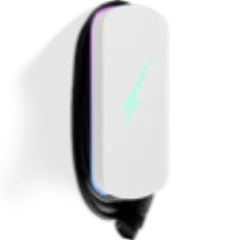
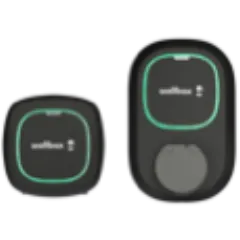
These two chargers sit in different price brackets but compete for the same wall space. The Hypervolt Home 3 Pro at £690 positions itself as a do-everything all-rounder. The Wallbox Pulsar Max at £496 undercuts it significantly while offering a longer warranty and a smaller footprint. That's a meaningful gap — £194 buys a lot of off-peak electricity.
In a nutshell:
- Hypervolt Home 3 Pro: Built-in solar integration, superior weatherproofing, smart tariff support, UK-designed with excellent customer service
- Wallbox Pulsar Max: £194 cheaper, 5-year warranty out of the box, ultra-compact design, voice control via Alexa and Google
Does the Hypervolt's Solar Integration Make It Worth the Extra Money?
If you have solar panels — or plan to install them — this is where the price gap starts to make sense. The Hypervolt Home 3 Pro includes a CT clamp in the box for solar diversion. Plug it in, configure it in the app, and your car soaks up excess solar generation. No additional hardware to buy.
The Wallbox Pulsar Max technically supports solar charging through its Eco-Smart feature, but you'll need to purchase a separate Wallbox Power Meter. Once you factor in that extra cost and installation, the price difference between the two chargers shrinks considerably. For a deeper look at how both stack up against dedicated solar chargers, see our best EV charger for solar panels guide.
No solar panels? This advantage evaporates, and the Pulsar Max's lower price becomes much harder to argue against.
Hypervolt Home 3 Pro vs Wallbox Pulsar Max: Smart Tariff and App Experience
The Hypervolt has native smart tariff integration. It talks to your energy provider and can automatically shift charging to the cheapest half-hour slots. If you're on Octopus Go or a similar time-of-use tariff, the charger handles the scheduling without you thinking about it. That's a tangible money-saving feature you'll use every single day. Check our EV tariff comparison to see how much you could save.
The Pulsar Max doesn't offer this. You can set manual charging schedules through the myWallbox app — say, start at midnight, stop at 5am — but it won't dynamically respond to variable pricing on tariffs like Octopus Agile. For straightforward off-peak scheduling on a fixed-window tariff, manual timers work fine. But if you want hands-off optimisation, the Hypervolt is the smarter choice.
One area where Wallbox fights back: voice control. Asking Alexa to start your charge is a nice convenience the Hypervolt can't match. Whether that matters depends entirely on how deeply you've committed to your smart home ecosystem.
Build Quality and Weatherproofing: A Clear Winner
Both chargers share an IK10 impact resistance rating, so they'll handle a stray football or a clumsy reversing manoeuvre equally well. But weatherproofing tells a different story.
The Hypervolt Home 3 Pro carries an IP66 rating — protection against powerful water jets from any direction. The Wallbox Pulsar Max is rated IP54, which covers splashing water but not sustained heavy rain hitting the unit directly. If your charger will live on an exposed wall facing the prevailing weather, the Hypervolt's rating provides genuine peace of mind. For a sheltered garage wall or a spot under an overhang, IP54 is perfectly adequate.
The Hypervolt is also the bigger unit (270 × 170 × 110mm versus the Pulsar Max's remarkably compact 198 × 201 × 99mm). If you're tight on space — a narrow driveway pillar, for instance — the Pulsar Max's tiny footprint is a real practical advantage.
Warranty and Long-Term Value
Wallbox wins this one cleanly. Five years of cover, included in the £496 price. The Hypervolt starts at three years and charges you £100 to extend to five. So matching the Pulsar Max's warranty pushes the Hypervolt's total cost to £790 — a £294 gap. That's significant.
For context, charger failures are rare but not unheard of, and a five-year warranty covering a product you'll use daily for a decade is reassuring. If long-term cost of ownership matters to you, the Pulsar Max has a structural advantage here.
Which Should You Buy?
Buy the Hypervolt Home 3 Pro if:
- You have solar panels and want plug-and-play solar diversion without extra hardware
- Smart tariff automation matters — you want the charger to optimise costs automatically
- Your charger will be fully exposed to the elements
- You value UK-based customer support with fast response times
Buy the Wallbox Pulsar Max if:
- You want the best value — £194 less with a longer warranty
- Space is limited and you need the smallest possible unit on your wall
- You don't have solar panels (or are happy buying the Power Meter separately)
- A 5-year warranty without paying extra is important to you
For most Tesla owners without solar panels, the Wallbox Pulsar Max is the sharper buy. It's cheaper, smaller, and better warranted. But if you're generating your own electricity and want a charger that handles solar and smart tariffs without fuss, the Hypervolt Home 3 Pro earns its premium. See how both compare against the wider field in our best Tesla home charger guide.