The Compact Contender vs the All-Rounder: Which Charger Fits Your Home?
These two British-designed chargers sit in a similar price bracket and tick many of the same boxes — smart tariff support, solar diversion with an included CT clamp, tethered Type 2 cables. On paper, they look like close rivals. In practice, they're built for different priorities.
In a nutshell:
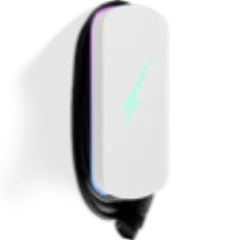
- Hypervolt Home 3 Pro: The more complete package — tougher build, longer cable options, extendable warranty. Best if you want a do-everything charger you won't think about for years.
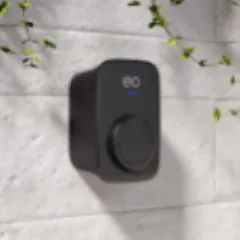
- EO Mini Pro 3: The smallest charger on the market, at a lower price. Best if installation space is limited or you want to save £140 upfront.
Is the Hypervolt's Build Quality Worth the Premium?
This is where the £140 price gap starts making sense. The Hypervolt carries an IP66 + IK10 rating — that's full jet-spray waterproofing plus impact resistance rated to withstand serious knocks. The EO Mini Pro 3 manages IP54, which is fine for rain but a different league of protection. If your charger lives on an exposed driveway or near a busy path where it might catch an elbow from a wheelie bin, the Hypervolt is built for that life.
Weight tells a story too. The Hypervolt at 4.5kg feels substantial on the wall. The EO at 2.5kg is impressively light, but that lightness partly reflects a more modest enclosure. Neither will fall off your wall, but the Hypervolt inspires more confidence that it'll look pristine in five years.
Does the EO Mini Pro 3's Size Actually Matter?
It does — but only if you need it to. At 215mm × 140mm, the EO is genuinely A5-sized. That's remarkable for a smart charger with solar diversion built in. If you're mounting inside a narrow garage, on a slim pillar, or anywhere space is at a premium, the EO might be your only realistic option among fully-featured chargers. Our full charger listings don't have anything smaller.
But if you've got a normal-sized wall with a clear 300mm × 200mm area, the Hypervolt's footprint is hardly imposing either. Size becomes a deciding factor only in genuinely constrained installations. For everyone else, it's a nice-to-have rather than a reason to buy.
Cable Length and Connectivity: The Practical Differences
The Hypervolt offers 5m, 7.5m, or 10m cable options. The EO comes with 5m only. This matters more than people expect — if your parking spot is even slightly offset from the charger location, 5m can feel tight. A 7.5m cable gives you breathing room without coiling excess everywhere. It's a quiet advantage the Hypervolt holds.
On connectivity, the EO actually has a trick up its sleeve: Ethernet. Alongside Wi-Fi and Bluetooth, you can hardwire it into your router for rock-solid reliability, and there's even an optional 4G module for outbuildings or rural spots with patchy Wi-Fi. The Hypervolt sticks with Wi-Fi and Bluetooth, which works fine for most homes but can't match a wired connection for consistency.
The EO also offers a British Gas/Hive Power+ integration that credits back 25% of charging costs — a meaningful saving if you're already in that ecosystem. If you're not, and you'd rather optimise across tariffs like Octopus Go or Agile, both chargers handle scheduled charging, though neither matches the depth of an Ohme's direct tariff integration.
Solar Diversion: A Draw, With Caveats
Both chargers include a CT clamp as standard for solar diversion — no extra hardware costs. Both handle the basics: detect surplus solar generation, divert it to your car. Neither approaches the sophistication of the Zappi's Eco+ mode, which can blend grid and solar power dynamically. If solar is your primary motivation, check our solar charger guide for a fuller picture. Between these two specifically, it's a wash.
Which Should You Buy?
Buy the Hypervolt Home 3 Pro if:
- You want the toughest build quality available (IP66 + IK10)
- You need a cable longer than 5m
- You'd value extending your warranty to 5 years for £100
- You like the idea of swapping colour covers to match your house
Buy the EO Mini Pro 3 if:
- Your mounting space is genuinely tight
- You're in the British Gas/Hive ecosystem and want that 25% charging credit
- You want Ethernet or 4G connectivity for reliability
- Saving £140 upfront matters to you
For most Tesla owners with a straightforward driveway or garage installation, the Hypervolt is the stronger buy. It costs more, but you're getting a charger that's built like a tank, offers real cable flexibility, and can be warranted for five years. The EO is a smart, capable little unit — but its headline advantage is physical size, and that only matters if your wall demands it. If you're still weighing options, our best Tesla home charger guide covers the full field.