The £285 Question: Do You Actually Need What the Hypervolt Adds?
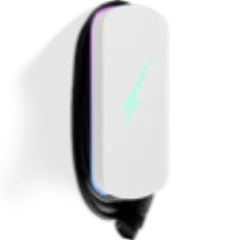
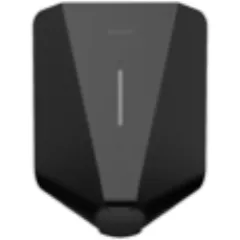
These two chargers deliver identical power — 7.4kW on single-phase — but they couldn't be more different in philosophy. The Hypervolt Home 3 Pro is a feature-packed, UK-built all-rounder at £690. The Easee One is a stripped-back Norwegian minimalist at £405. That £285 gap is the real story here, because the question isn't which charger is *better* — it's whether the extras justify the premium.
In a nutshell:
- Hypervolt Home 3 Pro: The feature-rich pick — solar diversion, smart tariff integration, tethered cable, and tank-like durability
- Easee One: The value pick — lifetime 4G, ultra-light installation, multi-charger expandability, and the lowest upfront cost on the market
Does the Hypervolt's Build Quality Actually Matter?
On paper, the Hypervolt's IP66 + IK10 rating absolutely destroys the Easee One's IP54. That IK10 impact resistance means it can shrug off a football, a wayward wheelie bin, or whatever else life throws at your driveway wall. The Easee, while perfectly weatherproof for UK conditions, isn't in the same league for physical toughness.
But here's the thing: how many people are actually battering their wall charger? If yours sits in a garage or on a sheltered wall, IP54 is more than adequate. The Hypervolt's ruggedness is a real advantage for exposed installations — think coastal properties, driveways without cover, or homes with kids who treat everything as a target. Otherwise, you're paying for peace of mind you may never cash in.
Weight is another contrast. The Easee One is absurdly light at 1.5 kg — less than a bag of sugar and a half. The Hypervolt is roughly three times heavier at 4.5 kg. Neither will trouble your installer, but the Easee's featherweight design makes it the easiest charger to mount on virtually any surface.
Tethered vs Untethered: More Than Just Convenience
The Hypervolt comes with a cable permanently attached — your choice of 5m, 7.5m, or 10m. You walk to the charger, grab the cable, plug in, done. The Easee One is untethered, meaning you use your own Type 2 cable (included with every UK Tesla).
For a single-car household with a dedicated Tesla, this barely matters. You'll keep the cable in the boot and the routine takes an extra 15 seconds. But if you charge in the rain, in the dark, or just value the grab-and-go simplicity of a tethered setup, the Hypervolt wins this one cleanly. The 10m cable option is particularly useful for awkward parking situations where the charger can't sit right next to the car.
Flip side: the untethered Easee keeps your wall looking cleaner when not in use, and if you ever switch to a non-Tesla EV with a different cable, you're not stuck with the wrong connector.
Is the Hypervolt Home 3 Pro Worth It for Solar Owners?
If you have solar panels, this comparison tilts heavily toward the Hypervolt. Its CT clamp solar integration comes included — no extra hardware, no extra cost. It'll divert surplus generation to your car automatically. The Easee One simply doesn't offer this.
That said, if you want *serious* solar diversion with granular control, the Zappi remains the specialist choice. The Hypervolt's solar features are competent but not as refined. For most solar households who just want their car to soak up spare generation without overthinking it, the Hypervolt does the job well. Check our solar charger guide for a deeper comparison.
The Easee's Hidden Advantage: Lifetime 4G
One spec that deserves more attention: the Easee One has a built-in eSIM with a lifetime 4G subscription at no ongoing cost. If your Wi-Fi doesn't reach the garage or driveway, this is a genuine problem-solver. The Hypervolt relies on Wi-Fi and Bluetooth only, which means a weak signal could leave you without app control or smart scheduling.
For homes where the charger sits far from the router, the Easee's always-on 4G connectivity removes a headache that no amount of Wi-Fi extenders fully solves.
Which Should You Buy?
Buy the Hypervolt Home 3 Pro if:
- You have solar panels and want built-in diversion without extra hardware
- You want a tethered cable for maximum daily convenience
- Your charger will be fully exposed to weather and potential impacts
- You value UK-based customer support with rapid response times
Buy the Easee One if:
- You want the lowest possible upfront cost for a quality smart charger
- Your Wi-Fi is unreliable near the charger location (lifetime 4G solves this)
- You might add a second or third charger later (expandable to 3 units)
- You prefer a clean, untethered wall mount
For most Tesla owners on a standard single-car setup, the Easee One at £405 is remarkably hard to argue against. It charges at the same 7.4kW, connects reliably via 4G, and leaves nearly £300 in your pocket — money better spent on a smart energy tariff that'll slash your running costs far more than any charger feature will. The Hypervolt earns its premium for solar households and anyone who wants the most complete feature set in a single box, but it's the extras you're paying for, not faster or better charging.