Zaptec Go 2 vs NexBlue Point 2: Two V2G-Ready Chargers, One Clear Value Winner
Future-Proofing on a Budget vs Future-Proofing with Pedigree
Vehicle-to-grid technology is the next frontier for UK EV owners — the idea that your car's battery could power your home during peak rates or even sell electricity back to the grid. It's not quite mainstream yet, but the chargers that support it are already here. And if you're shopping for a V2G-ready home charger in 2025, two compact, untethered units are vying for your attention: the Zaptec Go 2 at £707 and the NexBlue Point 2 at £530.
Both are untethered, both offer free 4G connectivity, both carry five-year warranties, and both promise to be ready for a bi-directional energy future. On paper, they look remarkably similar. But dig into the details and a £177 price gap starts to tell an interesting story — one about brand maturity, protocol support, and how much you're willing to bet on a newcomer.
In a nutshell:
- Zaptec Go 2 (£707): The UK's first V2G-ready AC home charger from an established Scandinavian brand, with three-phase support and a MID-approved energy meter.
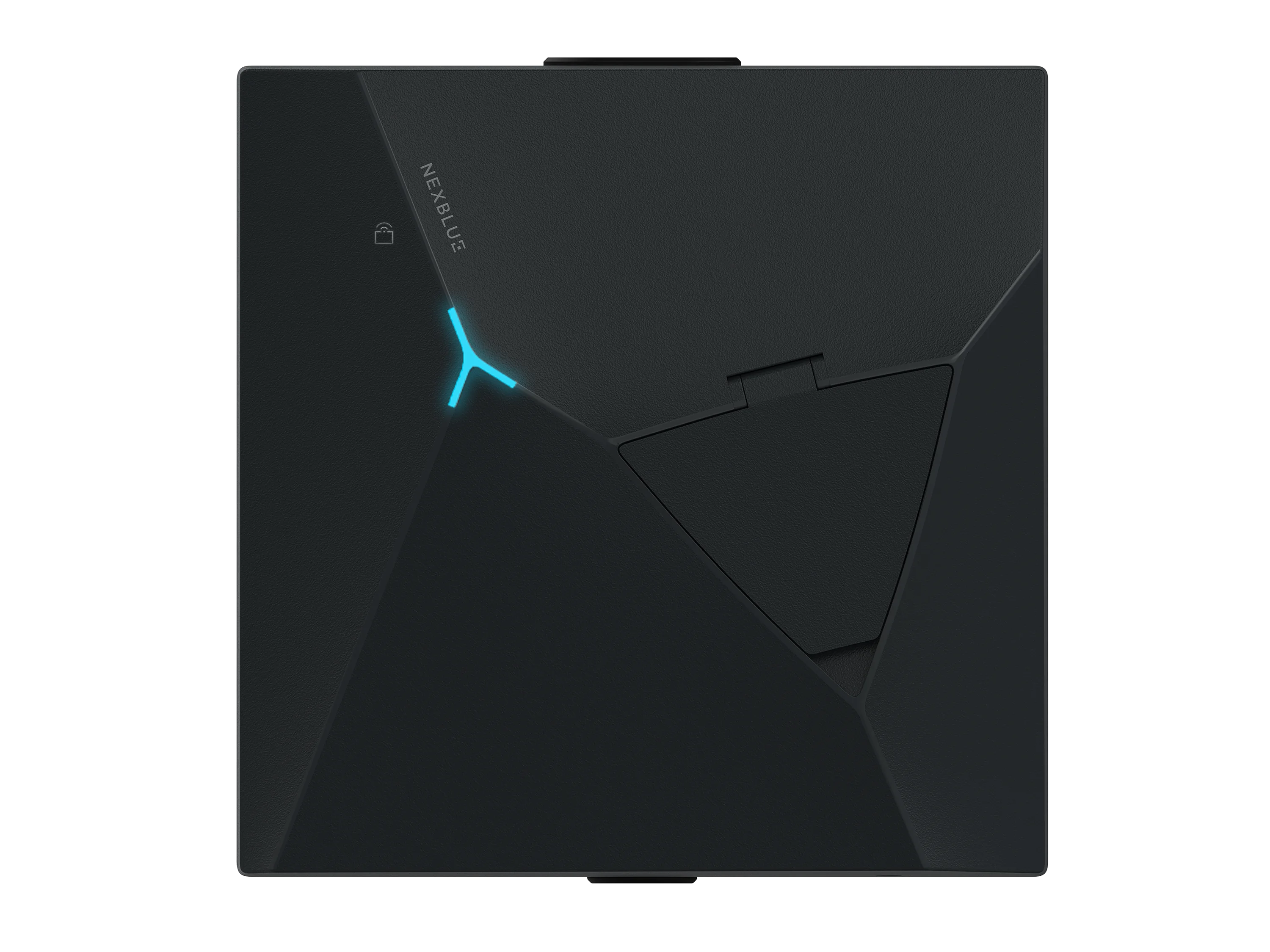
- NexBlue Point 2 (£530): A feature-packed newcomer offering ISO 15118 readiness, OCPP 2.0.1, and included CT clamp load balancing at a price that undercuts almost everything in its class.
Spec Comparison
| Feature | Zaptec Go 2 | NexBlue Point 2 |
|---|---|---|
| Price | £707 | £530–£600 |
| Max Power | 7.4kW (1-phase) / 22kW (3-phase) | 7.4kW (1-phase only) |
| Type | Untethered (Type 2) | Untethered (Type 2) |
| Smart Tariffs | Scheduled charging via Zaptec app | EcoPilot tariff integration |
| Solar | Auto-switches between 1 and 3-phase for solar integration | Solar surplus charging (requires NexBlue Zen accessory) |
| Connectivity | Wi-Fi, 4G (subscription-free), Bluetooth | Wi-Fi, Bluetooth, 4G eSIM (lifetime free) |
| V2G Ready | Yes | Yes (ISO 15118 / Plug & Charge) |
| OCPP | 1.6J | 1.6-J and 2.0.1 |
| Load Balancing | Not specified as included | Dynamic (CT clamp included) |
| Warranty | 5 years | 5 years |
| IP Rating | IP54 | IP54 + IK10 |
| Weight | ~3.2 kg | 2.1 kg |
| Dimensions | 240 × 180 × 106mm | 235 × 230 × 107mm |
Smart Tariff Integration and V2G Readiness
This is where the NexBlue Point 2 genuinely surprises. Its EcoPilot feature automatically shifts charging to the cheapest rate periods on your tariff — think Octopus Intelligent Go at around 7p/kWh or Octopus Go's 00:30–04:30 off-peak window at 7.5p/kWh. That kind of automation is a real selling point, especially if you'd rather set it and forget it than manually schedule sessions each night.
The Zaptec Go 2 offers scheduled charging through the Zaptec app, which is perfectly functional but relies on you setting the times yourself rather than dynamically responding to tariff data. As topcharger.co.uk noted in their review of the original Zaptec Go, smart scheduling is "very reliable" — but the Go 2's approach is less automated than what the NexBlue offers out of the box.
On the V2G front, both chargers are future-proofed, but the NexBlue goes further with ISO 15118 and Plug & Charge readiness, plus OCPP 2.0.1 compliance — the newer protocol that most energy companies are expected to adopt for bi-directional services. The Zaptec Go 2 supports OCPP 1.6J, which is the current industry standard but may need updating as V2G schemes roll out. That said, V2G remains emerging technology in the UK, and neither charger can actually push power back to the grid today — you're buying preparedness, not a working feature.
Power, Solar, and Load Balancing
Here's where the Zaptec Go 2 has a genuine, tangible advantage: three-phase support. If you're one of the small percentage of UK homes with a three-phase supply, the Go 2 can deliver a full 22kW — enough to charge a 60kWh Tesla Model 3 in roughly 2.7 hours rather than the 8.5 hours you'd get at 7.4kW. For most UK households on single-phase, both chargers max out at the same 7.4kW, so this advantage only matters if you have (or plan to install) three-phase power.
The Zaptec Go 2 also auto-switches between single and three-phase charging to optimise solar integration, which is a clever feature for homes with solar panels generating variable output throughout the day. The NexBlue Point 2 supports solar surplus charging too, but requires the separate NexBlue Zen accessory — an additional cost and complexity that the localev.uk comparison notes is "not as sophisticated as the Zappi's Eco+ mode."
Where the NexBlue claws back ground is load balancing. A CT clamp comes included in the box, enabling dynamic load balancing that prevents your home's supply from being overwhelmed. The Zaptec Go 2 doesn't specify this as an included feature, which could mean an additional expense at installation.
Build Quality and Design
Both chargers are remarkably compact and lightweight — a world away from the chunky wallboxes of a few years ago. The Zaptec Go 2 weighs approximately 3.2 kg and measures just 240 × 180 × 106mm. As zaptec.com highlights, the Zaptec Go line is "no bigger than an iPad" and designed in Norway to withstand harsh weather. The original Go earned a Red Dot Design Award, and the Go 2 continues that Scandinavian minimalism. Zaptec also has a MID-approved energy meter built in — useful if you need certified consumption data for expense claims or future V2G billing.
The NexBlue Point 2 is even lighter at just 2.1 kg — making it one of the lightest chargers on the UK market. Its IP54 rating matches the Zaptec, but it adds IK10 impact resistance, the highest rating available. That means it can withstand serious knocks — handy if your charger is mounted near a tight driveway where wing mirrors or wheelie bins might make contact.
Neither unit has an integrated display, and both rely on their respective apps for session monitoring and control. The Zaptec app, while functional, has been described as "relatively basic," whereas the NexBlue myNexBlue app adds RFID and NFC activation for managing access — a nice touch if multiple family members or visitors need to charge.
Price and Value
| Cost Element | Zaptec Go 2 | NexBlue Point 2 |
|---|---|---|
| Unit price | £707 | £530–£600 |
| Typical installation | £400–£600 | £400–£600 |
| Total installed cost | £1,107–£1,307 | £930–£1,200 |
| After OZEV grant (if eligible) | £607–£807 | £430–£700 |
The NexBlue Point 2 undercuts the Zaptec Go 2 by £107–£177 on unit price alone, and that gap widens when you factor in the included CT clamp for load balancing. For a charger that also offers OCPP 2.0.1, ISO 15118, EcoPilot tariff automation, and lifetime free 4G, the feature-to-price ratio is genuinely hard to beat. As evenergyhub.com points out, the market now has over 200 models, and value increasingly means getting smart features without paying a premium.
The Zaptec Go 2 justifies its higher price with three-phase capability, a MID-approved meter, and the backing of an established Norwegian manufacturer with a proven track record. That brand confidence matters — as voltsmonster.com bluntly puts it, getting the charger wrong means "a costly, infuriating monument to bad choices bolted to your wall."
Who Should Buy Which?
Buy the Zaptec Go 2 if:
- You have (or plan to install) a three-phase power supply and want 22kW charging
- You need a MID-approved energy meter for certified billing or expense tracking
- You prefer buying from an established brand with a proven UK track record
- Solar integration without additional accessories is important to you
- You value the Scandinavian design heritage and interchangeable fascia options from the Zaptec range
Buy the NexBlue Point 2 if:
- You want the most future-proofed protocol support (ISO 15118, OCPP 2.0.1, Plug & Charge) at the lowest price
- Automatic smart tariff optimisation matters more to you than manual scheduling
- You need dynamic load balancing included without extra cost
- Maximum impact resistance (IK10) is important for your installation location
- You're comfortable being an early adopter of a newer brand in exchange for outstanding value
Our recommendation: For the majority of UK homeowners on single-phase power, the NexBlue Point 2 offers more features for less money — full stop. The EcoPilot tariff integration, included CT clamp, and newer OCPP 2.0.1 support give it a meaningful edge in day-to-day functionality and future-proofing. However, if you have three-phase power, need a MID-approved meter, or simply sleep better knowing your charger comes from a brand with years of proven reliability in the UK market, the Zaptec Go 2 is worth the premium. Both are excellent choices — this is a decision between great value now and established confidence for the long haul.
For the full specs-level breakdown, see our Zaptec Go 2 vs NexBlue Point 2 comparison page.
Read our full Zaptec Go 2 review or NexBlue Point 2 review.
We’ll handle the installation
We’ll match you with vetted UK electricians — up to 3 free quotes, no obligation.