Zaptec Go 2 vs EcoFlow PowerPulse 2: V2G Future vs Solar Ecosystem
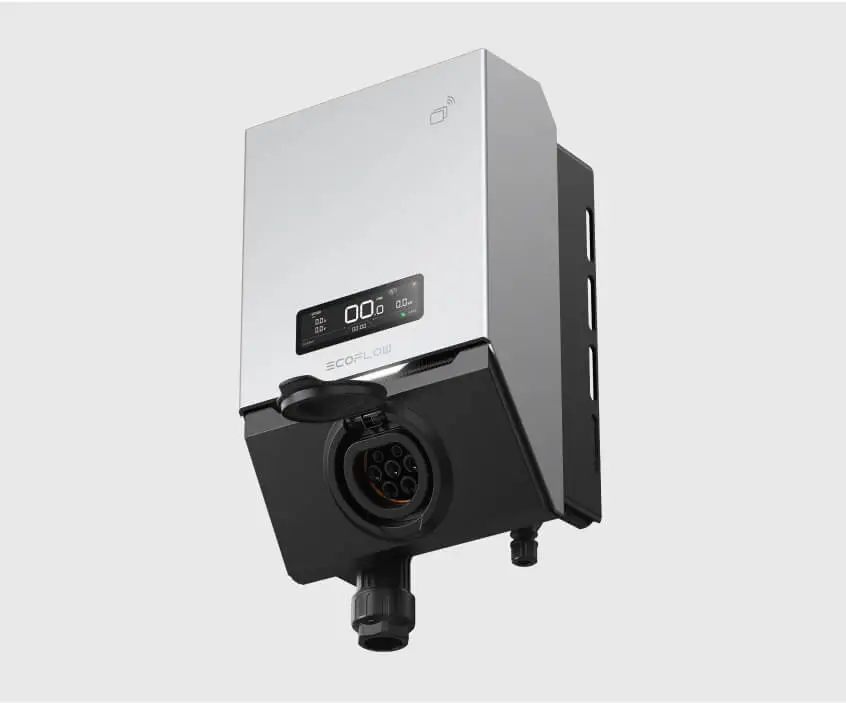
V2G Future vs Solar Ecosystem: Two Chargers Built for Energy-Savvy Homes
Most EV charger comparisons pit a smart tariff champion against a solar specialist. This one is different. The Zaptec Go 2 and the EcoFlow PowerPulse 2 are both aimed at homeowners who see their electric car as part of a bigger energy picture — but they place their bets on different futures.
The Zaptec Go 2 is the UK's first V2G-ready AC home charger. It is designed for a world where your Tesla or other EV can feed energy back to the grid during peak demand, potentially earning you money. The EcoFlow PowerPulse 2, meanwhile, comes from a company best known for portable power stations and home batteries. Its strength is deep integration with the EcoFlow PowerOcean solar and battery ecosystem, letting you manage solar generation, home storage, and EV charging from a single app. One charger is a bet on the grid of 2030; the other is built to maximise the solar-and-storage setup you can install today.
If you are choosing between these two, you are almost certainly thinking beyond "plug in, charge overnight." Good. Let us work out which approach suits your home.
In a nutshell:
- Zaptec Go 2 (£707): The UK's first V2G-ready home charger with a MID-approved meter and subscription-free 4G — built for the vehicle-to-grid future.
- EcoFlow PowerPulse 2 (£545): A solar-ecosystem charger with dedicated Solar Mode, Smart Mode for dynamic tariff optimisation, and seamless integration with EcoFlow's PowerOcean battery.
Spec Comparison
| Feature | Zaptec Go 2 | EcoFlow PowerPulse 2 |
|---|---|---|
| Price | £707 | £545 |
| Max Power | 7.4kW (single-phase) / 22kW (three-phase) | 7kW (single-phase) / 22kW (three-phase) |
| Type | Untethered (Type 2 socket) | Untethered (Type 2); tethered 5m also available |
| Smart Tariff Support | MID-approved meter; OCPP 1.6J | Smart Mode (dynamic tariff optimisation); OCPP 1.6-J |
| Solar Features | Auto-switches between 1 and 3-phase for solar | Solar Mode (prioritises surplus solar) |
| Connectivity | Wi-Fi, 4G (subscription-free), Bluetooth | Wi-Fi, RFID |
| Display | None (app-based) | Built-in LCD status display |
| Warranty | 5 years | 3 years |
| IP Rating | IP54 | IP55 (IP54 when cable not connected) |
| V2G Ready | Yes | No |
| OZEV Approved | Yes | Not yet confirmed |
Smart Tariff Integration
Both chargers support scheduled charging and OCPP 1.6-J compliance, which means they can theoretically work with third-party energy management platforms. But the way they handle smart tariffs day-to-day is noticeably different.
The Zaptec Go 2 includes a MID-approved energy meter — the kind of independently certified meter that energy suppliers and future V2G programmes will trust for accurate billing. If you are on a tariff like Octopus Intelligent Go (around 7p/kWh off-peak) or Octopus Agile with its half-hourly variable pricing, that MID meter gives you verifiable data on exactly what you have consumed and, eventually, what you have exported back. The OCPP compliance also means the Go 2 can slot into wider energy management systems without being locked to Zaptec's own platform.
The EcoFlow PowerPulse 2 takes a more hands-on approach with its dedicated Smart Mode, which handles dynamic tariff optimisation automatically through the EcoFlow app. If you are already managing an EcoFlow PowerOcean battery on a time-of-use tariff, the app coordinates when to charge the house battery, when to charge the car, and when to draw from the grid — all from one interface. For ecosystem buyers, this is genuinely slick. The trade-off is that EcoFlow's tariff integration is newer and less battle-tested than what you get from established platforms like Ohme or myenergi, so it is worth checking current compatibility with your specific tariff before committing.
Solar Diversion
Solar is where the EcoFlow PowerPulse 2 really earns its keep — provided you are in the EcoFlow ecosystem. Its Solar Mode actively prioritises surplus solar energy for EV charging, and because it talks directly to the PowerOcean battery system, it can intelligently decide whether surplus generation should go to your home battery or your car. For a household with, say, a 5kW solar array and an EcoFlow battery, this kind of coordinated decision-making can meaningfully increase your self-consumption ratio and reduce grid dependence.
The Zaptec Go 2 handles solar differently. It can auto-switch between single-phase and three-phase charging to match available solar output — a clever trick on three-phase installations that lets it drop down to lower power levels when the sun dips behind clouds, then ramp back up when generation recovers. On a standard UK single-phase supply, though, this flexibility is less relevant. The Go 2 does not have a dedicated solar divert mode in the way the EcoFlow or a myenergi Zappi does, so if maximising solar self-consumption is your primary goal and you are on single-phase power, the PowerPulse 2 has the edge — especially within its own ecosystem.
Connectivity and App Experience
Connectivity is one area where the Zaptec Go 2 pulls clearly ahead. It offers Wi-Fi, Bluetooth, and subscription-free 4G as standard. That last one matters more than you might think: if your charger is mounted on a detached garage or at the far end of a driveway where your home Wi-Fi signal is patchy, built-in 4G means it stays online regardless. No range extenders, no mesh network faff, no ongoing subscription costs. As noted in our previous comparison on teslacharger.co.uk, this is a genuine practical advantage for many UK homes.
The EcoFlow PowerPulse 2 relies on Wi-Fi only for its internet connection, supplemented by RFID authentication if you want to restrict access. It does, however, include a built-in LCD display that shows charging status at a glance — handy if you just want to confirm the car is charging without pulling out your phone. The EcoFlow app is functional and ties everything together nicely if you own other EcoFlow products, but the Zaptec app, while relatively basic, benefits from the charger's always-on 4G connection for more reliable remote monitoring.
Build Quality and Design
The Zaptec Go 2 is the smaller and lighter unit at 240mm × 180mm × 106mm and roughly 3.2 kg. Its compact Scandinavian design looks clean on a wall, and at IP54 it is rated for outdoor installation in typical UK weather. The five-year warranty is above average for the market and reflects Zaptec's confidence in the hardware.
The EcoFlow PowerPulse 2 is a bit larger at 333mm × 226mm × 145mm and 3.5 kg, though still modest by charger standards. Its IP55 rating is marginally better than the Zaptec's IP54, offering slightly more protection against water jets — a minor but real advantage if your charger is fully exposed to the elements. However, the three-year warranty is shorter than many competitors, and as a newer entrant to the UK EV charger market, long-term reliability data simply does not exist yet voltsmonster.com. Both chargers are available as untethered units, though the PowerPulse 2 also offers a tethered 5m cable version — a genuine advantage if you prefer the convenience of a permanently attached cable.
Price and Value
| Zaptec Go 2 | EcoFlow PowerPulse 2 | |
|---|---|---|
| Unit Price | £707 | £545 |
| Typical Installation | £400–£600 | £400–£600 |
| Total Installed Cost | £1,107–£1,307 | £945–£1,145 |
| After OZEV Grant (£500) | £607–£807 | £445–£645* |
*OZEV approval not yet confirmed for the PowerPulse 2 — check eligibility before purchasing.
The £162 price gap is significant. For that money, you are getting the Zaptec's V2G readiness, MID-approved meter, subscription-free 4G, and a longer five-year warranty. Whether that represents good value depends entirely on how much you value V2G — a technology that, as of early 2026, is still in its infancy in the UK. If V2G takes off as expected, the Go 2 could look like a bargain in hindsight. If it stalls, you have paid a premium for a feature you may never use.
The EcoFlow PowerPulse 2, at £545, is competitively priced for what it offers — especially the Solar Mode, Smart Mode, and three-phase support. The caveat is the unconfirmed OZEV status: if the grant does not apply, the total installed cost gap narrows, but the PowerPulse 2 still comes in cheaper.
Who Should Buy Which?
Buy the Zaptec Go 2 if:
- You want to future-proof for V2G and vehicle-to-grid energy trading
- Reliable connectivity matters — especially if your charger is far from your Wi-Fi router
- You value a MID-approved meter for accurate, verifiable energy data
- A five-year warranty gives you peace of mind
- You are comfortable with an untethered setup and already own a Type 2 cable
Buy the EcoFlow PowerPulse 2 if:
- You already own or plan to buy EcoFlow PowerOcean solar and battery products
- Maximising solar self-consumption is your top priority
- You want the option of a tethered cable version
- You prefer a built-in display over app-only monitoring
- You want three-phase capability at a lower price point
Our recommendation: For the general buyer who does not already own EcoFlow products, the Zaptec Go 2 is the stronger choice. Its V2G readiness, MID-approved meter, free 4G connectivity, and five-year warranty justify the premium — you are paying for genuine future-proofing and proven reliability features. However, if you are building or already running an EcoFlow solar-and-battery setup, the PowerPulse 2 is the obvious pick. The ecosystem integration is its killer feature, and at £545 it delivers excellent value within that context. Just confirm OZEV grant eligibility before you commit.
Read our full Zaptec Go 2 review or EcoFlow PowerPulse 2 review.
We’ll handle the installation
We’ll match you with vetted UK electricians — up to 3 free quotes, no obligation.