Wallbox Pulsar Max vs EcoFlow PowerPulse 2: Compact Classic or Solar Ecosystem?
The Compact Classic vs the Solar Ecosystem Newcomer
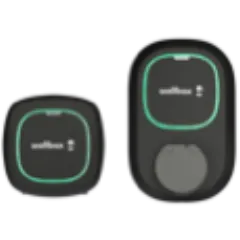
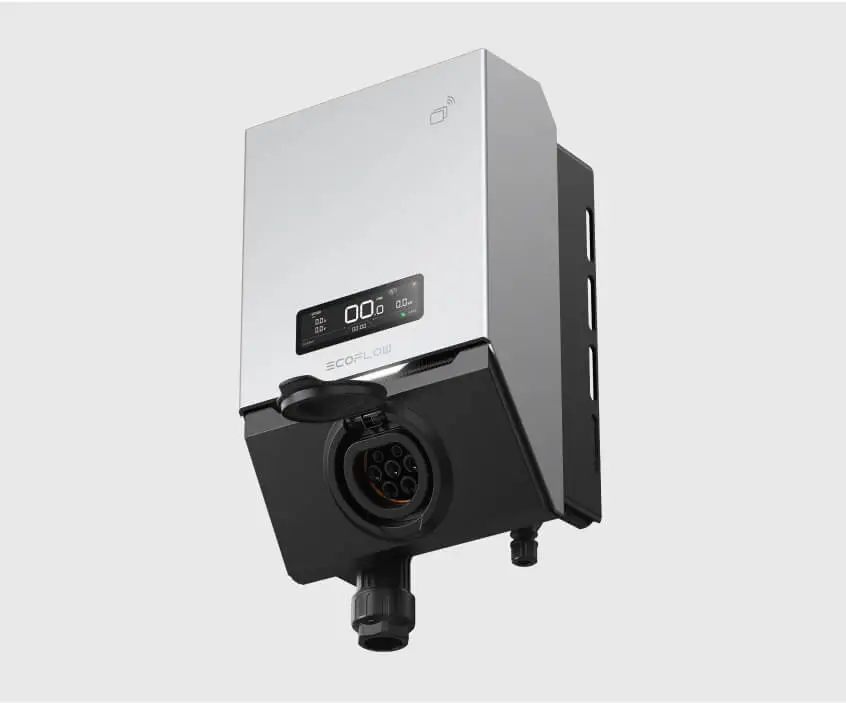
These two chargers sit tantalisingly close on price — just £49 apart — yet they come from very different corners of the market. The Wallbox Pulsar Max is a refined evolution of one of Europe's best-selling home chargers, backed by years of installer familiarity and a design so compact it practically disappears on your wall. The EcoFlow PowerPulse 2 is the ambitious new kid, arriving from a brand that built its reputation on portable power stations and home batteries rather than wallboxes.
If you're choosing between these two, you're probably weighing up a proven, compact all-rounder against a charger that promises deeper solar and battery integration — particularly if you already own (or plan to buy) EcoFlow's PowerOcean home battery system. Both support three-phase charging for future-proofing, both offer solar features, and both land in the mid-range price bracket. The differences lie in ecosystem depth, warranty confidence, smart tariff handling, and sheer physical footprint.
In a nutshell:
- Wallbox Pulsar Max (£496): The most compact charger on the market with a confidence-inspiring 5-year warranty, voice control, and proven installer network.
- EcoFlow PowerPulse 2 (£545): A feature-rich newcomer with built-in smart tariff optimisation, an LCD display, and unmatched integration with EcoFlow's solar and battery ecosystem.
Spec Comparison
| Feature | Wallbox Pulsar Max | EcoFlow PowerPulse 2 |
|---|---|---|
| Price (unit) | £496 | £545 |
| Max Power | 7.4kW (1-phase) / 22kW (3-phase) | 7kW (1-phase) / 22kW (3-phase) |
| Cable | Tethered, 5m Type 2 | Untethered (tethered 5m also available) |
| Smart Tariff Integration | No built-in tariff integration | Smart Mode (dynamic tariff optimisation) |
| Solar Features | Eco-Smart (requires separate Power Meter) | Solar Mode (prioritises surplus solar) |
| Connectivity | Bluetooth, Wi-Fi | Wi-Fi, RFID |
| Display | None (app only) | Built-in LCD status display |
| Warranty | 5 years | 3 years |
| IP Rating | IP54 + IK10 | IP55 (IP54 without cable) |
| OZEV Approved | Yes | Not yet confirmed |
| Dimensions | 198 × 201 × 99mm | 333 × 226 × 145mm |
| Weight | ~4.2 kg | ~3.5 kg |
Smart Tariff Integration
This is where the EcoFlow PowerPulse 2 pulls ahead in a meaningful way. Its Smart Mode offers dynamic tariff optimisation built directly into the charger, meaning it can automatically shift your charging sessions to the cheapest electricity slots. If you're on a variable tariff like Octopus Agile — where prices change every 30 minutes — this kind of automation can shave serious money off your annual charging bill. At off-peak rates around 7–7.5p/kWh versus a daytime average of 24p+, the savings on a typical 60kWh battery can be £10 or more per full charge.
The Wallbox Pulsar Max, by contrast, offers scheduled charging through the myWallbox app but lacks built-in smart tariff integration. You can manually set a timer to charge during your off-peak window — perfectly adequate if you're on a fixed-window tariff like Octopus Go (00:30–04:30 at 7.5p/kWh) — but you won't get the automated, price-responsive charging that the EcoFlow delivers. As evenergyhub.com notes, chargers like the Ohme Home Pro lead on deep tariff API integration, and the EcoFlow is clearly chasing that same territory, while the Pulsar Max sits a step behind.
For drivers on simple time-of-use tariffs, manual scheduling on the Pulsar Max is perfectly fine. But if you want set-and-forget tariff optimisation — especially on variable-rate plans — the PowerPulse 2 has the edge.
Solar Diversion
Both chargers offer solar integration, but the implementations differ significantly. The Wallbox Pulsar Max features Eco-Smart mode, which can prioritise surplus solar energy for EV charging. The catch? You'll need to purchase a separate Wallbox Power Meter to enable it, adding to your total outlay. Once installed, it works well, but that extra cost and installation step is worth factoring in.
The EcoFlow PowerPulse 2's Solar Mode is where the charger's heritage really shines. EcoFlow built its name on solar generators and the PowerOcean home battery, and the PowerPulse 2 slots neatly into that ecosystem. If you already have EcoFlow solar panels and a PowerOcean battery, you can manage solar generation, home battery storage, household consumption, and EV charging from a single EcoFlow app. That level of unified control is genuinely unmatched by the Pulsar Max.
However, if you don't own EcoFlow products and have no plans to buy them, the ecosystem advantage largely evaporates. Both chargers can work with third-party solar setups, but neither will match the deep integration that a Myenergi Zappi offers as a standalone solar diversion charger. The EcoFlow's solar story is compelling for ecosystem buyers; for everyone else, it's a more modest advantage.
Build Quality and Design
The Wallbox Pulsar Max is genuinely tiny — at 198 × 201 × 99mm, it's roughly the size of a hardback book. If you have a narrow wall beside your driveway, a listed property where aesthetics matter, or simply prefer your charger to be as unobtrusive as possible, the Pulsar Max is hard to beat. It's also available in six colours, which is a surprisingly rare touch in a market dominated by identikit white and black boxes. The IK10 impact resistance rating means it'll shrug off accidental bumps from car doors or wayward footballs, and the IP54 weatherproofing handles typical British weather without fuss.
The EcoFlow PowerPulse 2 is noticeably larger at 333 × 226 × 145mm — roughly 70% bigger in each dimension. It's lighter at 3.5kg versus 4.2kg, but that's cold comfort if wall space is at a premium. On the plus side, it features a built-in LCD display that shows charging status at a glance, removing the need to pull out your phone every time you want to check progress. It also carries a slightly higher IP55 weatherproof rating. The RFID authentication is a thoughtful addition if multiple people use the charger, or if it's mounted in a shared or semi-public location.
Where the Pulsar Max wins decisively is warranty: five years versus three. As wallbox.com highlights, that 5-year warranty reflects genuine confidence in long-term reliability — important given the EcoFlow PowerPulse 2 is new to the UK market with limited long-term reliability data.
Price and Value
| Cost Element | Wallbox Pulsar Max | EcoFlow PowerPulse 2 |
|---|---|---|
| Unit price | £496 | £545 |
| Typical installation | £400–£600 | £400–£600 |
| Total installed cost | £896–£1,096 | £945–£1,145 |
| After OZEV grant (£500) | £396–£596 | £445–£645* |
*The EcoFlow PowerPulse 2's OZEV approval status is not yet confirmed — check eligibility before purchasing if the grant matters to your budget.
At £496, the Pulsar Max is the cheaper unit and comes with a longer warranty — a straightforward value win on paper. The EcoFlow's £545 price tag buys you smart tariff optimisation, an LCD display, RFID, and OCPP 1.6-J compliance, which are features the Pulsar Max simply doesn't offer. If the smart tariff mode saves you even £3–4 per month compared to manual scheduling, the £49 premium pays for itself within a year.
The wildcard is the OZEV grant. If you're an eligible renter or flat owner, the £500 discount makes both chargers remarkably affordable — but only if the PowerPulse 2 secures OZEV approval. Until that's confirmed, the Pulsar Max is the safer bet for grant-dependent buyers.
Who Should Buy Which?
Buy the Wallbox Pulsar Max if:
- Wall space is limited and you want the most compact charger available
- A 5-year warranty and proven long-term reliability matter more than bleeding-edge features
- You prefer a tethered cable ready to grab and plug in
- You want voice control through Alexa or Google Assistant
- You need confirmed OZEV grant eligibility
Buy the EcoFlow PowerPulse 2 if:
- You already own or plan to buy EcoFlow solar panels or a PowerOcean home battery
- You want built-in smart tariff optimisation for variable-rate tariffs like Octopus Agile
- You prefer an untethered socket for a cleaner wall-mounted look
- A built-in LCD display and RFID authentication appeal to you
- You value OCPP 1.6-J compliance for future flexibility with energy management platforms
Our recommendation: For most UK buyers today, the Wallbox Pulsar Max is the safer, smarter purchase. It's cheaper, carries a longer warranty, has a vast UK installer network, and its compact design suits the majority of British driveways and garages. However, if you're already invested in the EcoFlow energy ecosystem — or you're on a variable smart tariff and want automated optimisation without relying on a third-party app — the EcoFlow PowerPulse 2 offers genuinely useful features that justify the modest premium. Just confirm its OZEV status before you commit if the grant is part of your budget.
Read our full Wallbox Pulsar Max review or EcoFlow PowerPulse 2 review.
We’ll handle the installation
We’ll match you with vetted UK electricians — up to 3 free quotes, no obligation.