VCHRGD Seven Pro vs EcoFlow PowerPulse 2: Value King vs Ecosystem Play
The Budget Feature-King vs the Solar Ecosystem Charger
If you're shopping for a smart home EV charger in 2025 and you've already ruled out the safe, established picks, chances are these two names have caught your eye. The VCHRGD Seven Pro and the EcoFlow PowerPulse 2 are both relative newcomers to the UK market, yet both pack feature lists that embarrass chargers costing significantly more. They share a lot of DNA on paper — solar integration, OCPP compliance, RFID, dynamic load balancing, smart tariff support — but they approach the market from very different angles.
VCHRGD has been building a reputation as the value disruptor in UK home charging, cramming every conceivable smart feature into a compact, affordable unit. EcoFlow, meanwhile, arrives from the portable power and home battery world, leveraging its existing PowerOcean ecosystem to offer something no other charger brand can: a single app controlling your solar panels, home battery, and EV charger in concert. The £113 price gap between them is meaningful but not enormous — so the real question is which philosophy suits your home.
In a nutshell:
- VCHRGD Seven Pro (£432): The most feature-dense charger at this price, with solar modes, RFID, load balancing, and a generous 7.5m cable all included.
- EcoFlow PowerPulse 2 (£545): A three-phase-capable charger with deep solar and battery ecosystem integration, ideal for EcoFlow product owners.
Spec Comparison
| Feature | VCHRGD Seven Pro | EcoFlow PowerPulse 2 |
|---|---|---|
| Price | £432 (tethered 7.5m) / from £395 untethered | £545 (untethered) / tethered 5m also available |
| Max Power | 7.4kW (single-phase only) | 7kW single-phase / 22kW three-phase |
| Cable | 7.5m tethered or untethered | Untethered or 5m tethered |
| Smart Tariffs | Yes (Octopus Intelligent Go) | Yes (Smart Mode dynamic tariff optimisation) |
| Solar Charging | Solar Export + Solar Only modes | Solar Mode (prioritises surplus solar) |
| Connectivity | Wi-Fi, Bluetooth (optional 4G) | Wi-Fi, RFID |
| OCPP | 1.6J | 1.6-J |
| Display | App only | Built-in LCD display |
| Warranty | 3 years | 3 years |
| IP Rating | IP54 + IK10 | IP55 (IP54 without cable) |
| OZEV Approved | Yes | Not yet confirmed |
| Weight | ~4 kg | ~3.5 kg |
Smart Tariff Integration
Both chargers support scheduled charging and smart tariff optimisation, which is where the real savings live for UK EV owners. On a tariff like Octopus Intelligent Go at roughly 7p/kWh off-peak, you could charge a 60kWh Tesla Model 3 battery from empty for around £4.20 — compared to over £16 at the current standard variable rate. Over 7,400 miles of average annual driving, that translates to roughly £350–£400 per year in savings versus daytime rates.
The VCHRGD Seven Pro explicitly integrates with Octopus Intelligent Go through the Powerverse app, which also features the Raya AI assistant for managing your charging schedule. The EcoFlow PowerPulse 2 takes a slightly different approach with its Smart Mode, which dynamically optimises charging around variable tariff pricing. Neither charger is locked to a single energy provider, and both support OCPP 1.6J, meaning they can connect to third-party management platforms if your tariff situation changes down the line.
One practical edge for the VCHRGD is that its Octopus integration is well-documented by existing users and installers. EcoFlow's tariff optimisation, while promising, has less of a track record in UK homes simply because the PowerPulse 2 is newer to the market. If smart tariff charging is your primary motivation, both will do the job — but the VCHRGD has a slight head start in real-world validation.
Solar Charging
This is where the comparison gets genuinely interesting. The VCHRGD Seven Pro offers two distinct solar modes: Solar Export, which uses surplus generation that would otherwise be exported to the grid, and Solar Only, which charges exclusively from solar power. A CT clamp is included in the box, so there is no extra cost to enable this. For a household with a typical 4kW solar array, diverting surplus energy to your car rather than exporting it at the SEG rate (typically 4–15p/kWh) can save £150–£300 annually depending on your driving habits and generation.
The EcoFlow PowerPulse 2 also has a Solar Mode that prioritises surplus solar energy. However, EcoFlow's real differentiator is ecosystem depth. If you own — or plan to buy — an EcoFlow PowerOcean home battery, the PowerPulse 2 integrates directly via the EcoFlow app, allowing you to manage solar generation, battery storage, home consumption, and EV charging from a single interface. That level of unified control is genuinely unique in the UK market right now. No other charger brand offers anything comparable, because no other charger brand also makes home batteries.
For standalone solar diversion, the VCHRGD Seven Pro is excellent value — you get two modes and the CT clamp for £432. But if you are building a complete home energy ecosystem around EcoFlow hardware, the PowerPulse 2 becomes the obvious choice, even at the higher price.
Power and Charging Speed
Here is the EcoFlow's most clear-cut technical advantage. The PowerPulse 2 supports three-phase power at up to 22kW, which would charge a 60kWh battery in roughly 2.7 hours. The VCHRGD Seven Pro is single-phase only at 7.4kW, meaning that same battery takes approximately 8.1 hours.
In practice, this matters less than it sounds for most UK buyers. Fewer than 5% of UK homes have three-phase supply, and upgrading to three-phase is expensive (often £1,000–£3,000+ through your DNO). If you are on standard single-phase, both chargers deliver essentially the same overnight charging experience — plug in at 10pm, wake up to a full battery. But if you are one of the lucky few with three-phase, or you are building a new property with three-phase planned, the EcoFlow is one of relatively few chargers at this price point that can take advantage of it.
On single-phase, the VCHRGD's 7.4kW output is marginally faster than the EcoFlow's 7kW — roughly 20 minutes quicker on a full charge. Not a deal-breaker, but worth noting.
Build Quality and Design
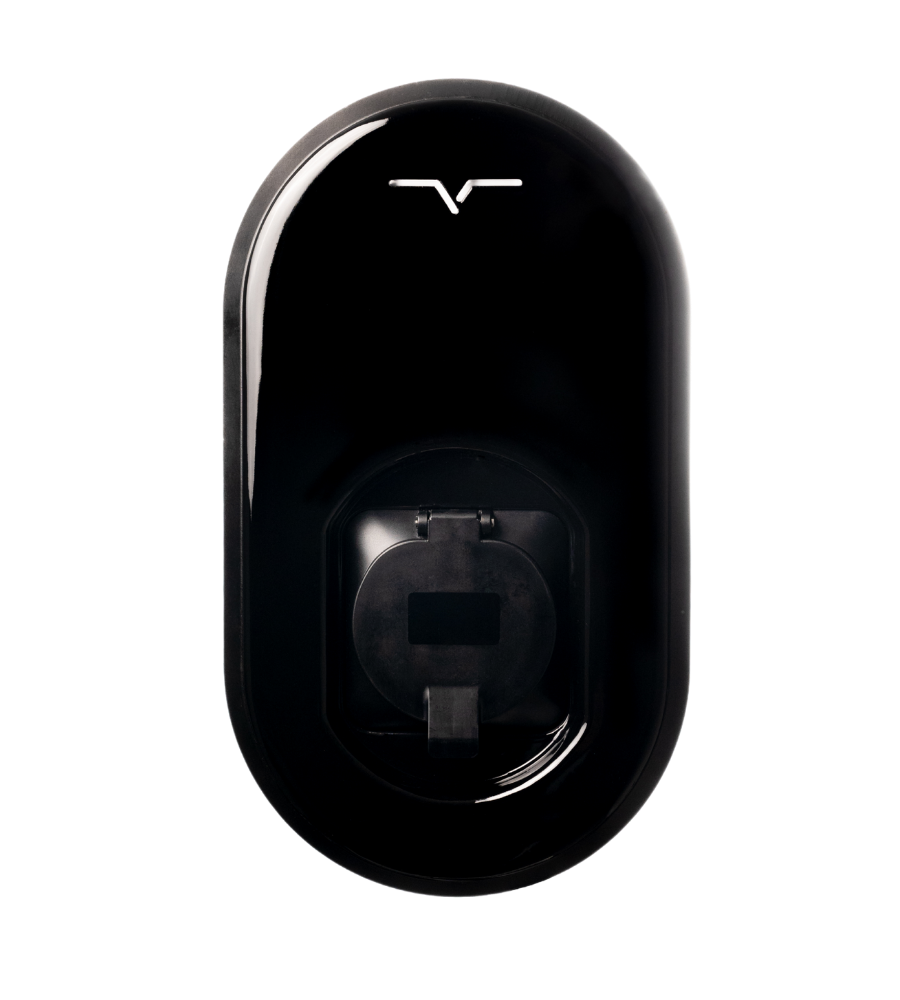
The VCHRGD Seven Pro is notably compact at 300mm × 180mm × 90mm — electriccarguide.co.uk notes the newer Pro model is 40% smaller than its predecessor, according to wepoweryourcar.com. It carries an IK10 impact resistance rating alongside IP54 weatherproofing, meaning it can handle a knock from a wayward football or a clumsy reversing manoeuvre. It weighs around 4 kg with cable and comes only in black.
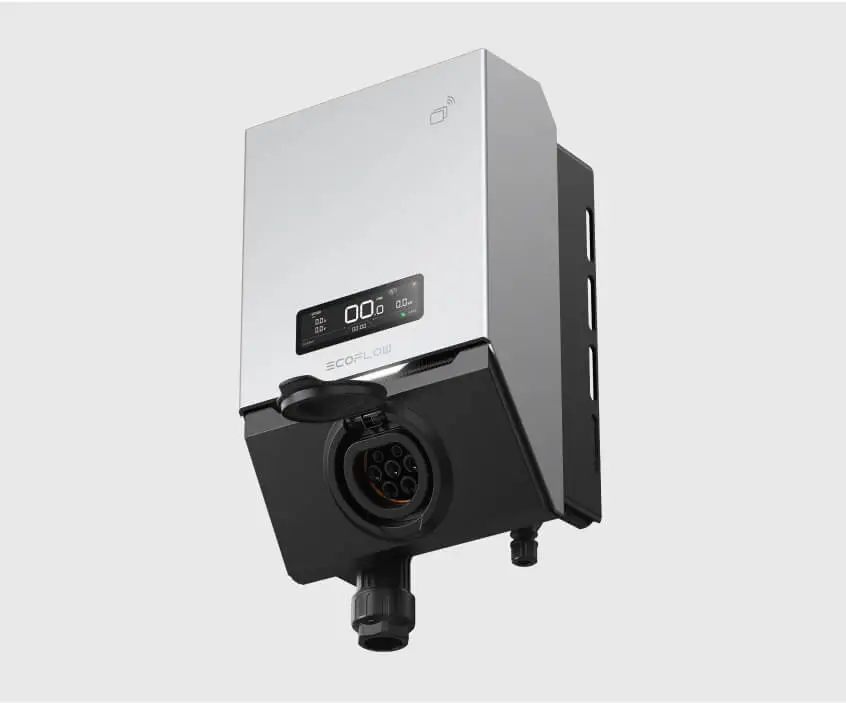
The EcoFlow PowerPulse 2 is larger at 333mm × 226mm × 145mm but lighter at roughly 3.5 kg. It has a slightly higher IP55 water ingress rating and includes a built-in LCD display — a genuinely useful touch that lets you check charging status at a glance without reaching for your phone. Neither charger offers colour options, so aesthetics are a draw.
Both carry 3-year warranties, which is adequate but shorter than the 5-year cover offered by Easee, Wallbox, and Zaptec. For newer brands, a longer warranty would have been reassuring.
Price and Value
| Cost Element | VCHRGD Seven Pro | EcoFlow PowerPulse 2 |
|---|---|---|
| Unit price | £432 (tethered 7.5m) | £545 (untethered) |
| Typical installation | £400–£600 | £400–£600 |
| Total installed cost | £832–£1,032 | £945–£1,145 |
| After OZEV grant (if eligible) | £332–£532 | £445–£645 |
The VCHRGD Seven Pro is £113 cheaper at the unit level, and arguably includes more in the box — a 7.5m tethered cable, CT clamp, and two RFID cards all come as standard. The EcoFlow's untethered base model means you will need your own Type 2 cable (typically £80–£150) unless you opt for the tethered version with its shorter 5m lead.
For pure pound-for-pound value on a single-phase home, the VCHRGD is exceptionally hard to beat. The EcoFlow justifies its premium primarily through three-phase capability and ecosystem integration — features that are genuinely valuable if they apply to your situation, but irrelevant if they do not.
One important note: the VCHRGD Seven Pro is confirmed OZEV-approved, while the EcoFlow PowerPulse 2's OZEV approval status is not yet confirmed. If you are an eligible renter or flat owner counting on the £500 grant, verify the EcoFlow's status before purchasing.
Who Should Buy Which?
Buy the VCHRGD Seven Pro if:
- You want the most features for the least money on a single-phase home
- You have solar panels and want two distinct solar charging modes with the CT clamp included
- You share a driveway and need RFID access control (two cards included)
- You prefer a longer 7.5m tethered cable for flexible parking positions
- You want confirmed OZEV grant eligibility
Buy the EcoFlow PowerPulse 2 if:
- You already own or plan to buy EcoFlow PowerOcean batteries and solar equipment
- You have three-phase power supply and want to charge at up to 22kW
- You value a built-in LCD display for at-a-glance status checks
- You are building a whole-home energy management system under one app
- You prefer an untethered socket for charging multiple vehicles with different cables
Our recommendation: For the majority of UK homeowners on single-phase power without existing EcoFlow equipment, the VCHRGD Seven Pro is the stronger buy. It delivers a remarkable feature set — solar integration, load balancing, RFID, OCPP, and a generous cable — for £432, making it one of the best-value smart chargers available. The EcoFlow PowerPulse 2 is the better choice in two specific scenarios: if you are investing in the EcoFlow energy ecosystem, or if you have three-phase power and want faster charging. Outside those use cases, the £113 saving and more complete out-of-the-box package make the VCHRGD the smarter spend.
Read our full VCHRGD Seven Pro review or EcoFlow PowerPulse 2 review.
We’ll handle the installation
We’ll match you with vetted UK electricians — up to 3 free quotes, no obligation.