Tesla Wall Connector vs Sync Energy Wall Charger 2: Premium Polish or Smart Value?
Premium Polish vs Smart Value: Which Charger Deserves Your Driveway?
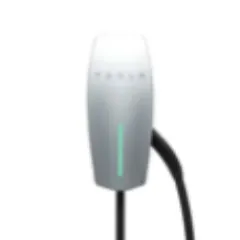
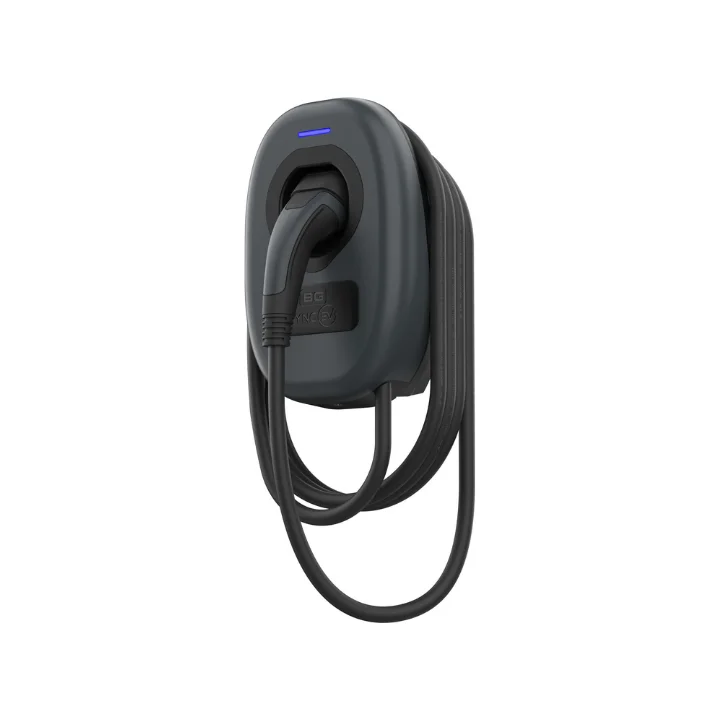
These two chargers sit at opposite ends of the UK home charging philosophy. The Tesla Wall Connector (Gen 3) is the sleek, brand-loyal choice — a charger built to slot seamlessly into the Tesla ecosystem with minimal fuss. The Sync Energy Wall Charger 2, meanwhile, is a feature-packed underdog from UK-listed company Luceco PLC, cramming in solar diversion, smart tariff scheduling, and built-in PEN fault protection at a price that undercuts almost everything on the market.
If you drive a Tesla and want the tidiest possible ownership experience, the Wall Connector is the obvious starting point. But if you want more flexibility — particularly around solar panels, smart tariffs, or future-proofing with OCPP — the Sync Energy makes a compelling case for keeping an extra £100 or more in your pocket. Let's dig into the detail.
In a nutshell:
- Tesla Wall Connector (Gen 3) (£425): The best-in-class Tesla app experience, power sharing for up to 6 units, and a market-leading 4-year warranty.
- Sync Energy Wall Charger 2 (£362): A budget-friendly UK-designed charger with integrated solar diversion, smart tariff scheduling, and built-in PEN fault protection — all for under £365.
Spec Comparison
| Feature | Tesla Wall Connector (Gen 3) | Sync Energy Wall Charger 2 |
|---|---|---|
| Price (unit only) | £425 | £362 (socketed); from £302 (tethered) |
| Max Power | 7.4kW (single-phase) / 22kW (three-phase) | 7.4kW (single-phase only) |
| Cable Length | 7.3m (tethered, Type 2) | 7.5m (tethered variant, Type 2) |
| Type | Tethered | Untethered (socketed); tethered available |
| Smart Tariff Support | Manual scheduling only | TariffSense scheduling |
| Solar Diversion | No (requires additional hardware) | Yes — SolarCharge with CT clamp |
| Connectivity | Wi-Fi | Wi-Fi, Ethernet, Bluetooth |
| Warranty | 4 years | 3 years |
| IP Rating | IP44 | IP65 + IK10 |
| OCPP Support | No | Yes (OCPP 1.6J) |
| PEN Fault Protection | External device required | Built-in |
| OZEV Approved | No | Yes |
Smart Tariff Integration
This is where the Sync Energy pulls ahead in a meaningful way. Its TariffSense feature is designed to work with time-of-use tariffs, automatically scheduling your charging sessions to take advantage of cheaper overnight rates. If you're on something like Octopus Go (7.5p/kWh between 00:30 and 04:30) or Octopus Intelligent Go (~7p/kWh off-peak), that kind of automation can save you hundreds of pounds a year compared to daytime rates.
The Tesla Wall Connector, by contrast, has no built-in smart tariff integration. You can set charging schedules manually through the Tesla app — and Tesla owners can access the Tesla Energy plan — but there's no direct link to third-party tariff data. As viablepower.co.uk notes, chargers like Ohme have made a name for themselves with deep tariff integration, and the Tesla lags behind in this specific area. If squeezing every penny from an agile or time-of-use tariff is your priority, the Sync Energy's TariffSense gives it a genuine edge.
Solar Diversion
If you've got solar panels on your roof — or plan to install them — this comparison becomes lopsided. The Sync Energy Wall Charger 2 includes SolarCharge, an integrated solar diversion feature that uses a CT clamp to monitor your solar generation and divert surplus energy into your car. It's a similar concept to the Myenergi Zappi, but at a fraction of the price.
The Tesla Wall Connector has no solar diverting capability without additional hardware. For a household generating, say, 4kW of surplus solar on a sunny afternoon, the Sync Energy can automatically route that power into your EV rather than exporting it to the grid at roughly 15p/kWh. Over a year, that could easily save £150–£250 depending on your system size and driving habits. If you don't have solar panels and have no plans to install them, this is irrelevant — but if you do, it's a significant differentiator.
App, Connectivity, and Ecosystem
The Tesla app experience is, frankly, superb — and that's not just marketing. As electriccarguide.co.uk highlights, Tesla owners get charging schedules, session history, and notifications all within the same app they use to manage their car. There's no second app to download, no separate login. It just works. The Wall Connector also supports power sharing across up to 6 units on a single circuit, which is genuinely useful for households with multiple EVs or for landlords managing shared parking.
The Sync Energy app has had a rockier journey. Early users experienced confusion during a platform transition from Monta, and some reviews flag Wi-Fi connectivity issues at range. That said, the Sync Energy hedges its bets with three connectivity options — Wi-Fi, Ethernet, and Bluetooth — so if your Wi-Fi signal is weak at the charger location, you can hardwire an Ethernet cable for rock-solid reliability. The charger is also OCPP 1.6J compliant, meaning it can connect to third-party energy management platforms. This is a genuine future-proofing advantage that the Tesla simply doesn't offer.
Build Quality and Installation
Both chargers are suitable for outdoor installation, but there's a notable difference in weatherproofing. The Sync Energy is OZEV-approved (the Tesla Wall Connector is not) and carries an IP65 rating plus IK10 impact resistance — meaning it's fully protected against water jets and can withstand a reasonable knock. The Tesla Wall Connector is rated IP44, which covers splashing water but is a step below. For a charger mounted on an exposed driveway wall, the Sync Energy's ruggedisation is reassuring. qualityheating.co.uk and smarthomecharge.co.uk both note the Tesla's premium build quality and sleek aesthetics, however — it's a genuinely attractive unit.
A crucial installation difference: the Sync Energy has built-in PEN fault protection, which means your electrician won't need to install an external PME fault device or drive an earth rod. This can save £50–£150 on installation costs and reduces complexity. The Tesla Wall Connector requires this additional protection as standard, as electriccarguide.co.uk confirms.
One more thing — the Sync Energy offers interchangeable fascia plates in 9 colours, so you can match it to your brickwork or front door. The Tesla comes in white. Just white.
Price and Value
| Cost Element | Tesla Wall Connector | Sync Energy Wall Charger 2 |
|---|---|---|
| Unit price | £425 | £362 (socketed) / from £302 (tethered) |
| Typical installation | £400–£600 | £300–£600 |
| Total installed range | £825–£1,025 | £602–£962 |
| After OZEV grant (if eligible) | Not eligible | £102–£462 |
The numbers speak clearly here. The Sync Energy can be installed for significantly less, especially in its tethered configuration from £302. Factor in the savings from built-in PEN fault protection — which removes an installation extra that Tesla owners must pay for — and the gap widens further. The Tesla Wall Connector is not OZEV-approved, so only the Sync Energy benefits from the £500 grant. For eligible renters and flat owners, the Sync Energy tethered model could land under £300 fully installed in a best-case scenario.
The Tesla justifies its premium through ecosystem integration, the 4-year warranty (versus 3 years for the Sync Energy), and the option for 22kW three-phase charging if your property supports it. But on pure value-for-money, the Sync Energy is hard to beat.
Who Should Buy Which?
Buy the Tesla Wall Connector (Gen 3) if:
- You drive a Tesla and want everything managed in one app with zero friction
- You have multiple EVs and need power sharing across up to 6 chargers
- You have (or plan to get) a three-phase supply and want 22kW charging speeds
- You value a longer 4-year warranty for peace of mind
- You prioritise design and want the cleanest-looking charger on the market
Buy the Sync Energy Wall Charger 2 if:
- You have solar panels and want integrated solar diversion without buying a Zappi
- You want smart tariff scheduling built into the charger via TariffSense
- You want to minimise installation costs with built-in PEN fault protection
- You want OCPP 1.6J support for future flexibility with energy platforms
- Budget matters — you want a fully featured smart charger from as little as £302
Our recommendation: For Tesla owners who don't have solar panels and aren't fussed about squeezing every fraction of a penny from an agile tariff, the Tesla Wall Connector remains the most polished, integrated choice. But for everyone else — and particularly for households with solar panels or those on smart tariffs — the Sync Energy Wall Charger 2 delivers substantially more functionality for substantially less money. It's not as slick, and the app experience has had growing pains, but the feature set at this price point is genuinely impressive. If value and versatility are your priorities, the Sync Energy wins.
For the full specs-level breakdown, see our Tesla Wall Connector (Gen 3) vs Sync Energy Wall Charger 2 comparison page.
Read our full Tesla Wall Connector (Gen 3) review or Sync Energy Wall Charger 2 review.
For total installed cost rankings, see our cheapest EV charger guide.
We’ll handle the installation
We’ll match you with vetted UK electricians — up to 3 free quotes, no obligation.