Sync Energy Wall Charger 2 vs VCHRGD Seven Pro: Budget Smart Charger Showdown
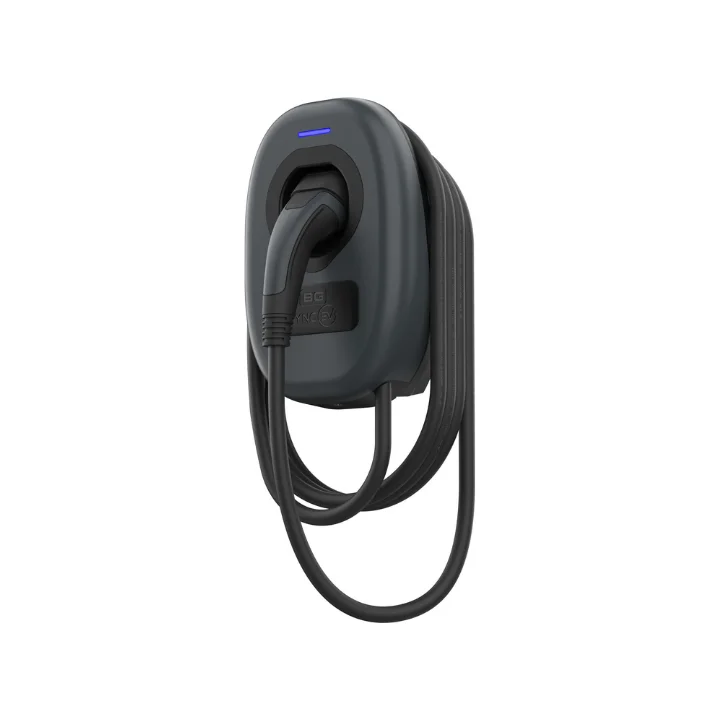
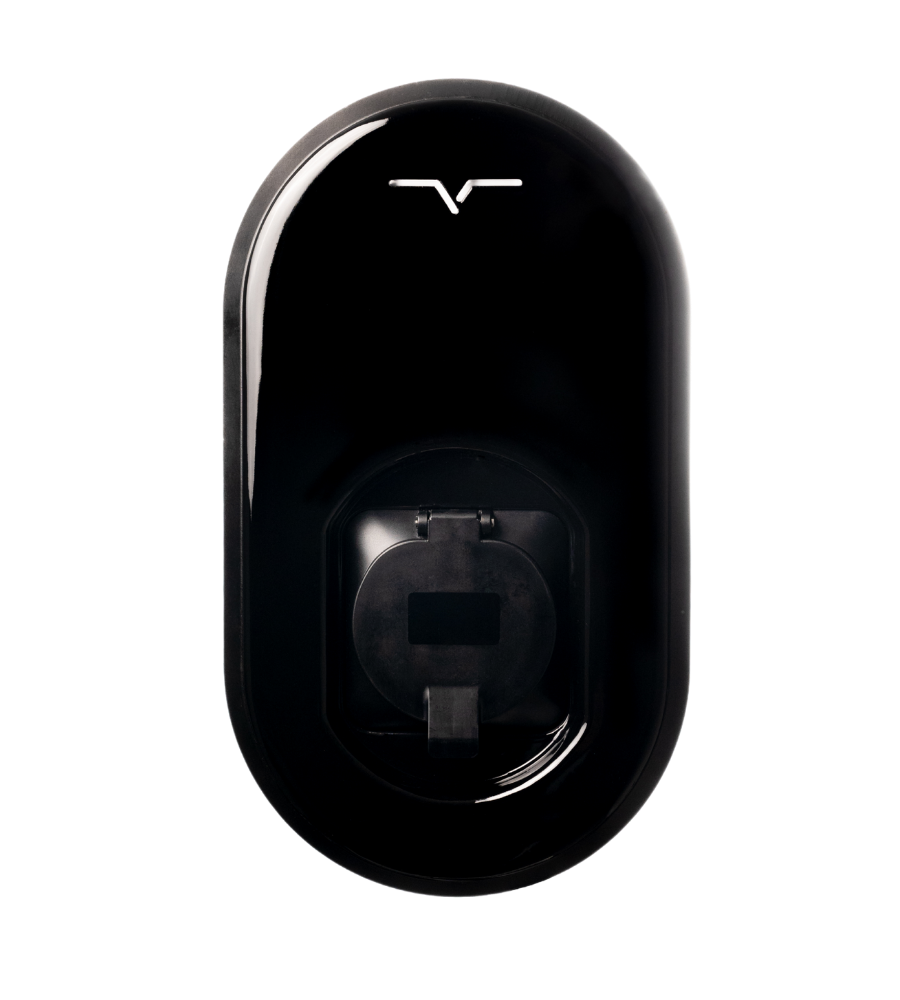
Two Budget Chargers, One Big Decision
If you're shopping for a smart home EV charger in 2025 without wanting to spend north of £500, two names keep cropping up: the Sync Energy Wall Charger 2 and the VCHRGD Seven Pro. Both sit comfortably below the price of a Tesla Wall Connector, yet both pack in features — solar diversion, dynamic load balancing, OCPP compliance — that you'd normally expect from chargers costing significantly more.
So what separates them? The Sync Energy is backed by Luceco PLC, a listed UK electrical products company, and offers unmatched flexibility with nine interchangeable fascia colours and both tethered and untethered options starting from just £302. The VCHRGD Seven Pro, meanwhile, is a newer contender that has quickly earned a stellar 4.8-star rating by cramming in more features per pound than almost anything else on the market — including two RFID cards and a CT clamp in the box. Choosing between them comes down to what you value most: established pedigree and customisation, or raw feature density from a hungry newcomer.
In a nutshell:
- Sync Energy Wall Charger 2 (£362): A UK-designed, budget-friendly smart charger with nine colour options, Ethernet connectivity, and the backing of a publicly listed company.
- VCHRGD Seven Pro (£432): The feature-packed challenger that includes RFID cards, a CT clamp, and two solar charging modes — all for under £450.
Spec Comparison
| Feature | Sync Energy Wall Charger 2 | VCHRGD Seven Pro |
|---|---|---|
| Price | From £302 (tethered) / £362 (untethered) | From £395 (untethered) / £432 (tethered) |
| Power | 7.4kW (single-phase) | 7.4kW (single-phase) |
| Cable | 7.5m Type 2 (tethered version) | 7.5m Type 2 (tethered version) |
| Smart tariffs | TariffSense scheduling | Octopus Intelligent Go integration |
| Solar | SolarCharge (solar diversion) | Solar Export + Solar Only modes |
| Connectivity | Wi-Fi, Ethernet, Bluetooth | Wi-Fi, Bluetooth (optional 4G) |
| OCPP | 1.6J | 1.6J |
| RFID | On select models | Yes — 2 cards included |
| Dynamic load balancing | Yes | Yes (CT clamp included) |
| Warranty | 3 years | 3 years |
| IP / IK rating | IP65 + IK10 | IP54 + IK10 |
| Dimensions | 305 × 201 × 115mm | 300 × 180 × 90mm |
| Weight | ~4–5 kg | ~4 kg |
Smart Tariff Integration
Both chargers support scheduled charging to help you take advantage of cheap overnight electricity — essential if you're on a tariff like Octopus Go (7.5p/kWh between 00:30 and 04:30) or Octopus Intelligent Go (~7p/kWh off-peak). At those rates, charging a 60kWh Tesla Model 3 from empty costs roughly £4.20–£4.50 rather than the £16+ you'd pay at standard daytime rates.
The VCHRGD Seven Pro has a clear edge here with explicit integration for Octopus Intelligent Go via the Powerverse app. This means the charger can communicate directly with Octopus to unlock the extended off-peak window that Intelligent Go offers — potentially giving you cheap-rate electricity from as early as 23:30 rather than the standard 00:30 start. The Sync Energy's TariffSense scheduling is capable but works more as a timer-based approach through its app. It'll get the job done on fixed-window tariffs like Octopus Go, but the VCHRGD's direct smart tariff integration is the more sophisticated solution.
Solar Diversion
Both chargers offer solar charging capabilities, which is increasingly important as more UK homes add solar panels. However, their approaches differ in meaningful ways.
The VCHRGD Seven Pro provides two distinct solar modes: Solar Export, which uses excess solar generation to charge your car while still powering your home, and Solar Only, which restricts charging entirely to surplus solar power. Crucially, the CT clamp needed for solar monitoring comes included in the box — a genuine cost saving of £30–50 compared to chargers that sell it separately. The Sync Energy Wall Charger 2 offers its SolarCharge feature with CT clamp support, providing solar diversion functionality as well. Both chargers use CT clamps to monitor your home's energy flow, but the VCHRGD's dual-mode approach gives you slightly more granular control over how aggressively you prioritise solar energy.
If you have a 4kW solar array and charge during peak generation hours in summer, you could realistically add 15–20 miles of range per day from free solar energy alone — that's potentially 5,000+ free miles per year depending on your driving patterns and panel orientation.
App and Connectivity
The Sync Energy Wall Charger 2 connects via Wi-Fi, Ethernet, and Bluetooth. That Ethernet option is genuinely noteworthy — it's rare at this price point and provides a rock-solid connection for homes where Wi-Fi signal to the garage or driveway is patchy. This matters because some user reviews have flagged Wi-Fi reliability issues with the Sync Energy, so having a wired fallback is reassuring. It's worth noting that the Sync Energy's app platform has transitioned — early users experienced the Monta app, while the charger now uses the Sync Energy app with TariffSense. This transition reportedly caused some confusion, though it should be settled for new buyers now. evergy.co.uk
The VCHRGD Seven Pro uses the Powerverse app, which features a Raya AI assistant — a novel touch that can help optimise your charging based on your habits and tariff. The charger connects via Wi-Fi and Bluetooth, with optional 4G available. The risk here is platform dependency: Powerverse is a third-party app, and the long-term continuity of that partnership isn't guaranteed. That said, both chargers support OCPP 1.6J, which means either could theoretically be migrated to a different management platform in the future — a valuable safety net.
Build Quality and Design
Both chargers carry IK10 impact resistance ratings, meaning they'll shrug off the occasional bump from a wheelie bin or wayward football. However, the Sync Energy edges ahead on weather protection with an IP65 rating versus the VCHRGD's IP54. In practical terms, IP65 means the Sync Energy is fully protected against water jets from any direction, while IP54 protects against splashing water. Both are perfectly adequate for a UK driveway, but if your charger is particularly exposed to driving rain, the Sync Energy offers more peace of mind.
Design-wise, the Sync Energy's party trick is its nine interchangeable fascia plates, letting you colour-match to your property. The VCHRGD Seven Pro comes in black only. If kerb appeal matters to you — and for a box that'll sit on the front of your house for a decade — the Sync Energy's customisation options are a genuine advantage. The VCHRGD is the more compact unit at 300 × 180 × 90mm versus the Sync Energy's 305 × 201 × 115mm, though neither is what you'd call bulky.
Price and Value
| Cost element | Sync Energy Wall Charger 2 | VCHRGD Seven Pro |
|---|---|---|
| Unit price | From £302 (tethered) / £362 (untethered) | From £395 (untethered) / £432 (tethered) |
| Typical installation | £300–£600 | £400–£600 |
| Total installed cost | £602–£962 | £795–£1,032 |
| After OZEV grant (if eligible) | £102–£462 | £295–£532 |
The Sync Energy is the cheaper option by £70–130 depending on which variants you compare. That's meaningful at this end of the market. However, the VCHRGD includes two RFID cards and a CT clamp in the box, which would cost extra with many competitors. When you factor those accessories in, the real-world price gap narrows considerably. Both chargers include built-in PEN fault protection, saving you the £100+ cost of an earth rod installation — a genuine saving that installers and comparison sites consistently highlight. evcompared.co.uk
Who Should Buy Which?
Buy the Sync Energy Wall Charger 2 if:
- You want the lowest possible upfront cost — from just £302 for the tethered version
- Your Wi-Fi signal is weak at the charger location and you need Ethernet connectivity
- You care about aesthetics and want to colour-match with nine fascia options
- You prefer a charger backed by an established, publicly listed UK company (Luceco PLC)
- Your charger will be fully exposed to the elements and you want IP65 weather protection
Buy the VCHRGD Seven Pro if:
- You want the most features for your money, including RFID cards and CT clamp in the box
- You're on Octopus Intelligent Go or plan to switch to it for direct smart tariff integration
- You have solar panels and want granular control with two distinct solar charging modes
- You share a driveway and need RFID access control out of the box
- You value a compact, lightweight unit and don't mind the black-only colour option
Our recommendation: For most buyers, the VCHRGD Seven Pro edges it. Its 4.8-star rating, included accessories, superior smart tariff integration, and dual solar modes make it the more complete package despite the higher price tag. The £70 premium over the Sync Energy's tethered price buys you meaningfully more functionality. However, the Sync Energy Wall Charger 2 is the smarter pick if budget is your absolute priority, if you need Ethernet connectivity for a reliable connection, or if you want your charger to blend seamlessly with your property's exterior. Both are excellent choices that punch well above their price point.
For the full specs-level breakdown, see our Sync Energy Wall Charger 2 vs VCHRGD Seven Pro comparison page.
Read our full Sync Energy Wall Charger 2 review or VCHRGD Seven Pro review.
For total installed cost rankings, see our cheapest EV charger guide.
We’ll handle the installation
We’ll match you with vetted UK electricians — up to 3 free quotes, no obligation.