Sync Energy Wall Charger 2 vs Rolec EVO: UK Value Champions Compared
Budget Brilliance: Two UK-Built Smart Chargers That Punch Above Their Weight
If you've been shopping for a home EV charger and feel like every decent option costs north of £600, the Sync Energy Wall Charger 2 and the Rolec EVO will come as a welcome surprise. Both are designed and built in the UK, both pack in smart features that rival chargers costing significantly more, and both include built-in PEN fault protection — saving you the cost and hassle of an earth rod installation. They represent, arguably, the two best value propositions in the UK home charger market right now.
So why might you be torn between them? They occupy very similar territory: sub-£500 smart chargers with solar integration, dynamic load balancing, and OCPP compliance. The differences come down to design philosophy, warranty length, connectivity options, and whether you prefer a tethered or untethered setup. Let's dig into the details.
In a nutshell:
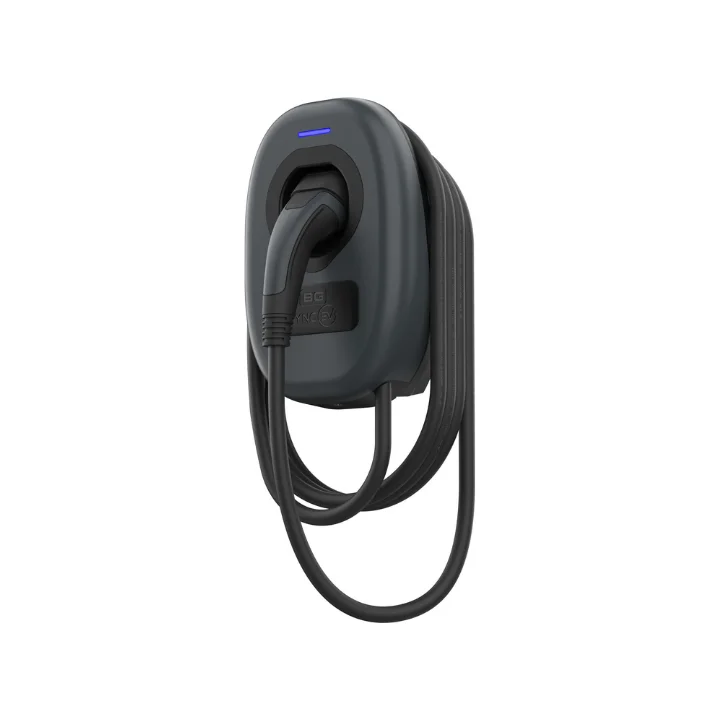
- Sync Energy Wall Charger 2 (£362): The most affordable fully-featured smart charger on the market, available in both tethered and untethered variants with nine interchangeable colour fascias.
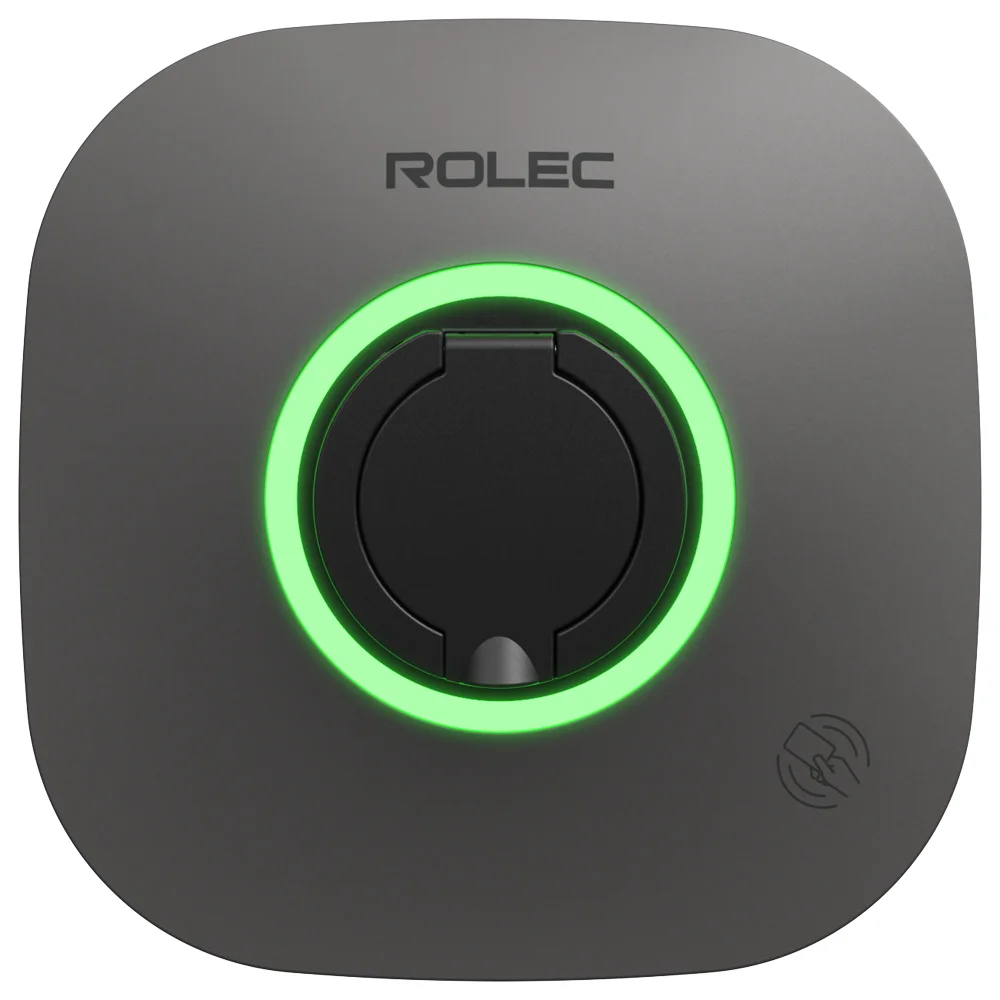
- Rolec EVO (£449): A Red Dot Award-winning UK-manufactured charger with a class-leading 5-year warranty, Wi-Fi 6, and comprehensive solar integration out of the box.
Spec Comparison
| Feature | Sync Energy Wall Charger 2 | Rolec EVO |
|---|---|---|
| Price | £362 (socketed); from £302 (tethered) | £449 |
| Power | 7.4kW (single-phase) | 7.4kW (single-phase) |
| Cable | 7.5m Type 2 (tethered) / Untethered | Untethered only |
| Smart tariff scheduling | Yes — TariffSense | Yes — charge scheduling |
| Solar integration | SolarCharge (CT clamp) | Eco + Eco+ modes (CT clamp included) |
| Connectivity | Wi-Fi, Ethernet, Bluetooth | Wi-Fi 6, Bluetooth 5.0, Ethernet |
| OCPP | 1.6J | 1.6J |
| Warranty | 3 years | 5 years |
| IP / IK Rating | IP65 / IK10 | IP54 / IK10 |
| Type | Tethered or Untethered | Untethered only |
| Weight | ~4–5 kg | 3 kg |
| RFID | On select models | Yes (2 cards included) |
Smart Tariff Integration and Scheduling
Both chargers let you schedule charging sessions to take advantage of off-peak electricity rates — essential if you're on a tariff like Octopus Intelligent Go (~7p/kWh off-peak) or Octopus Go (7.5p/kWh between 00:30 and 04:30). Charging overnight on these tariffs rather than at peak rates can save you roughly £400–500 per year based on average UK mileage of 7,400 miles in a Tesla Model 3.
The Sync Energy uses its TariffSense feature for scheduling, while the Rolec EVO handles it through its own EVO app. Both are OCPP 1.6J compliant, which is worth paying attention to — it means either charger can connect to third-party energy management platforms in the future, giving you flexibility if you switch providers or want to integrate with a home energy management system.
One area of concern flagged in user reviews is app reliability. The Sync Energy charger went through a transition from the Monta app to its own platform, which caused some confusion among early adopters. The Rolec EVO's app, meanwhile, is still relatively new and being refined. Neither charger has the app polish of, say, the myenergi or Tesla ecosystems, but both are functional and improving with OTA updates.
Solar Diversion
This is where both chargers genuinely shine for the price. Solar diversion — using excess energy from your rooftop panels to charge your EV rather than exporting it to the grid — can save you significant money. If you're currently exporting at the Smart Export Guarantee rate of around 4–6p/kWh but could instead be using that energy to charge your car (avoiding 24–30p/kWh grid electricity), the savings add up quickly.
The Sync Energy Wall Charger 2 offers its SolarCharge feature, which works with a CT clamp to monitor your solar generation and divert surplus energy to your EV. The Rolec EVO takes a similar approach but offers two distinct modes: Eco mode, which blends solar and grid power to maintain a minimum charge rate, and Eco+ mode, which charges exclusively from solar surplus. The Rolec also includes the CT clamp in the box, whereas you should confirm this is included with the Sync Energy at the point of purchase.
For households with solar panels, both chargers represent outstanding value — you'd typically need to spend £600+ on a charger from myenergi or Ohme to get comparable solar functionality. As evergy.co.uk notes, the Sync Energy features "multiple modes, including options to utilise excess energy generated by home solar panels."
Build Quality, Design, and Connectivity
The Rolec EVO is the more compact and lighter unit at just 3 kg and 260mm × 260mm, sporting a clean, minimalist square design that won a Red Dot Award in 2024. The Sync Energy is slightly larger (305mm × 201mm) and heavier at 4–5 kg, but offers something the Rolec doesn't: nine interchangeable colour fascia plates, letting you match the charger to your property's exterior.
On weatherproofing, the Sync Energy edges ahead with an IP65 rating (fully protected against water jets from any direction) versus the Rolec's IP54 (protected against splashing water). Both share the same IK10 impact resistance rating — the highest available — so neither will be troubled by a stray football or a bumped wheelie bin.
Connectivity is another differentiator. The Rolec EVO features Wi-Fi 6 and Bluetooth 5.0, which should provide faster and more reliable wireless connections than the Sync Energy's standard Wi-Fi. Both offer wired Ethernet as a fallback, which is always the most reliable option if you can run a cable. Neither base model offers 4G cellular connectivity — the Sync Energy does have a "GG" variant with cellular, but that's a separate SKU. Some user reviews have flagged Wi-Fi reliability issues with the Sync Energy at range, so if your router is far from the charger location, Ethernet or the Rolec's Wi-Fi 6 may be the safer bet.
Installation Considerations
Both chargers include built-in PEN fault protection (called PME fault detection on the Rolec), which is a genuine money-saver. Without this, your installer would need to fit a separate PEN fault device or install an earth rod — typically adding £100–200 to the installation bill. Both also include built-in Type A RCD with 6mA DC protection, meaning fewer additional components in your consumer unit.
As plugin-stations.com notes, installation considerations include the distance from your electricity meter to the charger location. Standard installations for both chargers fall in the £300–600 range, though the Sync Energy's lower starting price may translate to a slightly lower total installed cost.
Price and Value
| Sync Energy Wall Charger 2 | Rolec EVO | |
|---|---|---|
| Unit price | £362 (socketed) / from £302 (tethered) | £449 |
| Installation estimate | £300–600 | £400–600 |
| Total installed (estimate) | £602–962 | £849–1,049 |
| After OZEV grant (if eligible) | £102–462 | £349–549 |
The Sync Energy is the clear winner on price — potentially £87 cheaper at the unit level (socketed vs socketed) and up to £147 cheaper in tethered form. Over a typical ownership period, that saving could cover several months of off-peak charging. However, the Rolec EVO counters with a 5-year warranty versus the Sync Energy's 3 years, which represents meaningful peace of mind and could save you far more than the price difference if anything goes wrong in years four or five.
Both chargers are OZEV-approved, so eligible renters and flat owners can claim up to £500 off installation costs.
Who Should Buy Which?
Buy the Sync Energy Wall Charger 2 if:
- You want the lowest possible upfront cost for a fully-featured smart charger
- You prefer a tethered charger with a permanently attached 7.5m cable
- You want to customise the charger's appearance with interchangeable colour fascias
- You need maximum weatherproofing (IP65) for an exposed mounting location
- You want the option of a 4G cellular model (GG variant) for locations with poor Wi-Fi
Buy the Rolec EVO if:
- A 5-year warranty is important to you — it's among the best in the industry
- You have solar panels and want clearly defined Eco and Eco+ charging modes with the CT clamp included
- You value Wi-Fi 6 and Bluetooth 5.0 for more reliable wireless connectivity
- You prefer a compact, award-winning design (Red Dot 2024)
- You want RFID access cards included as standard for shared or multi-user scenarios
Our recommendation: For most buyers, the Rolec EVO gets our nod. The 5-year warranty alone justifies the price premium over the Sync Energy, and the inclusion of Wi-Fi 6, RFID cards, and a CT clamp in the box means fewer surprises at checkout. Its solar integration is also marginally more sophisticated with the dual Eco/Eco+ modes. However, if budget is your primary concern or you specifically want a tethered charger, the Sync Energy Wall Charger 2 from £302 is genuinely hard to beat — it's the cheapest fully-featured smart charger we've tested, and it's backed by Luceco PLC, a listed UK company. You won't go wrong with either.
For the full specs-level breakdown, see our Sync Energy Wall Charger 2 vs Rolec EVO comparison page.
Read our full Sync Energy Wall Charger 2 review or Rolec EVO review.
For total installed cost rankings, see our cheapest EV charger guide.
We’ll handle the installation
We’ll match you with vetted UK electricians — up to 3 free quotes, no obligation.