Sync Energy Wall Charger 2 vs NexBlue Point 2: Budget Hero or Future-Proof Pick?
Budget Favourite vs Future-Proof Contender: Which Smart Charger Deserves Your Driveway?
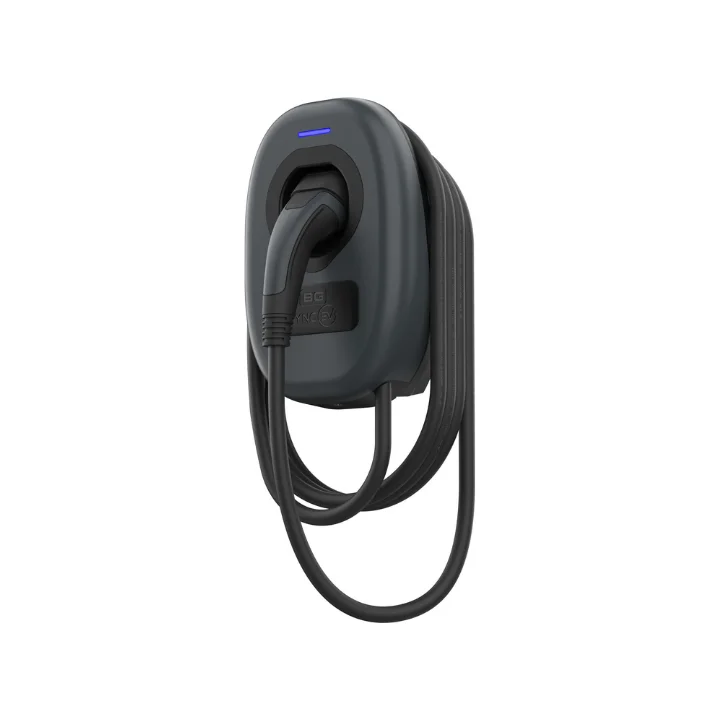
These two chargers sit at different points on the price spectrum but share a common goal: delivering genuine smart charging without breaking the bank. The Sync Energy Wall Charger 2 has quickly become one of the most popular budget-friendly options in the UK, backed by listed electrical company Luceco PLC and formerly sold under the BG Sync EV brand. The NexBlue Point 2, meanwhile, is a newer arrival that packs headline features — V2G readiness, lifetime 4G, OCPP 2.0.1 — into a remarkably compact unit at a mid-range price.
If you are weighing up whether to save roughly £170 with the Sync Energy or invest a little more in the NexBlue's future-proofing, this comparison will help you decide. Both charge at 7.4kW on a standard UK single-phase supply, both offer solar diversion, and both comply with the UK Smart Charge Points Regulations 2021. The differences lie in connectivity, warranty, design philosophy, and how far each charger looks ahead.
In a nutshell:
- Sync Energy Wall Charger 2 (£362): The best-value UK smart charger with integrated PEN protection, solar charging, and the option of a tethered cable — all from around £302.
- NexBlue Point 2 (£530): A genuinely future-proofed charger with V2G readiness, lifetime free 4G, and OCPP 2.0.1 support at a competitive mid-range price.
Spec Comparison
| Feature | Sync Energy Wall Charger 2 | NexBlue Point 2 |
|---|---|---|
| Price | £362 (socketed); tethered from £302 | £530–£600 |
| Power | 7.4kW (32A, single-phase) | 7.4kW (single-phase) |
| Cable | Untethered (socketed) or tethered 7.5m | Untethered only |
| Smart tariff support | TariffSense scheduling | EcoPilot tariff integration |
| Solar diversion | SolarCharge (CT clamp) | Solar surplus (requires NexBlue Zen accessory) |
| Connectivity | Wi-Fi, Ethernet, Bluetooth | Wi-Fi, Bluetooth, 4G eSIM (lifetime free) |
| Protocol | OCPP 1.6J | OCPP 1.6J and 2.0.1 |
| V2G ready | No | Yes (ISO 15118 / Plug & Charge) |
| Warranty | 3 years | 5 years |
| IP / IK rating | IP65 / IK10 | IP54 / IK10 |
| Weight | ~4–5 kg | 2.1 kg |
| Dimensions | 305 × 201 × 115 mm | 235 × 230 × 107 mm |
| RFID / NFC | RFID on select models | RFID + NFC included |
Smart Tariff Integration
Both chargers offer smart tariff scheduling, but they approach it differently. The Sync Energy's TariffSense feature connects to any UK tariff and provides real-time insights into charging costs via the Sync Energy app, as detailed on sync.energy. This means you can schedule sessions around cheap overnight windows on tariffs like Octopus Go (7.5p/kWh between 00:30 and 04:30) or Octopus Intelligent Go (~7p/kWh off-peak). It works, but you are largely setting schedules manually based on the tariff data the app surfaces.
The NexBlue Point 2's EcoPilot takes a more automated approach, actively integrating with smart tariffs to charge at the cheapest available rates without requiring you to manually configure time windows. For drivers on variable tariffs like Octopus Agile — where prices shift every 30 minutes — this kind of automation can squeeze out meaningful savings. On a typical 60kWh Tesla Model 3 battery, charging at 7p/kWh instead of the average 24p/kWh standard rate saves you roughly £10 per full charge, or around £220 a year based on average UK mileage of 7,400 miles.
Both approaches work well with fixed off-peak tariffs. But if you are on Agile or a similarly dynamic tariff, the NexBlue's EcoPilot automation is genuinely more hands-off.
Solar Diversion
Solar panel owners will be pleased that both chargers support solar surplus charging. The Sync Energy's SolarCharge feature uses a CT clamp to monitor your home's energy export and divert excess generation into your EV. According to the electricpoint.com datasheet, this is integrated directly into the charger — no additional accessories required beyond the CT clamp included with the load management kit.
The NexBlue Point 2 also offers solar surplus charging, but it requires the separate NexBlue Zen accessory to function. That is an additional cost and installation step that narrows the price gap between the two chargers. Neither system is as sophisticated as the myenergi Zappi's Eco+ mode, but both will help you make use of free solar energy during sunny months — particularly valuable if you work from home and your car sits on the drive during peak generation hours.
For straightforward, out-of-the-box solar diversion, the Sync Energy has the edge here.
App, Connectivity and Future-Proofing
The Sync Energy connects via Wi-Fi, Ethernet (RJ45), and Bluetooth for initial setup. The wired Ethernet option is a genuine advantage if your charger is in a garage with poor Wi-Fi signal — some user reviews have flagged Wi-Fi reliability issues at range. The base model lacks 4G, so if your charger location has no Wi-Fi or Ethernet access, you will need to step up to the more expensive GG variant. The app, now the Sync Energy app (having transitioned from Monta, as noted by evergy.co.uk), handles scheduling, energy monitoring, and solar management.
The NexBlue Point 2 takes a different approach with a built-in 4G eSIM that comes with a lifetime free data subscription. This is a standout feature — your charger stays connected regardless of your home Wi-Fi situation, and there are no ongoing costs. Combined with OCPP 2.0.1 support and ISO 15118 V2G readiness, the NexBlue is built for a future where your car could feed energy back to the grid for profit. That future is not here yet for most UK households, but when V2G tariffs and services do arrive, the NexBlue will not need replacing.
The Sync Energy supports OCPP 1.6J, which is perfectly adequate today but lacks the advanced security and smart grid features of 2.0.1.
Build Quality and Design
The Sync Energy is a solidly built unit with a UV-stabilised polycarbonate housing rated IP65 and IK10 — meaning it is fully weatherproof and highly impact-resistant. As highlighted by hivehome.com, it is made for British weather. The interchangeable colour fascia plates (nine options) are a nice touch for homeowners who care about kerb appeal, and the tethered version includes a built-in cable wrap and gun holster for tidy cable management.
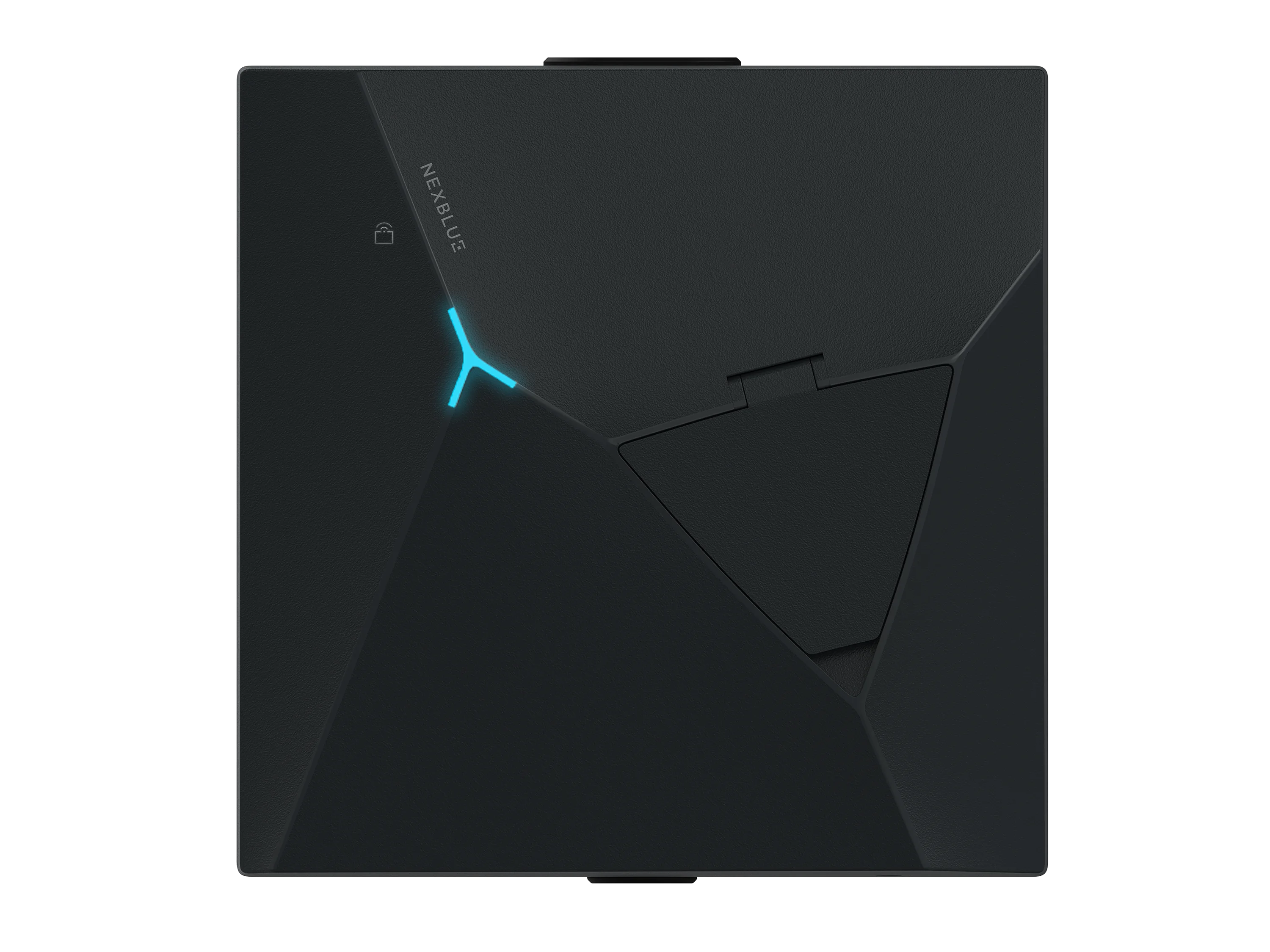
The NexBlue Point 2 is remarkably compact at just 235 × 230 × 107 mm and weighing only 2.1 kg — less than half the weight of the Sync Energy. Its IP54 rating is slightly lower (protected against splashing water rather than water jets), though IK10 impact resistance matches the Sync Energy. For a discreet installation, the NexBlue's smaller footprint is appealing, but the Sync Energy's higher IP rating may matter if your charger is fully exposed to driving rain.
Price and Value
| Cost element | Sync Energy Wall Charger 2 | NexBlue Point 2 |
|---|---|---|
| Unit price | £362 (socketed) / from £302 (tethered) | £530–£600 |
| Typical installation | £300–£600 | £400–£600 |
| Total installed cost | £602–£962 | £930–£1,200 |
| After OZEV grant (if eligible) | £102–£462 | £430–£700 |
The Sync Energy is significantly cheaper, and the price gap widens if you choose the tethered version from around £302. The built-in PEN fault protection on both models means no earth rod is required, saving £100–£150 on installation — though the Sync Energy has been particularly well-known for this cost-saving feature. Hive offers the Sync Energy fully installed from £1,019 including standard installation, as shown on hivehome.com.
The NexBlue justifies its premium through lifetime 4G, a five-year warranty (versus three), and V2G readiness. Whether those features are worth an extra £170–£230 depends entirely on your priorities. If V2G services launch in the UK within the next few years, the NexBlue could pay for itself through grid export revenue.
Who Should Buy Which?
Buy the Sync Energy Wall Charger 2 if:
- You want the lowest possible upfront cost without sacrificing smart features
- You prefer a tethered charger with a 7.5m cable for maximum convenience
- You have solar panels and want integrated solar diversion without buying extra accessories
- You have Ethernet available near your charger location for rock-solid connectivity
- You value a proven UK brand backed by Luceco PLC with an established installer network
Buy the NexBlue Point 2 if:
- You want V2G and ISO 15118 readiness to future-proof your installation
- You need guaranteed 4G connectivity without ongoing subscription fees
- A five-year warranty gives you peace of mind over the longer term
- You prefer an ultra-compact, lightweight unit for a discreet installation
- You are on a dynamic tariff like Octopus Agile and want automated cost optimisation via EcoPilot
Our recommendation: For most UK homeowners buying a charger today, the Sync Energy Wall Charger 2 is the smarter financial choice. It delivers everything you actually need right now — smart scheduling, solar diversion, dynamic load balancing, and integrated safety features — at a price that is genuinely hard to beat. However, if you are the type of buyer who keeps technology for five-plus years and wants to be ready for V2G without replacing hardware, the NexBlue Point 2's future-proofing and lifetime 4G make it a compelling investment. Just be aware that NexBlue is a younger brand, so you are placing a bet on their longevity alongside their technology.
For the full specs-level breakdown, see our Sync Energy Wall Charger 2 vs NexBlue Point 2 comparison page.
Read our full Sync Energy Wall Charger 2 review or NexBlue Point 2 review.
For total installed cost rankings, see our cheapest EV charger guide.
We’ll handle the installation
We’ll match you with vetted UK electricians — up to 3 free quotes, no obligation.