Sync Energy Wall Charger 2 vs Indra Smart LUX: Budget Brains vs Slim Premium
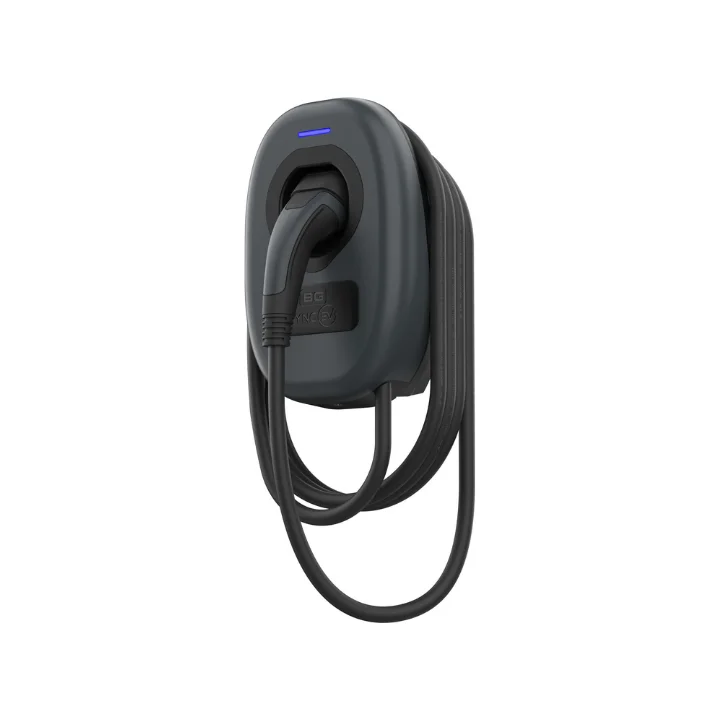
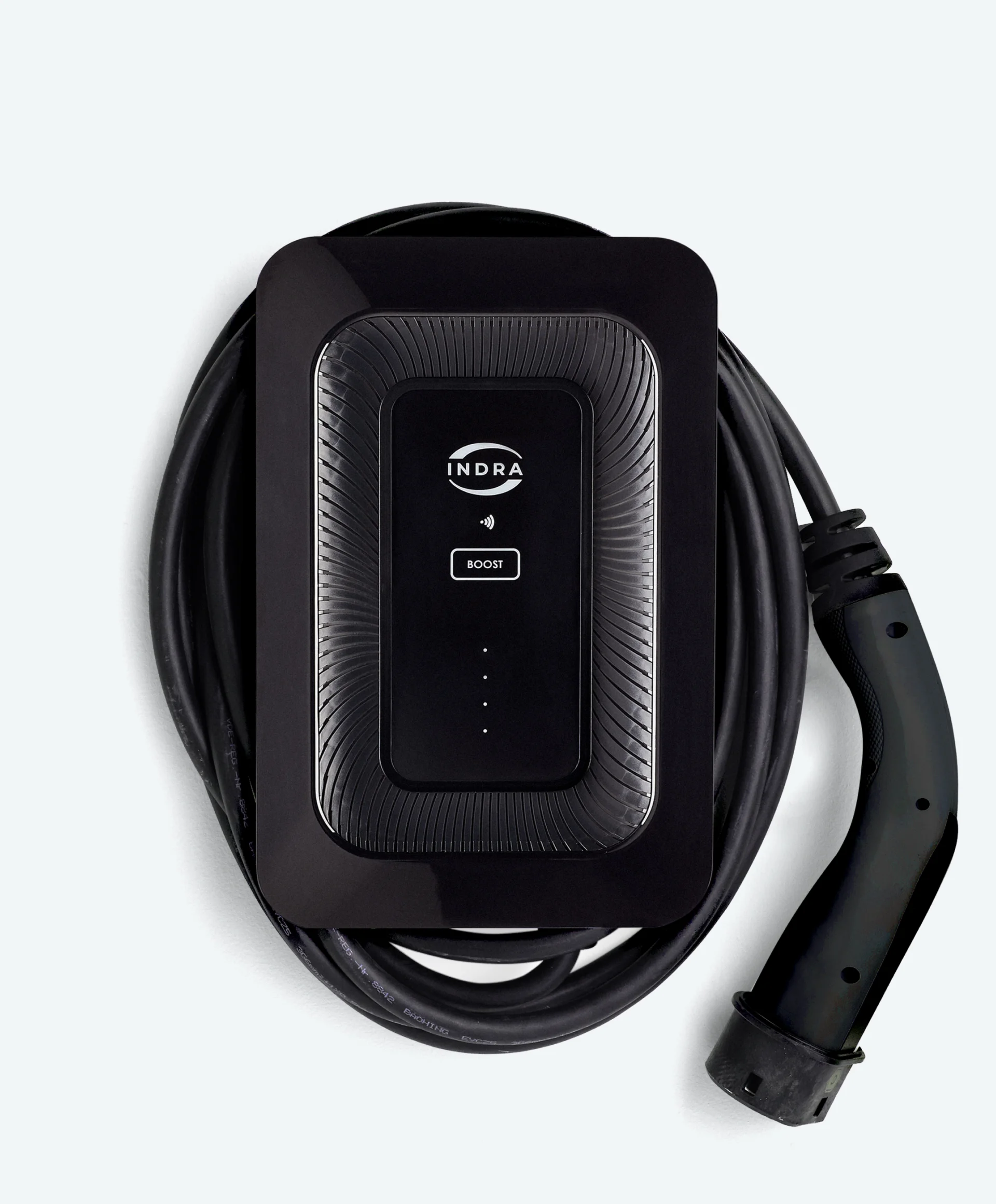
Budget All-Rounder vs Slim Premium: Is the £253 Gap Justified?
These two chargers have more in common than you might expect. Both are designed and backed by UK companies, both offer solar diversion and smart tariff scheduling, both include built-in PEN fault protection, and both charge at the same 7.4kW rate that suits virtually every single-phase UK home. Yet the Indra Smart LUX costs £253 more than the Sync Energy Wall Charger 2 at supply-only prices. So where does that extra money go — and does it matter to you?
This is a comparison shoppers land on when they want genuine smart features without paying Tesla Wall Connector or Zappi money, but they are torn between saving cash and getting a more refined product. Let us break it down honestly.
In a nutshell:
- Sync Energy Wall Charger 2 (£362): The best-value UK smart charger, offering solar diversion, dynamic load balancing, OCPP compliance and an untethered option — all from around £302 tethered.
- Indra Smart LUX (£615): The UK's slimmest smart charger at just 78mm deep, with class-leading IP67 weatherproofing and integration with over 1,000 energy tariffs.
Spec Comparison
| Feature | Sync Energy Wall Charger 2 | Indra Smart LUX |
|---|---|---|
| Price (supply only) | £362 (socketed); from £302 tethered | £615 (10m); from £670 (6m) |
| Power | 7.4kW single-phase | 7.4kW single-phase |
| Cable | 7.5m Type 2 (tethered version) | 6m or 10m Type 2 (tethered only) |
| Type | Tethered or untethered | Tethered only |
| Smart tariff support | TariffSense scheduling | 1,000+ tariffs including Octopus Agile |
| Solar diversion | SolarCharge with CT clamp | Solar PV diversion with CT clamp included |
| Connectivity | Wi-Fi, Ethernet, Bluetooth | Wi-Fi (Ethernet and 4G optional) |
| OCPP | 1.6J | 1.6 |
| IP / IK rating | IP65 / IK10 | IP67 / IK10 |
| Warranty | 3 years | 3 years (extendable to 5 for £100) |
| Weight | ~4–5 kg | 3.6 kg (6m cable) |
| Dimensions | 305 × 201 × 115mm | 201 × 306 × 78mm |
Smart Tariff Integration
Both chargers let you schedule charging around cheap off-peak electricity, which is where the real savings live. On a tariff like Octopus Intelligent Go at roughly 7p/kWh, a typical Tesla Model 3 owner covering 7,400 miles a year could spend as little as £150 annually on electricity — versus over £500 at standard rates. So this feature alone can pay for either charger within a year or two.
The Sync Energy uses its TariffSense feature through the Sync Energy app (which replaced the earlier Monta integration — a transition that caused some early-adopter confusion, as noted in user feedback). It handles scheduling well, though the specifics of how many tariffs it supports natively are less clearly documented than the Indra's offering.
The Indra Smart LUX is more explicit here, claiming compatibility with over 1,000 UK energy tariffs, including dynamic half-hourly pricing on Octopus Agile. If you are on an Agile-style tariff where prices change every 30 minutes, having a charger that can automatically chase the cheapest slots is genuinely valuable. For straightforward off-peak tariffs like Octopus Go or OVO Smart Charge, both chargers will do the job perfectly well. The Indra's edge shows most on variable tariffs.
Solar Diversion
Both chargers offer solar PV surplus diversion using a CT clamp to monitor your generation and route excess energy into your car rather than exporting it to the grid. This is a feature you would normally associate with pricier units like the Zappi, so having it on a charger starting from £302 (Sync Energy tethered) is genuinely impressive.
The Sync Energy calls its implementation SolarCharge and, according to evergy.co.uk, it includes multiple solar charging modes. The Indra states that a CT clamp is included in the box, which is a nice touch — always check whether the Sync Energy variant you are ordering bundles one or charges extra. For a household with a typical 4kW solar array, diverting surplus generation into your EV during summer months can realistically save £200–£350 per year depending on your driving habits and export tariff.
Build Quality and Design
This is where the Indra Smart LUX most clearly justifies its premium. At just 78mm deep, it is the slimmest tethered smart charger on the UK market — nearly a third thinner than the Sync Energy's 115mm depth. If your charger is mounted on a narrow wall beside a pathway, or you simply want something that looks like it belongs on a modern home, the LUX's profile is a genuine differentiator. Its turbine LED status light is a subtle design touch that elevates it beyond the utilitarian.
The Indra also edges ahead on weather resistance with an IP67 rating (technically submersible to 1 metre for 30 minutes) versus the Sync Energy's IP65 (protected against water jets). Both share an IK10 impact resistance rating, meaning they will shrug off an errant football or a knock from a wheelie bin. In practice, IP65 is more than adequate for any UK wall-mounted installation — IP67 is overkill, but reassuring overkill if your charger is in a particularly exposed spot.
The Sync Energy counters with interchangeable fascia plates in nine colours, letting you match the unit to your property's exterior. It is a practical rather than beautiful charger, but the customisation is a thoughtful touch. It also offers both tethered and untethered (socketed) variants, giving you flexibility the tethered-only Indra cannot match. An untethered socket version suits households with two EVs using different cable lengths, or owners who prefer a tidier look when not charging.
App and Connectivity
The Sync Energy ships with Wi-Fi, Ethernet, and Bluetooth as standard — a triple-connectivity approach that is generous at this price point. The Ethernet option is particularly welcome if your Wi-Fi signal is weak near the driveway, as some users have reported Wi-Fi reliability issues at range. Having a wired fallback is a meaningful advantage.
The Indra Smart LUX relies on Wi-Fi as standard, with Ethernet and 4G available as optional extras — and that 4G upgrade costs a steep £250. The Sync Energy also offers a 4G-equipped variant (the GG model), but it is not included on the base unit either. Both chargers support OCPP (1.6J for Sync, 1.6 for Indra), future-proofing them for third-party energy management platforms as the smart home ecosystem evolves.
Price and Value
| Cost element | Sync Energy Wall Charger 2 | Indra Smart LUX |
|---|---|---|
| Unit price | From £302 (tethered) / £362 (socketed) | From £615 (10m) / £670 (6m) |
| Typical installation | £300–£600 | £300–£500 |
| Total installed estimate | £602–£962 | £915–£1,170 |
| After OZEV grant (if eligible) | £102–£462 | £415–£670 |
The numbers tell a clear story: the Sync Energy can be fully installed for less than the Indra costs supply-only. That is a significant gap. Both chargers are OZEV-approved, so eligible renters and flat owners can claim up to £500 off installation costs. Both include built-in PEN fault protection, which typically saves £100–£150 on installation by eliminating the need for an earth rod — as highlighted by evergy.co.uk.
The Indra's 3-year warranty can be extended to 5 years for £100, bringing it in line with longer-warranty rivals. The Sync Energy offers a standard 3-year warranty with no published extension option, which is worth noting if longevity peace of mind matters to you.
Who Should Buy Which?
Buy the Sync Energy Wall Charger 2 if:
- Budget is your primary concern — it is one of the cheapest fully-featured smart chargers in the UK
- You want an untethered (socketed) option for flexibility with multiple vehicles or cable preferences
- You value built-in Ethernet connectivity without paying extra
- You have solar panels and want diversion capability without spending over £600
- You like the idea of customising your charger's appearance with interchangeable colour fascias
Buy the Indra Smart LUX if:
- You want the slimmest possible profile on your wall — 78mm is unmatched
- You are on a dynamic tariff like Octopus Agile and want proven integration with 1,000+ tariffs
- Maximum weatherproofing matters — IP67 is the best in class for a home charger
- You prefer a more premium, design-led aesthetic with the turbine LED indicator
- You value UK manufacturing (Worcestershire) and are happy to pay a premium for it
Our recommendation: For most UK homeowners, the Sync Energy Wall Charger 2 offers the better deal. It matches the Indra on core functionality — 7.4kW charging, solar diversion, smart tariff scheduling, PEN fault protection — while costing roughly £250–£350 less installed. The inclusion of Ethernet as standard and the choice of tethered or untethered variants give it practical flexibility the Indra lacks. However, if you are on Octopus Agile, care deeply about aesthetics, or need the absolute toughest weatherproofing for an exposed coastal or rural installation, the Indra Smart LUX earns its premium. It is a genuinely beautiful, brilliantly engineered charger — you are just paying for that refinement.
For the full specs-level breakdown, see our Sync Energy Wall Charger 2 vs Indra Smart LUX comparison page.
Read our full Sync Energy Wall Charger 2 review or Indra Smart LUX review.
For total installed cost rankings, see our cheapest EV charger guide.
We’ll handle the installation
We’ll match you with vetted UK electricians — up to 3 free quotes, no obligation.