Pod Point Solo 3S vs Sync Energy Wall Charger 2: Convenience vs Value
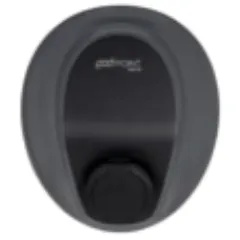
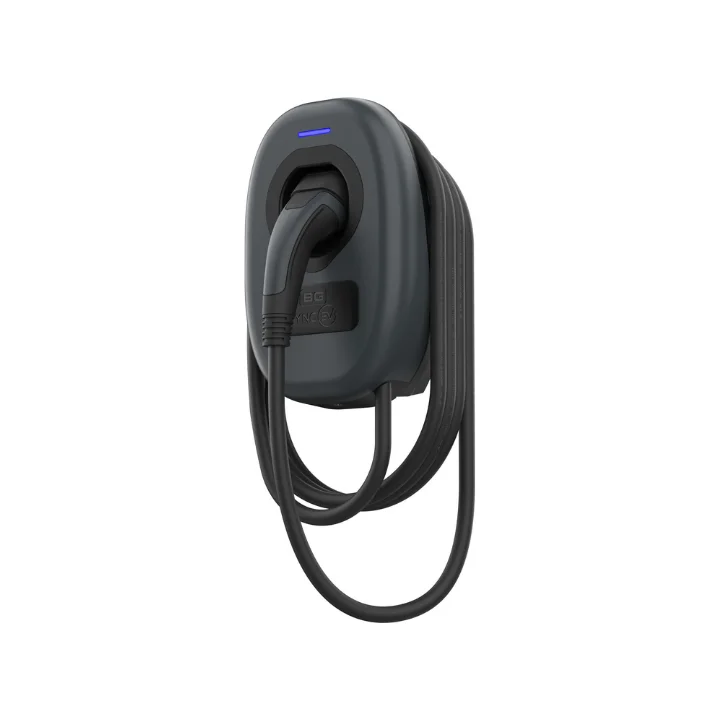
All-Inclusive Convenience vs Feature-Packed Value
These two chargers represent fundamentally different philosophies about how to sell a home EV charger. The Pod Point Solo 3S comes as a complete, installed package at £999 — you order it, Pod Point sends an installer, and you're charging within a week. The Sync Energy Wall Charger 2 takes the opposite approach: a feature-rich unit from around £362 that you pair with your own chosen installer. It's the classic convenience-versus-control trade-off, and the price gap between them is substantial.
If you're choosing between these two, you're likely weighing up whether the Pod Point all-in experience justifies spending roughly £600 more than a Sync Energy unit plus independent installation. Both deliver 7.4kW single-phase charging — the standard for UK homes — and both are OZEV approved. But the similarities end there. The Sync Energy packs in significantly more smart features for less money, while Pod Point offers a streamlined, worry-free buying experience backed by one of the UK's most established charging brands, with over 250,000 chargers installed according to pod-point.com.
In a nutshell:
- Pod Point Solo 3S (£999): A hassle-free, fully installed package from one of the UK's biggest charging brands, with a market-leading 5-year warranty.
- Sync Energy Wall Charger 2 (£362): A feature-loaded, budget-friendly charger with solar diversion, OCPP support, and built-in PEN fault protection — all for roughly a third of the Pod Point's price.
Spec Comparison
| Feature | Pod Point Solo 3S | Sync Energy Wall Charger 2 |
|---|---|---|
| Price | £999 (installed) | From £302 (tethered) / £362 (socketed) |
| Power Output | 7.4kW (single-phase) | 7.4kW (single-phase) |
| Cable Length | 5m (tethered version) | 7.5m (tethered version) |
| Connector | Type 2 | Type 2 |
| Smart Tariff Support | No smart tariff integration | TariffSense scheduling |
| Solar Compatibility | Yes (Solar & Grid modes) | Yes (SolarCharge with CT clamp) |
| Connectivity | Wi-Fi | Wi-Fi, Ethernet, Bluetooth |
| OCPP Support | No | OCPP 1.6J |
| Warranty | 5 years | 3 years |
| IP Rating | IP54 | IP65 + IK10 |
| Type | Tethered or untethered | Tethered or untethered |
| Weight | 3.5kg (untethered) / 6kg (tethered) | ~4–5kg |
Smart Features and Tariff Integration
This is where the Sync Energy Wall Charger 2 pulls decisively ahead. Its TariffSense scheduling lets you align charging with off-peak tariff windows — essential if you're on Octopus Go (7.5p/kWh between 00:30 and 04:30) or Octopus Intelligent Go (~7p/kWh off-peak). For a typical Tesla Model 3 driver covering 7,400 miles a year, the difference between charging at off-peak rates versus standard rates can save £300–£400 annually. Having smart tariff integration baked into the charger makes capturing those savings straightforward.
The Pod Point Solo 3S offers scheduled charging through the Pod Point app, so you can set timers to charge during cheaper periods. However, it lacks direct smart tariff integration — you're manually setting schedules rather than having the charger automatically optimise around your tariff. Pod Point does advertise access to exclusive energy tariffs enabling driving "for as little as 2.5p per mile," as noted on pod-point.com, though this is separate from the charger's built-in intelligence.
The Sync Energy also supports OCPP 1.6J, an open protocol that future-proofs it for third-party energy management platforms. This is a genuinely forward-thinking inclusion at this price point, and something the Pod Point simply doesn't offer.
Solar Diversion
Both chargers support solar PV integration, but they approach it differently. The Sync Energy Wall Charger 2 features SolarCharge, which uses a CT clamp to monitor your solar generation and divert surplus energy to your car. This is a proper solar diversion system that can help you charge for effectively nothing during sunny periods.
The Pod Point Solo 3S also offers solar compatibility with Solar and Solar & Grid modes, as highlighted by electriccarguide.co.uk. This lets you choose whether to charge exclusively from solar or supplement with grid power. Both approaches work well, though the Sync Energy's CT clamp setup tends to offer more granular control over energy diversion.
If you've already got solar panels — or plan to install them — both chargers will serve you well. It's worth noting that the Solo 3S's solar features were absent from the older Solo 3, so this is a welcome addition from Pod Point, as noted by topcharger.co.uk.
Build Quality and Weather Protection
Here's an area where the Sync Energy quietly wins on paper. Its IP65 rating means it's fully protected against water jets from any direction, compared to the Pod Point's IP54 rating which protects against splashing water. Both also carry IK10 impact resistance ratings, meaning they can withstand significant knocks. For a charger mounted on an exposed driveway wall — common in UK installations — that IP65 rating offers extra reassurance during horizontal rain and winter storms.
The Pod Point Solo 3S has a distinctive oval design that's earned praise from reviewers, with topcharger.co.uk noting its polycarbonate housing provides excellent durability. The Sync Energy takes a more functional approach to aesthetics but compensates with nine interchangeable fascia colour plates — a nice touch if you want the charger to blend with your property's exterior.
Installation Considerations
The Pod Point Solo 3S includes standard installation in its £999 price, and pod-point.com states 90% of customers qualify. Their installation service is Which? endorsed, and if they can't fit it, they'll refund you in full. The downside? You can't choose your installer — Pod Point assigns a third-party contractor from their network.
The Sync Energy Wall Charger 2 requires you to source your own installer, with typical costs ranging from £300 to £600 depending on cable run length and consumer unit work. However, it includes built-in PEN fault protection, which means no earth rod is required. This can save £50–£100 on installation and avoids the hassle of drilling into your property's foundations — a genuine practical advantage.
Price and Value
| Cost Element | Pod Point Solo 3S | Sync Energy Wall Charger 2 |
|---|---|---|
| Unit Price | £999 (installed) | £302–£362 (unit only) |
| Installation | Included | £300–£600 |
| Total Installed Cost | £999 | £602–£962 |
| After OZEV Grant (if eligible) | £499 | £102–£462 |
The value equation here is striking. Even at the top end of installation costs, the Sync Energy Wall Charger 2 comes in at roughly the same total price as the Pod Point — but with more smart features, better weather protection, a longer cable, and OCPP support. At the lower end of installation costs, you could save nearly £400 while getting a more capable charger.
The Pod Point's value proposition rests on its simplicity and its industry-leading 5-year warranty versus the Sync Energy's 3 years. Pod Point also offers the Pod Drive subscription (£99 upfront plus £40/month for 36 months) which includes a lifetime warranty and 7,500 miles of annual cashback worth £172.50, as detailed by topcharger.co.uk.
Who Should Buy Which?
Buy the Pod Point Solo 3S if:
- You want a completely hands-off buying experience — one order, one price, done
- You value a 5-year warranty covering both the charger and installation
- You'd rather deal with an established brand with 24/7 customer support and 250,000+ installations
- You're eligible for the Pod Drive subscription and want the lifetime warranty option
- You don't want to spend time finding and vetting your own electrician
Buy the Sync Energy Wall Charger 2 if:
- You want to keep costs down without sacrificing smart features
- Smart tariff integration matters to you — TariffSense can save hundreds annually on Octopus Go or similar
- You have or plan to install solar panels and want proper solar diversion
- You want to choose your own installer and control the installation process
- You value future-proofing through OCPP 1.6J support
Our recommendation: For most UK EV drivers, the Sync Energy Wall Charger 2 offers significantly better value. It delivers more features — smart tariff scheduling, OCPP support, superior weatherproofing, a longer cable, and built-in PEN fault protection — at a lower total installed price. The Pod Point Solo 3S is the right choice if you genuinely want a turnkey experience and are willing to pay a premium for Pod Point's brand, warranty, and installation service. But if you're comfortable spending 30 minutes finding a well-reviewed local electrician, the Sync Energy saves you money while giving you a more capable charger.
For the full specs-level breakdown, see our Pod Point Solo 3S vs Sync Energy Wall Charger 2 comparison page.
Read our full Pod Point Solo 3S review or Sync Energy Wall Charger 2 review.
For total installed cost rankings, see our cheapest EV charger guide.
We’ll handle the installation
We’ll match you with vetted UK electricians — up to 3 free quotes, no obligation.