Pod Point Solo 3S vs NexBlue Point 2: Proven Brand or Future-Proof Tech?
The Safe Bet vs the Tech Pioneer
Choosing a home EV charger in the UK often comes down to a fundamental question: do you want the reassurance of an established name, or are you willing to back a newer player that's packing in more technology for less money?
The Pod Point Solo 3S represents the first camp. Pod Point has installed over 250,000 chargers across the UK, earned a Which? endorsement for its installation service, and won What Car?'s Best Value Home EV Charger award in 2024. The Solo 3S comes fully installed for £999 — one price, no fuss. The NexBlue Point 2, on the other hand, is a relative newcomer that arrives loaded with features you'd normally find on chargers costing twice as much: V2G readiness, smart tariff automation, built-in 4G, and OCPP 2.0.1 compliance — all for around £530 before installation. It's a compelling proposition, but NexBlue doesn't yet have the track record to match.
If you're torn between these two, you're really weighing convenience and brand confidence against raw feature count and future-proofing. Let's break it down.
In a nutshell:
- Pod Point Solo 3S (£999): The hassle-free, all-inclusive package from one of the UK's most trusted EV charging brands, with a 5-year warranty and standard installation included.
- NexBlue Point 2 (£530): A feature-packed, future-proofed smart charger with V2G readiness, smart tariff integration, and built-in 4G — at a significantly lower price point.
Spec Comparison
| Feature | Pod Point Solo 3S | NexBlue Point 2 |
|---|---|---|
| Price | £999 (installed) | £530–£600 (unit only) |
| Power | 7.4kW (single-phase) | 7.4kW (single-phase) |
| Cable | Tethered (5m) or untethered | Untethered only |
| Smart tariff integration | No | Yes (EcoPilot) |
| Solar compatible | Yes | Yes (requires Zen accessory) |
| Connectivity | Wi-Fi | Wi-Fi, Bluetooth, 4G eSIM (lifetime free) |
| Load balancing | Adaptive load management | Dynamic load balancing (CT clamp included) |
| Warranty | 5 years | 5 years |
| IP / IK Rating | IP54 | IP54 / IK10 |
| Type | Tethered or untethered | Untethered only |
| Weight | 3.5 kg (untethered) / 6 kg (tethered) | 2.1 kg |
| V2G / ISO 15118 | No | Yes (ready) |
Smart Tariff Integration
This is where the NexBlue Point 2 opens up a significant gap. Its EcoPilot feature integrates directly with smart energy tariffs, automatically scheduling your charging sessions to coincide with the cheapest electricity rates. If you're on a tariff like Octopus Agile — where prices shift every 30 minutes — this kind of automation can save you a meaningful amount over a year. Even on simpler off-peak tariffs like Octopus Go (7.5p/kWh between 00:30 and 04:30), having the charger handle scheduling intelligently removes one more thing to think about.
The Pod Point Solo 3S, by contrast, offers scheduled charging through the Pod Point app but lacks direct smart tariff integration. You can manually set your charging window to align with off-peak hours, but the charger won't dynamically respond to price changes. Pod Point does advertise access to exclusive EV tariffs that can bring costs down to around 2.5p per mile, but the charger itself doesn't automate around those rates the way the NexBlue does pod-point.com.
For context, charging a 60kWh Tesla Model 3 battery from empty on Octopus Go at 7.5p/kWh costs roughly £4.50 — compared to around £18 at the current average standard rate. The savings are there regardless of charger, but the NexBlue makes capturing them more effortless.
App and Connectivity
The Pod Point app covers the essentials: charge scheduling, session tracking, and cost monitoring. Reviews describe it as functional but basic compared to rivals topcharger.co.uk. It connects via Wi-Fi, which is perfectly adequate for most homes, though it does mean the charger relies entirely on your home broadband being up.
The NexBlue Point 2 takes a belt-and-braces approach with triple connectivity: Wi-Fi, Bluetooth, and a built-in 4G eSIM with a lifetime free data subscription. That 4G fallback is genuinely useful — if your router goes down overnight, your charging schedule still runs. The myNexBlue app also handles tariff integration and load balancing data, giving it a broader feature set. Add RFID and NFC activation, and you've got a charger that's clearly been designed with flexibility in mind.
One area worth noting: the NexBlue supports OCPP 1.6-J and 2.0.1 protocols. This might sound like alphabet soup, but it means the charger can communicate with third-party energy management platforms and isn't locked into a single ecosystem. The Pod Point Solo 3S doesn't offer OCPP support, so you're tied to Pod Point's own app and services.
Build Quality and Design
Both chargers carry an IP54 weatherproof rating, meaning they'll handle typical British rain and dust without issue. The NexBlue adds an IK10 impact resistance rating — the highest available — which is worth having if your charger is mounted near a driveway or anywhere it might take a knock.
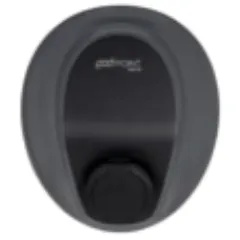
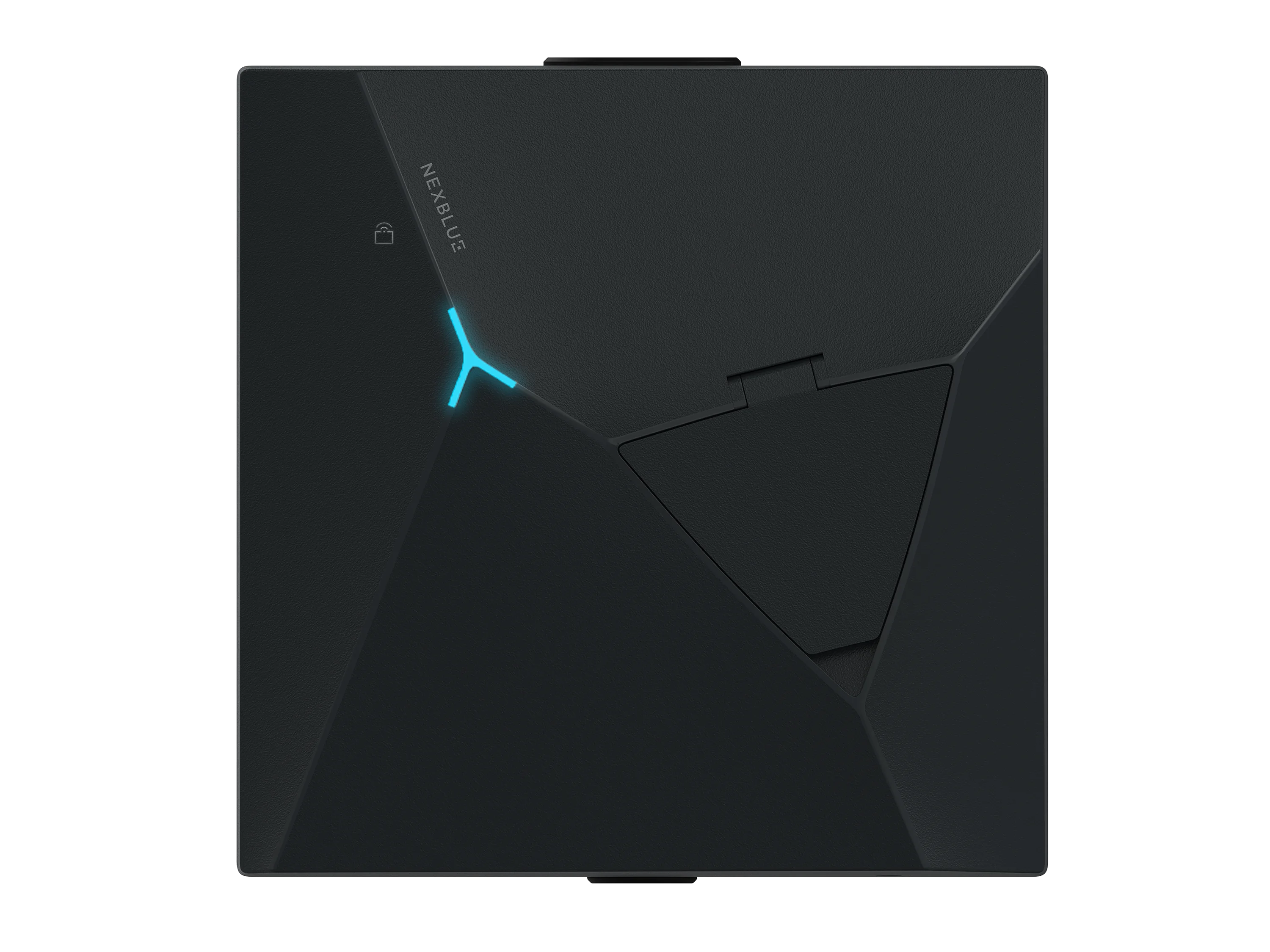
The Pod Point Solo 3S has a distinctive oval design that's become something of a familiar sight on UK driveways. The tethered version measures 330mm × 290mm × 112mm and weighs 6 kg, while the untethered model is lighter at 3.5 kg electriccarguide.co.uk. The NexBlue Point 2 is remarkably compact at 235mm × 230mm × 107mm and just 2.1 kg — making it one of the lightest home chargers on the market. If aesthetics and a small footprint matter to you, the NexBlue has the edge.
The Pod Point does offer the advantage of a tethered option with a 5-metre Type 2 cable permanently attached. For many drivers, having the cable always ready and avoiding the faff of plugging in both ends is a genuine everyday convenience. The NexBlue is untethered only, so you'll need to supply and store your own cable.
Installation Considerations
Here's where the buying experience diverges sharply. The Pod Point Solo 3S price of £999 includes standard installation by a Pod Point-approved contractor — a Which?-endorsed service with a 5-year warranty covering both charger and installation work topcharger.co.uk. The downside is that you can't choose your installer or get alternative quotes. Pod Point assigns a third-party contractor from their network, and you take what you're given.
The NexBlue Point 2 is a unit-only purchase, so you'll need to find your own OZEV-approved installer. Standard UK installation typically runs £400–£600, depending on cable run length and any consumer unit upgrades needed. This gives you the freedom to choose a local electrician with strong reviews, but it does add an extra step to the process.
Price and Value
| Cost | Pod Point Solo 3S | NexBlue Point 2 |
|---|---|---|
| Unit price | £999 (installed) | £530–£600 |
| Installation | Included | £400–£600 |
| Total installed cost | £999 | £930–£1,200 |
| After OZEV grant (if eligible) | £499 | £430–£700 |
On paper, the NexBlue can work out cheaper — particularly if you secure a competitive installation quote. At the lower end, you could be fully installed for around £930, or as little as £430 after the OZEV grant. The Pod Point comes in at £999 (or £499 post-grant), which is competitive given installation is included, but you're paying a premium for a charger with fewer smart features.
The real value question is whether the NexBlue's V2G readiness, smart tariff automation, and 4G connectivity justify the slight uncertainty of backing a newer brand. If V2G becomes mainstream in the UK — and the direction of travel suggests it will — the NexBlue won't need replacing. That's a meaningful long-term saving.
Who Should Buy Which?
Buy the Pod Point Solo 3S if:
- You want a single, all-inclusive price with no need to source your own installer
- Brand reputation and a proven track record matter more to you than cutting-edge features
- You prefer a tethered charger with the cable permanently attached for daily convenience
- You value the reassurance of a Which?-endorsed installation service
- You'd rather keep things simple and don't need smart tariff automation
Buy the NexBlue Point 2 if:
- You want the most features for the least money and don't mind sourcing your own installer
- Smart tariff integration is important — especially if you're on Octopus Agile or a similar variable tariff
- You want a charger that's V2G and ISO 15118 ready for future bi-directional charging
- Reliable connectivity matters and you want 4G fallback alongside Wi-Fi
- You prefer a compact, lightweight unit and are happy using your own Type 2 cable
Our recommendation: For most UK homeowners who simply want a reliable charger installed with minimum fuss, the Pod Point Solo 3S remains a solid, low-risk choice — and Pod Point's track record speaks for itself. However, if you're even slightly tech-curious or cost-conscious, the NexBlue Point 2 is hard to ignore. It offers meaningfully more technology, genuine future-proofing, and a lower total cost in many scenarios. The lack of a long brand history is the main caveat, but the 5-year warranty and standards compliance provide a reasonable safety net. For Tesla owners on smart tariffs who want to squeeze every penny from off-peak charging, the NexBlue Point 2 gets our nod.
For the full specs-level breakdown, see our Pod Point Solo 3S vs NexBlue Point 2 comparison page.
Read our full Pod Point Solo 3S review or NexBlue Point 2 review.
We’ll handle the installation
We’ll match you with vetted UK electricians — up to 3 free quotes, no obligation.