Ohme Home Pro vs EcoFlow PowerPulse 2: Smart Tariff King vs Solar Ecosystem
The Tariff Specialist vs the Ecosystem Newcomer
These two chargers sit at almost identical price points — just £10 apart — yet they come from completely different worlds. The Ohme Home Pro has earned its reputation as the UK's go-to charger for drivers who want to squeeze every penny out of smart energy tariffs like Octopus Intelligent Go. The EcoFlow PowerPulse 2, meanwhile, arrives from a company best known for portable power stations and home battery systems, bringing deep solar and battery ecosystem integration to the EV charging space.
If you're choosing between these two, you're likely someone who cares about more than just plugging in and walking away. You want your charger to work intelligently with your energy setup — whether that's a cheap overnight tariff, a rooftop solar array, or a full home battery system. The question is which flavour of "smart" matters most to you.
In a nutshell:
- Ohme Home Pro (£535): The UK's best charger for automated smart tariff charging, officially recommended by Octopus Energy and backed by bulletproof 4G connectivity.
- EcoFlow PowerPulse 2 (£545): A three-phase-capable charger with unmatched integration into EcoFlow's solar and battery ecosystem, plus OCPP compliance for future flexibility.
Spec Comparison
| Feature | Ohme Home Pro | EcoFlow PowerPulse 2 |
|---|---|---|
| Price (unit only) | £535 | £545 |
| Price (installed) | From £999 | £945–£1,145 (estimated) |
| Max Power | 7.4kW (single-phase) | 7kW (single-phase) / 22kW (three-phase) |
| Cable | Tethered, 5m (8m optional) | Untethered (tethered 5m also available) |
| Smart Tariff Integration | Octopus, OVO, and others — automatic | Smart Mode with dynamic tariff optimisation |
| Solar Features | Solar diverting built-in | Solar Mode (prioritises surplus solar) |
| Connectivity | Wi-Fi + 3G/4G (SIM included) | Wi-Fi + RFID |
| Display | Colour screen | LCD status display |
| Warranty | 3 years | 3 years |
| IP Rating | IP65 | IP55 (IP54 without cable) |
| OZEV Approved | Yes | Not yet confirmed |
| Connector | Type 2 | Type 2 |
Smart Tariff Integration
This is where the Ohme Home Pro truly shines — and where the gap between these two chargers is widest. The Ohme integrates directly with energy suppliers including Octopus Energy, OVO, and others. If you're on Octopus Intelligent Go (around 7p/kWh off-peak), the Ohme doesn't just schedule charging for cheap hours — it communicates with Octopus's servers to unlock an extended off-peak window from 23:30 to 05:30, potentially saving you hundreds of pounds a year. As viablepower.co.uk notes, the Ohme can even adapt in real time, postponing charging if prices spike unexpectedly during your usual window.
The EcoFlow PowerPulse 2 offers a "Smart Mode" that performs dynamic tariff optimisation, but it lacks the deep, named partnerships with UK energy suppliers that Ohme has built. You can schedule charging around off-peak windows, but you won't get the bespoke Octopus Intelligent Go integration that makes the Ohme so effective. For a driver covering the UK average of 7,400 miles per year in a Tesla Model 3, the difference between paying 7p/kWh on Intelligent Go via Ohme versus manually scheduling on a standard Go tariff at 7.5p/kWh is modest — but the real value is in the automation and the extended off-peak window that only the Ohme unlocks.
The Ohme's built-in 4G SIM card is another quiet advantage here. Even if your Wi-Fi drops out overnight, the charger stays connected to tariff data and continues optimising. The EcoFlow relies solely on Wi-Fi, which could be a concern if your router is far from your driveway. As electriccarguide.co.uk highlights, this connectivity resilience is one of the Ohme's most underrated features.
Solar and Ecosystem Integration
If the Ohme owns the tariff conversation, the EcoFlow PowerPulse 2 fights back hard on solar and home energy ecosystems. Both chargers offer solar charging modes — the Ohme has built-in solar diverting, while the EcoFlow features a dedicated Solar Mode that prioritises surplus solar energy for your car.
Where the EcoFlow pulls ahead is if you already own (or plan to buy) EcoFlow's PowerOcean home battery or their solar panels. The PowerPulse 2 integrates into a single EcoFlow app that manages solar generation, battery storage, home consumption, and EV charging together. This holistic approach means the charger can make genuinely intelligent decisions — for example, storing cheap overnight electricity in your home battery while sending surplus solar to your car during the day. No other charger at this price point offers that level of ecosystem integration.
The Ohme's solar diverting is perfectly capable for homes with solar panels but no battery, and it works regardless of your inverter brand. It's a more universal solution, but it doesn't have the deep system-level awareness that the EcoFlow achieves within its own ecosystem.
Power and Charging Speed
Here's a significant hardware difference. The Ohme Home Pro maxes out at 7.4kW on single-phase power — which, to be fair, is what the vast majority of UK homes have. A Tesla Model 3 with a 60kWh battery will charge from empty to full in roughly 8.5 hours at this rate, comfortably overnight.
The EcoFlow PowerPulse 2, however, supports three-phase power at up to 22kW. If you're one of the small percentage of UK homes with a three-phase supply (or you're planning an upgrade), this slashes that same charge to around 2.7 hours. It's also a more future-proof choice if you think three-phase installations might become more common as EV adoption grows.
On single-phase, the EcoFlow delivers 7kW versus the Ohme's 7.4kW — a marginal difference that adds perhaps 20 minutes to a full overnight charge. In practice, you'll never notice it.
The EcoFlow also offers real-time load balancing for multi-EV households, which is a genuine advantage if you have two electric cars sharing a single supply. The Ohme is pre-wired for dynamic load balancing, so both chargers address this need, but the EcoFlow's implementation is designed with multi-charger setups in mind.
Build Quality and Installation
Both chargers weigh approximately 3.5kg, but the Ohme is noticeably more compact at 170mm × 200mm × 100mm versus the EcoFlow's 333mm × 226mm × 145mm. The Ohme also edges ahead on weather protection with an IP65 rating (fully weatherproof, including protection against water jets) compared to the EcoFlow's IP55.
One important caveat: the EcoFlow's OZEV grant approval status is not yet confirmed. If you're a renter or flat owner eligible for the £500 OZEV grant, verify the PowerPulse 2's status before purchasing. The Ohme Home Pro is fully OZEV approved, as confirmed by ohme-ev.com.
The EcoFlow also has a smaller UK installer network compared to Ohme, which has been established in the UK market for several years. This could affect installation lead times and aftercare support. The Ohme's standard installation package at £999 all-in is straightforward and well-documented, with warmzilla.co.uk praising the build quality as "top-notch."
Price and Value
| Cost | Ohme Home Pro | EcoFlow PowerPulse 2 |
|---|---|---|
| Unit price | £535 | £545 |
| Installation range | £400–£500 | £400–£600 |
| Total installed range | £935–£1,035 (or £999 with Ohme's package) | £945–£1,145 |
| After OZEV grant | £435–£535 | Not yet confirmed |
At face value, these chargers are nearly identical in price. The Ohme's bundled installation package at £999 simplifies budgeting, while the EcoFlow's installation costs may vary more widely given its newer installer network. If OZEV eligibility matters to you, the Ohme's confirmed approval is a clear financial advantage — potentially knocking £500 off your total cost.
The real value calculation depends on your energy setup. An Ohme on Octopus Intelligent Go could save you roughly £300–£400 per year compared to charging on a standard variable tariff. The EcoFlow's value proposition is harder to quantify in isolation but becomes compelling when paired with EcoFlow solar panels and a PowerOcean battery, where the integrated energy management could deliver even greater whole-home savings.
Who Should Buy Which?
Buy the Ohme Home Pro if:
- You're on (or planning to join) Octopus Intelligent Go, Octopus Go, Octopus Agile, or an OVO smart tariff
- You want proven, automated off-peak charging that works out of the box with named UK energy suppliers
- Your Wi-Fi signal is weak near your parking space — the built-in 4G keeps you connected
- You want OZEV grant eligibility confirmed from day one
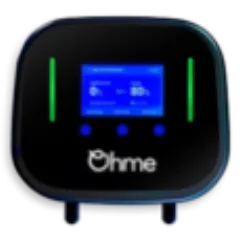
- You prefer a tethered charger with a convenient colour display
Buy the EcoFlow PowerPulse 2 if:
- You already own or plan to buy EcoFlow solar panels or a PowerOcean home battery
- You have (or plan to install) a three-phase electricity supply
- You want OCPP 1.6-J compliance for potential future integration with third-party energy management platforms
- You run a multi-EV household and need robust real-time load balancing
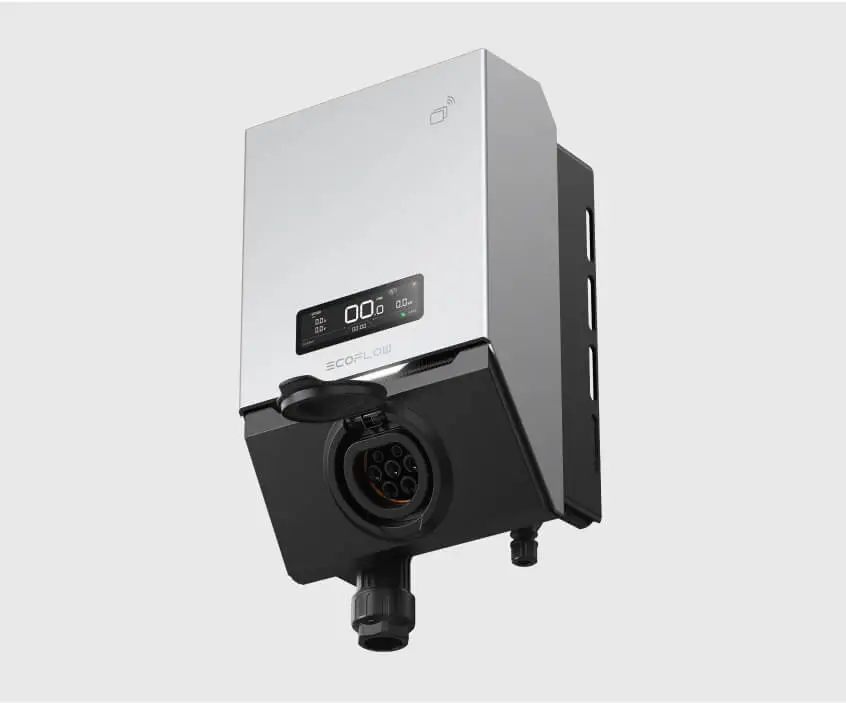
- You prefer an untethered charger for a cleaner wall-mounted look
Our recommendation: For the majority of UK Tesla owners on single-phase power, the Ohme Home Pro is the stronger choice. Its unrivalled smart tariff integration, confirmed OZEV approval, and proven track record make it the safer, smarter buy — especially if you pair it with Octopus Intelligent Go for charging as low as 7p/kWh. However, if you're building out an EcoFlow solar and battery ecosystem at home, or you have three-phase power, the PowerPulse 2 offers a level of whole-home energy integration that the Ohme simply cannot match. It's a charger with enormous potential — it just needs time to prove itself in the UK market.
Read our full Ohme Home Pro review or EcoFlow PowerPulse 2 review.
We’ll handle the installation
We’ll match you with vetted UK electricians — up to 3 free quotes, no obligation.