Ohme ePod vs Sync Energy Wall Charger 2: Smart Compact vs Budget All-Rounder
The Pocket Rocket vs the Budget All-Rounder
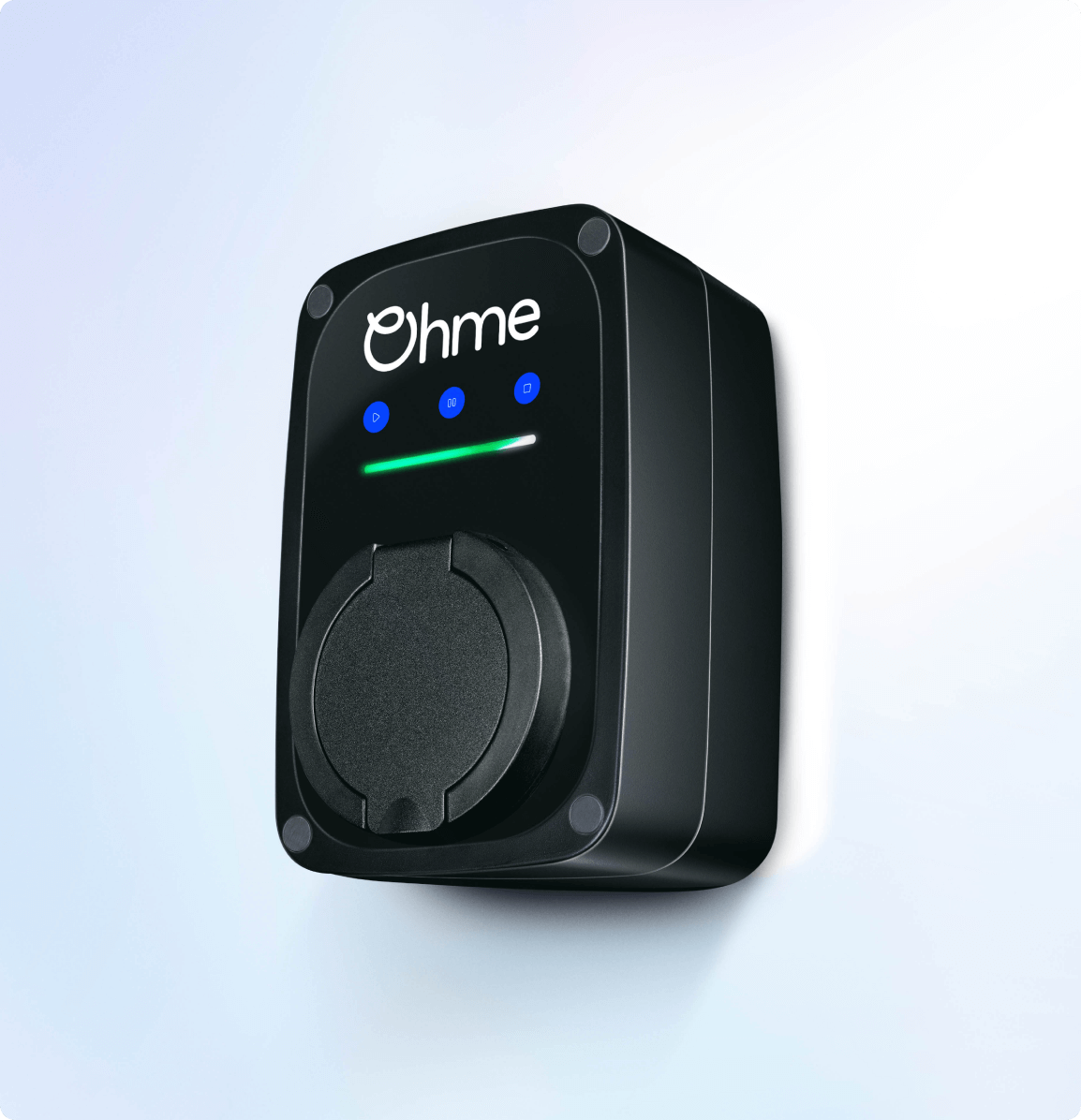
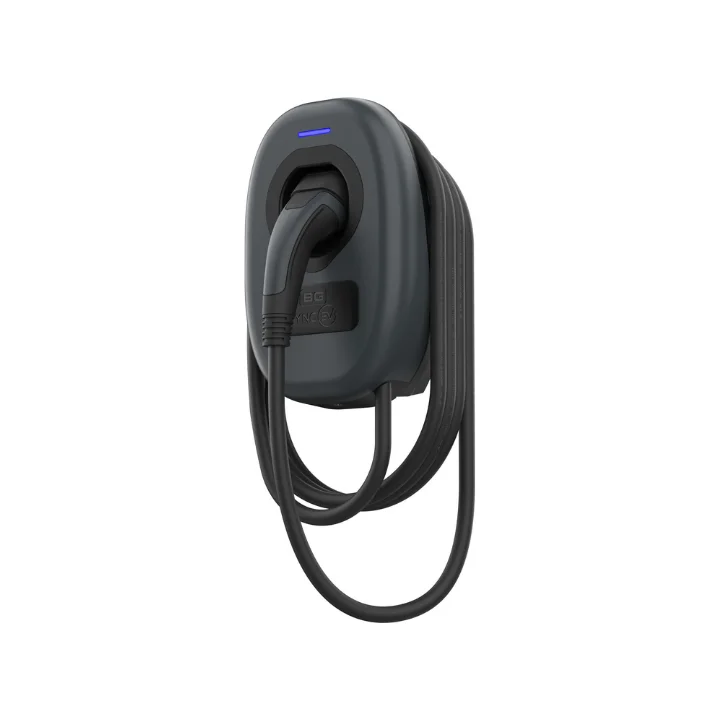
Choosing a home EV charger in 2025 doesn't have to mean spending a fortune. Both the Ohme ePod and the Sync Energy Wall Charger 2 sit comfortably below £420 for the unit alone, making them two of the most affordable smart chargers on the UK market. Yet they take very different approaches to getting electrons into your car. The ePod is Ohme's ultra-compact, untethered unit — barely bigger than a paperback book and packed with arguably the best smart tariff integration available in the UK. The Sync Energy Wall Charger 2, meanwhile, is a practical, feature-rich workhorse backed by listed UK manufacturer Luceco PLC, offering solar diversion, OCPP compliance, and a choice of nine colour fascia plates to match your brickwork.
If you're weighing these two up, you're likely an EV owner who wants smart charging without paying premium prices. Both chargers deliver 7.4kW, both support solar, and both include built-in PEN fault protection — so the decision comes down to how you charge, how you connect, and what you value most day-to-day.
In a nutshell:
- Ohme ePod (£409): The UK's smallest smart charger with industry-leading tariff integration and built-in 4G — no Wi-Fi required.
- Sync Energy Wall Charger 2 (£362): A well-priced, weatherproof smart charger with solar diversion, OCPP support, and customisable colour fascias.
Spec Comparison
| Feature | Ohme ePod | Sync Energy Wall Charger 2 |
|---|---|---|
| Price (unit only) | £409 | £362 (socketed Wi-Fi/LAN) |
| Max Power Output | 7.4kW (single-phase) | 7.4kW (single-phase) |
| Cable | Untethered — cable not included | Untethered (socketed); tethered 7.5m option from £302 |
| Smart Tariff Support | Intelligent Octopus Go, Agile, OVO, British Gas | TariffSense scheduling |
| Solar Charging | Solar Boost / Solar Only modes | SolarCharge (solar diversion via CT clamp) |
| Connectivity | 3G/4G built-in SIM | Wi-Fi, Ethernet, Bluetooth |
| Display | None (app only) | None on base model |
| OCPP Support | No | Yes (OCPP 1.6J) |
| IP Rating | IP54 | IP65 + IK10 |
| Weight | 1.48 kg | ~4–5 kg |
| Warranty | 3 years | 3 years |
| OZEV Approved | Yes | Yes |
Smart Tariff Integration
This is where the Ohme ePod genuinely shines — and where the gap between these two chargers is widest. Ohme's app offers direct integration with Octopus Intelligent Go, Octopus Agile, OVO Smart Charge, and British Gas Electric Driver, among others. As ohme-ev.com explains, the charger automatically schedules sessions during the cheapest half-hour slots, and its "Price cap" feature ensures you never charge above your off-peak rate. On Intelligent Octopus Go at roughly 7p/kWh, a full 60kWh charge could cost under £4.20 — compared with around £15–20 on a standard variable tariff. Over a year of typical UK mileage (7,400 miles in a Tesla Model 3), that's potentially £400–500 in annual savings.
The Sync Energy Wall Charger 2 offers its own TariffSense scheduling, which lets you set charging windows around off-peak periods. It's functional, but the integration isn't as deep or as automatic as Ohme's. You won't get the same granular, half-hourly slot optimisation that makes Agile tariffs so rewarding, and the app platform has undergone a transition away from Monta that caused some early user confusion. If smart tariff savings are your primary motivation for buying a home charger, the ePod is the stronger choice by a clear margin. As mcnallyev.uk notes, the Ohme app is widely regarded as the most powerful option for UK energy tariff users.
Solar Diversion
Both chargers support solar charging via a CT clamp, which is excellent news if you have rooftop PV panels. The Ohme ePod offers Solar Boost mode (tops up grid power with solar) and Solar Only mode (charges exclusively from surplus solar generation). The Sync Energy Wall Charger 2 counters with its SolarCharge feature, which works on a similar principle — diverting excess solar production to your car rather than exporting it to the grid.
In practice, both approaches achieve the same goal: free miles from sunshine. On a decent summer day, a typical 4kW solar array could deliver 15–20 miles of range without costing you a penny. Neither charger has a clear advantage here — both require a CT clamp installation and both handle the solar logic through their respective apps. It's a genuine tie, and it's impressive that two chargers at this price point include solar diversion as standard.
Connectivity and Reliability
Here's where your home setup matters. The Ohme ePod comes with a built-in multi-network 3G/4G SIM, meaning it connects to the internet entirely independently of your home Wi-Fi. If your charger is mounted in a detached garage, at the end of a long driveway, or anywhere your router signal struggles to reach, the ePod simply works. No range extenders, no Ethernet cables, no fuss. As evergy.co.uk notes, the ePod's cellular connectivity makes it reliable in virtually any location.
The Sync Energy Wall Charger 2 relies on Wi-Fi, Ethernet, or Bluetooth for connectivity. The Ethernet option is a genuine plus — if you can run a cable to your charger, it's arguably the most reliable connection of all. However, user reviews have flagged Wi-Fi reliability issues at range, which is a common complaint with chargers that depend on household networks. If your charging spot is close to your router or you can run an Ethernet cable, this won't be a problem. If not, it could be a frustration. The base model doesn't include 4G — you'd need the GG variant for cellular connectivity.
Build Quality, Design, and Installation
The ePod is astonishingly small at just 230mm × 140mm × 100mm and 1.48 kg — electriccarguide.co.uk rates its design and durability at 9/10. It's the smallest smart charger on the UK market by a considerable margin, and its compact footprint makes it ideal for tight spaces or homes where aesthetics matter. The trade-off is an IP54 rating, which means it's fine for sheltered outdoor locations but not as robust as a fully exposed installation might demand.
The Sync Energy Wall Charger 2 is larger and heavier at roughly 4–5 kg, but it compensates with an IP65 + IK10 rating — fully weatherproof and impact-resistant. If your charger will be exposed to the elements or at risk of knocks (a busy driveway, for instance), the Sync Energy unit is the tougher proposition. The nine interchangeable colour fascia plates are a genuinely nice touch, letting you match the charger to your property's exterior. Both chargers include built-in PEN fault protection, which saves the cost and hassle of an earth rod during installation.
Price and Value
| Cost Element | Ohme ePod | Sync Energy Wall Charger 2 |
|---|---|---|
| Unit price | £409 | £362 |
| Charging cable | £100–200 (not included) | N/A (socketed) / included with tethered |
| Typical installation | £300–600 | £300–600 |
| Total installed (est.) | £709–1,209 | £662–962 |
| After OZEV grant (if eligible) | £209–709 | £162–462 |
The headline unit prices look close, but the Ohme ePod's untethered design means you'll need to budget an extra £100–200 for a Type 2 cable. That pushes the true cost of ownership above the Sync Energy, particularly if you opt for the tethered Sync variant at just £302. On pure value, the Sync Energy Wall Charger 2 is hard to beat — you get a tethered 7.5m cable, solar diversion, OCPP compliance, and IP65 weatherproofing for less money overall.
However, value isn't just about upfront cost. If the Ohme ePod's superior tariff integration saves you an extra £100–200 per year on electricity versus the Sync Energy's TariffSense, it pays back that cable cost within the first year or two.
Who Should Buy Which?
Buy the Ohme ePod if:
- You're on (or planning to switch to) Octopus Intelligent Go, Agile, or another smart tariff and want maximum savings
- Your charger location has poor Wi-Fi coverage — the built-in 4G means no connectivity headaches
- You want the smallest, lightest smart charger available for a clean wall-mounted look
- You value the flexibility of an untethered socket and already own a Type 2 cable
- You want solar diversion with Solar Boost and Solar Only modes alongside best-in-class tariff scheduling
Buy the Sync Energy Wall Charger 2 if:
- You want the lowest possible total installed cost — especially in the tethered variant at £302
- Your charger will be fully exposed to weather and you need IP65 + IK10 toughness
- You want OCPP 1.6J compliance for future-proofing with third-party energy platforms
- You prefer a tethered cable for plug-and-go convenience without buying a separate cable
- You like the idea of customising your charger's appearance with interchangeable colour fascias
Our recommendation: For most UK EV owners, the Ohme ePod edges it — its tariff integration is genuinely best-in-class, and the annual savings on a smart tariff like Intelligent Octopus Go can be substantial. The built-in 4G connectivity is a real differentiator that removes one of the most common frustrations with home chargers. However, if budget is your primary concern, the Sync Energy Wall Charger 2 in its tethered configuration offers remarkable value for money and a tougher build. It's an excellent charger in its own right — just not quite as clever when it comes to squeezing every penny from your electricity tariff.
For the full specs-level breakdown, see our Ohme ePod vs Sync Energy Wall Charger 2 comparison page.
Read our full Ohme ePod review or Sync Energy Wall Charger 2 review.
For smart tariff integration rankings, see our best smart EV charger guide.
For total installed cost rankings, see our cheapest EV charger guide.
We’ll handle the installation
We’ll match you with vetted UK electricians — up to 3 free quotes, no obligation.