NexBlue Point 2 vs EcoFlow PowerPulse 2: Two New Brands, Two Big Bets
Two Newcomers, Two Different Visions of Smart Charging
The UK home EV charger market has been dominated by familiar names for years — Myenergi, Ohme, Wallbox, Tesla. But 2025 and 2026 have brought a wave of ambitious newcomers, and two of the most interesting are the NexBlue Point 2 and the EcoFlow PowerPulse 2. Both sit at almost identical price points, both promise smart tariff optimisation and solar features, and both come from brands that are still proving themselves in the EV charging space.
So why would you be choosing between them? If you are the kind of buyer who wants cutting-edge features at a competitive price and you are comfortable being a relatively early adopter, these two chargers represent genuinely compelling value. The question is which flavour of "future-proofed" suits your home better: the NexBlue's bet on V2G and bi-directional energy, or EcoFlow's bet on a fully integrated solar-and-battery ecosystem. As our colleagues at teslacharger.co.uk noted in a recent comparison of the GivEnergy and Zaptec Go 2, this kind of decision increasingly comes down to which energy future you are building towards.
In a nutshell:
- NexBlue Point 2 (£530): A featherweight, V2G-ready charger with ISO 15118 support, lifetime free 4G, and arguably the best feature-to-price ratio on the market.
- EcoFlow PowerPulse 2 (£545): A three-phase-capable charger with deep solar and battery ecosystem integration, built by a company with serious portable power credentials.
Spec Comparison
| Feature | NexBlue Point 2 | EcoFlow PowerPulse 2 |
|---|---|---|
| Price | £530 (£530–600 by retailer) | £545 (untethered) |
| Max Power | 7.4kW (single-phase) | 7kW (single-phase) / 22kW (three-phase) |
| Type | Untethered (Type 2 socket) | Untethered (Type 2); tethered 5m also available |
| Smart Tariff Support | EcoPilot tariff integration | Smart Mode (dynamic tariff optimisation) |
| Solar Features | Solar surplus charging (requires NexBlue Zen accessory) | Solar Mode (prioritises surplus solar) |
| Connectivity | Wi-Fi, Bluetooth, 4G eSIM (lifetime free) | Wi-Fi, RFID |
| OCPP | 1.6-J and 2.0.1 | 1.6-J |
| V2G Ready | Yes (ISO 15118 / Plug & Charge) | No |
| Warranty | 5 years | 3 years |
| IP Rating | IP54 + IK10 | IP55 (IP54 when cable not connected) |
| Weight | 2.1 kg | ~3.5 kg |
| Display | No on-unit display | Built-in LCD |
| OZEV Approved | Yes | Not yet confirmed |
Smart Tariff Integration
Both chargers promise to take the pain out of off-peak charging — the kind of feature that, paired with a tariff like Octopus Intelligent Go at roughly 7p/kWh or Octopus Go at 7.5p/kWh overnight, can save a typical UK driver hundreds of pounds a year compared to standard rate electricity.
The NexBlue Point 2 uses its EcoPilot system to automatically schedule charging during the cheapest rate windows. Crucially, it supports OCPP 2.0.1 — the newer, more capable protocol — alongside OCPP 1.6-J. That dual compatibility matters because OCPP 2.0.1 is what enables more sophisticated interactions with energy providers and grid services down the line. The EcoFlow PowerPulse 2 offers its own Smart Mode for dynamic tariff optimisation through the EcoFlow app, but it is limited to OCPP 1.6-J. For today's smart tariffs, both will do the job. For tomorrow's grid services, the NexBlue has a meaningful head start.
As evzapster.com rightly points out, a smart charger that schedules overnight charging is one of the most important steps to unlocking real EV savings. Both chargers tick that box — the difference is in how far ahead they look.
Solar Diversion and Ecosystem Integration
This is where the two chargers diverge most sharply. The EcoFlow PowerPulse 2 has a dedicated Solar Mode that prioritises surplus solar energy for EV charging, and if you already own EcoFlow's PowerOcean home battery system, you can manage solar generation, battery storage, home consumption, and EV charging from a single app. That kind of seamless ecosystem integration is genuinely rare and practically useful — no fiddling with multiple platforms or hoping two brands' APIs play nicely together.
The NexBlue Point 2 also offers solar surplus charging, but it requires the separate NexBlue Zen accessory to work. The CT clamp for dynamic load balancing is included in the box (a nice touch that saves you £30–50), but the solar diversion setup is not as turnkey as EcoFlow's. It is worth noting that neither charger matches the sophistication of the Myenergi Zappi's Eco+ mode, which remains the gold standard for granular solar diversion in the UK. But for most households with a modest solar array, both will do a solid job of pushing free sunshine into your Tesla rather than exporting it to the grid at a pittance.
Power, Charging Speed, and Future-Proofing
On a standard UK single-phase supply, these two are neck and neck: the NexBlue delivers 7.4kW and the EcoFlow manages 7kW. In practice, that 0.4kW difference adds perhaps 20 minutes to a full 60kWh charge overnight — utterly irrelevant when you are asleep. A Tesla Model 3 owner doing the UK average of 7,400 miles a year needs roughly 35kWh per week; either charger handles that in under five hours.
Where the EcoFlow pulls ahead is three-phase support. If you are one of the small minority of UK homes with a three-phase supply — or you are future-proofing a new build — the PowerPulse 2 can deliver up to 22kW, cutting a full charge to around 2.7 hours. The NexBlue is single-phase only.
However, the NexBlue counters with its strongest card: ISO 15118 and V2G readiness. When bi-directional charging becomes widely available in the UK (and it is coming — Octopus Energy and others are already running V2G trials), the Point 2 should be able to participate without a hardware swap. The EcoFlow offers no V2G capability. If you believe V2G will be a meaningful revenue or savings opportunity within the next five years, the NexBlue is the smarter long-term bet.
App, Connectivity, and Build Quality
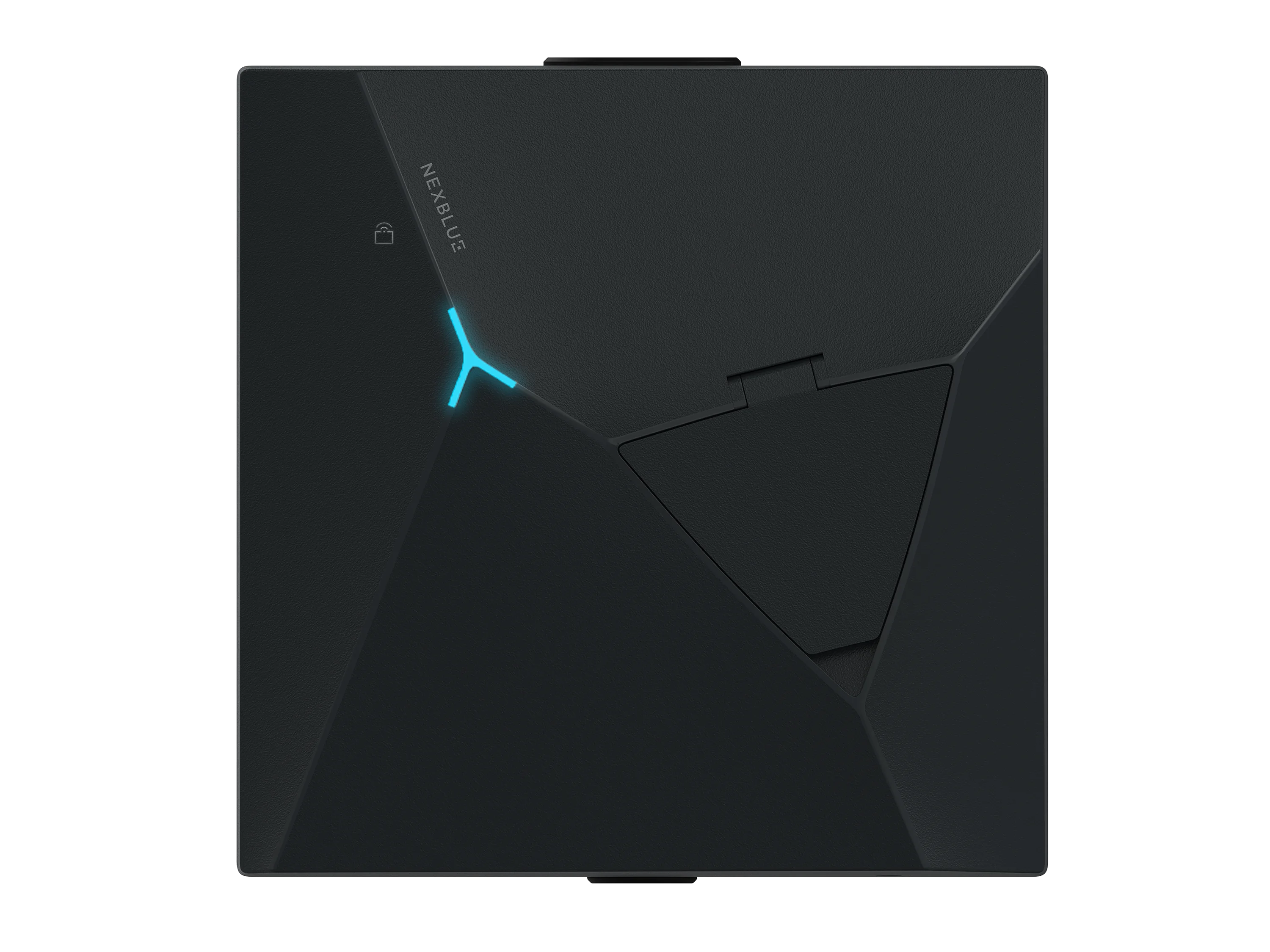
The NexBlue Point 2 is a connectivity powerhouse: Wi-Fi, Bluetooth, and a built-in 4G eSIM with a lifetime free subscription. That triple-redundancy approach means your charger stays online even if your home Wi-Fi drops — a genuine advantage for reliability and OTA updates. At just 2.1 kg and 235mm × 230mm, it is also one of the lightest, most compact chargers on the UK market. The trade-off? No on-unit display — you need the myNexBlue app for everything.
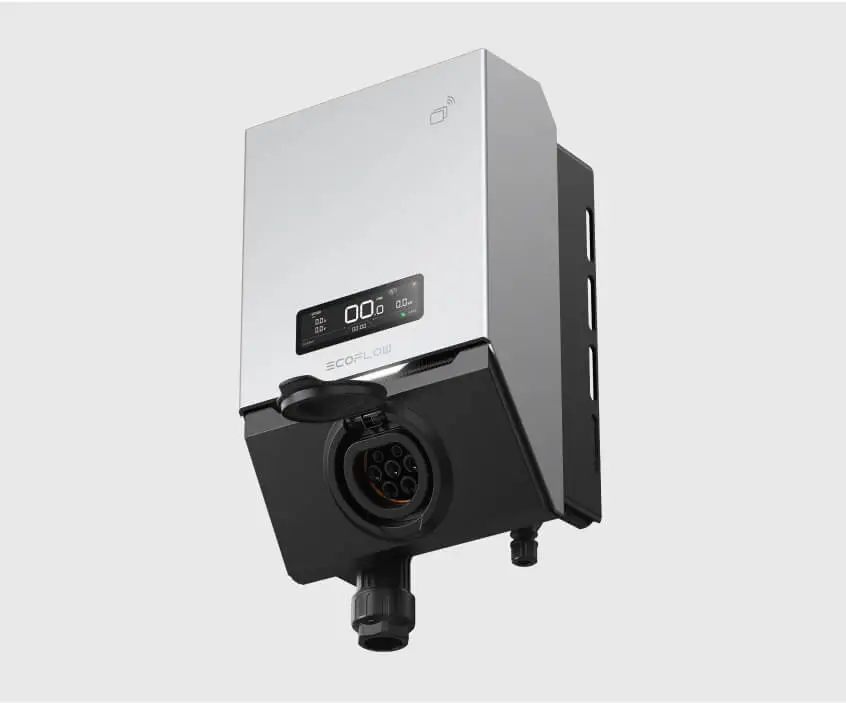
The EcoFlow PowerPulse 2 takes a different approach. It has a built-in LCD display that shows charging status at a glance — handy when you just want to confirm charging has started without reaching for your phone. Connectivity is more modest: Wi-Fi and RFID only, with no 4G fallback. At 3.5 kg and noticeably larger dimensions (333mm × 226mm × 145mm), it is chunkier but still perfectly manageable. Both units have strong IP ratings for outdoor installation, though the NexBlue's IK10 impact resistance rating is the highest available — useful if your charger is near a driveway where it might take a knock.
Price and Value
| Cost Element | NexBlue Point 2 | EcoFlow PowerPulse 2 |
|---|---|---|
| Unit Price | £530–600 | £545 |
| Typical Installation | £400–600 | £400–600 |
| Total Installed Cost | £930–1,200 | £945–1,145 |
| After OZEV Grant (£500) | £430–700 | Not yet confirmed |
The pricing is remarkably close, but the NexBlue edges it on value. For £15 less at the entry price, you get a 5-year warranty (versus 3), V2G readiness, OCPP 2.0.1, triple connectivity with free 4G, and confirmed OZEV approval. The EcoFlow's OZEV status is unconfirmed at the time of writing — if you are a renter or flat owner eligible for the £500 grant, verify this before purchasing.
That said, the EcoFlow offers three-phase capability, a tethered option, an LCD display, and unmatched ecosystem integration if you own EcoFlow solar and battery products. Those are not trivial advantages for the right buyer.
Who Should Buy Which?
Buy the NexBlue Point 2 if:
- You want V2G and ISO 15118 readiness without paying a premium
- Lifetime free 4G connectivity appeals — especially if your Wi-Fi is unreliable near the charger
- A 5-year warranty and confirmed OZEV approval give you peace of mind
- You value the smallest, lightest possible unit on your wall
- You are comfortable with an untethered socket and using the app for all status checks
Buy the EcoFlow PowerPulse 2 if:
- You already own EcoFlow solar panels or a PowerOcean battery and want single-app control
- You have (or plan to install) a three-phase supply and want 22kW charging
- You prefer a tethered cable option for convenience
- A built-in LCD display matters to you — no phone needed for basic status
- Three-phase future-proofing is more important to you than V2G readiness
Our recommendation: For the majority of UK homeowners on a standard single-phase supply, the NexBlue Point 2 is the stronger buy. The combination of V2G readiness, OCPP 2.0.1, 5-year warranty, free 4G, and a lower entry price is difficult to beat at this level. It is a genuine feature leader at a mid-range price. The caveat is brand maturity — NexBlue does not yet have the install base or long-term track record of established names, and that is a legitimate concern. The EcoFlow PowerPulse 2 becomes the clear winner if you are already invested in the EcoFlow energy ecosystem or need three-phase charging. For everyone else, the NexBlue offers more future-proofing per pound.
Read our full NexBlue Point 2 review or EcoFlow PowerPulse 2 review.
We’ll handle the installation
We’ll match you with vetted UK electricians — up to 3 free quotes, no obligation.