Indra Smart PRO vs VCHRGD Seven Pro: British Heritage vs Best Value
British Pedigree vs Budget Champion: Which Smart Charger Deserves Your Driveway?
Choosing between the Indra Smart PRO and the VCHRGD Seven Pro is a genuinely interesting dilemma. Both are 7.4kW single-phase smart chargers packed with features that would have been premium-only territory just two years ago — solar integration, dynamic load balancing, smart tariff support, and RFID security. Both include a CT clamp in the box. Both are OZEV-approved. And yet there is a £167 gap between them, which naturally raises the question: is the Indra's extra cost justified, or is the VCHRGD simply offering more for less?
The Indra Smart PRO comes from a well-established British manufacturer with a strong reputation in the EV charging space and genuine V2G credentials — Indra was one of the first UK companies to develop vehicle-to-grid technology. The VCHRGD Seven Pro, meanwhile, is a newer entrant that has quickly earned attention for cramming an extraordinary number of features into a compact, affordable package. Let us dig into the details.
In a nutshell:
- Indra Smart PRO (£599): A British-made charger with an included surge protection device (SPD) that can save £100–150 on installation, backed by a brand with genuine V2G pedigree.
- VCHRGD Seven Pro (£432): Arguably the most feature-rich charger per pound on the UK market, with dual solar modes, OCPP compliance, and a longer 7.5m cable.
Spec Comparison
| Feature | Indra Smart PRO | VCHRGD Seven Pro |
|---|---|---|
| Price | £599 | £432 (tethered 7.5m) |
| Max Power | 7.4kW (single-phase) | 7.4kW (single-phase) |
| Cable Length | 6 metres | 7.5 metres |
| Smart Tariff Support | Yes — major UK providers | Yes — Octopus Intelligent Go |
| Solar Integration | Yes (CT clamp included) | Yes — Solar Export + Solar Only modes (CT clamp included) |
| Connectivity | Wi-Fi, Bluetooth | Wi-Fi, Bluetooth (optional 4G) |
| RFID Security | Yes | Yes (2 cards included) |
| Dynamic Load Balancing | Yes (CT clamp included) | Yes (CT clamp included) |
| OCPP Support | Not specified | OCPP 1.6J |
| IP Rating | IP54 | IP54 + IK10 |
| Warranty | 3 years | 3 years |
| Type | Tethered (Type 2) | Tethered (Type 2) |
| SPD Included | Yes | No |
| Weight | ~5.0 kg | ~4.0 kg |
| Dimensions | 340 × 240 × 115mm | 300 × 180 × 90mm |
Smart Tariff Integration
Both chargers support smart tariff integration, which is arguably the single most impactful feature for reducing your running costs. On a tariff like Octopus Intelligent Go (~7p/kWh off-peak), charging a Tesla Model 3 with a 60kWh battery costs roughly £4.20 instead of £15+ at standard rates. Over a year of average UK driving (7,400 miles), that is the difference between roughly £150 and £500+ in electricity costs.
The Indra Smart PRO advertises integration with major UK energy providers, and Indra's own website promotes driving for "less than 3p per mile" using off-peak tariffs — a claim that checks out on rates around 7p/kWh (indra.co.uk). Reviews confirm the tariff mode works well, allowing you to input your tariff details so charging automatically begins when cheap rates kick in (topcharger.co.uk).
The VCHRGD Seven Pro specifically highlights Octopus Intelligent Go compatibility through its Powerverse app, which also features an AI assistant called Raya. While Octopus Intelligent Go is arguably the UK's most popular EV tariff, if you are on a different provider — say OVO Smart Charge or British Gas Electric Driver — you will want to verify compatibility. The Indra's broader claimed provider support could be an advantage here, though neither charger matches the deep Octopus API integration offered by the likes of Ohme.
Solar Integration
This is where the VCHRGD Seven Pro pulls ahead on paper. It offers two distinct solar modes: Solar Export, which uses excess solar generation that would otherwise be exported to the grid, and Solar Only, which ensures your car charges exclusively from solar power. Both chargers include a CT clamp for monitoring your home's energy usage, so there is no extra hardware cost.
The Indra Smart PRO also supports solar charging, and reviewers have praised its solar matching capability (electriccarguide.co.uk). However, the VCHRGD's dual-mode approach gives you finer control. Solar Only mode is particularly appealing if you have a decent-sized array (4kW+) and want to maximise truly free miles — on a sunny summer day, you could add 20–25 miles of range without spending a penny.
For homes with solar panels, both chargers are solid choices, but the VCHRGD's additional granularity is a genuine differentiator that could help you squeeze more value from your panels.
Build Quality, Design, and Installation
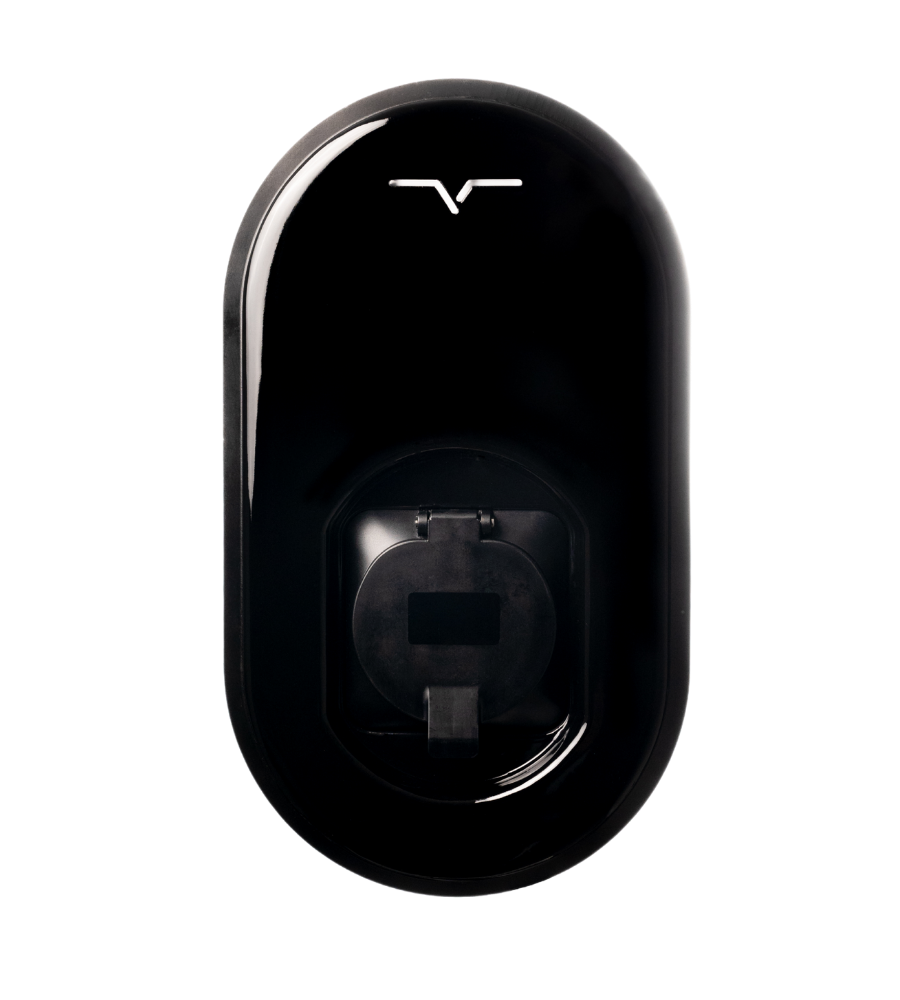
The Indra Smart PRO is the larger and heavier unit at 340 × 240 × 115mm and roughly 5kg, compared to the VCHRGD's notably compact 300 × 180 × 90mm and 4kg. If aesthetics and unobtrusiveness matter to you, the VCHRGD wins on size — it is one of the smallest smart chargers on the market. That said, the VCHRGD is only available in black, while the Indra comes in white. Neither offers the colour range of Indra's premium LUX model, which comes in four finishes (electriccarguide.co.uk).
Both share an IP54 weatherproof rating, which is perfectly adequate for UK outdoor installation. However, the VCHRGD adds an IK10 impact resistance rating — the highest on the standard scale — meaning it can withstand a 20-joule impact. This is reassuring if your charger is mounted near a driveway where it might catch a car door or a wayward football.
The Indra's standout installation advantage is the included surge protection device (SPD). Since the 18th Edition wiring regulations, SPDs are required in most UK installations, and electricians typically charge £100–150 to supply and fit one. With the Indra, that cost is baked in. This effectively narrows the real-world price gap between these two chargers considerably.
The VCHRGD counters with a longer 7.5-metre tethered cable versus the Indra's 6 metres. That extra 1.5 metres can be the difference between comfortably reaching your charge port and having to park at an awkward angle — a small detail that matters every single day.
Price and Value
| Cost Element | Indra Smart PRO | VCHRGD Seven Pro |
|---|---|---|
| Unit Price | £599 | £432 |
| Typical Installation | £400–£600 | £400–£600 |
| Total Installed Cost | £999–£1,199 | £832–£1,032 |
| After OZEV Grant (if eligible) | £349–£549 | £332–£532 |
The VCHRGD Seven Pro is £167 cheaper at the unit level. However, the Indra includes an SPD worth roughly £100–150, so the effective gap narrows to perhaps £20–70 once you factor in what your electrician would otherwise charge. That said, some installers include SPD costs within their standard installation quote regardless, so this saving is not guaranteed — always ask your installer.
Where the VCHRGD truly excels on value is in what you get for the money: OCPP 1.6J compliance (useful if you ever want to connect to third-party energy management platforms), two RFID cards in the box, dual solar modes, OTA firmware updates, and a longer cable. Feature-for-feature, it is exceptionally difficult to beat at this price point.
Who Should Buy Which?
Buy the Indra Smart PRO if:
- You value buying from an established British manufacturer with a proven track record
- Your installer would otherwise charge separately for an SPD — the included device genuinely saves money
- You want broad smart tariff compatibility beyond just Octopus
- You are interested in the Indra ecosystem and potential future V2G upgrade paths
- You prefer a white charger to match a lighter-coloured wall or garage
Buy the VCHRGD Seven Pro if:
- You want the most features for the lowest price — it is hard to argue with the value proposition
- You have solar panels and want granular control with dedicated Solar Export and Solar Only modes
- You need a longer cable (7.5m vs 6m) to comfortably reach your charge port
- You want OCPP 1.6J compliance for future flexibility with energy management platforms
- You share a driveway or parking space and want RFID access control with cards included
Our recommendation: For most buyers, the VCHRGD Seven Pro offers the better overall package. It matches the Indra on core functionality, beats it on solar flexibility and cable length, and costs significantly less. The feature density at £432 is genuinely remarkable. However, if you value brand heritage, want the installation savings from an included SPD, or prefer broader tariff compatibility, the Indra Smart PRO remains a solid, well-engineered choice from a company with deep roots in UK EV infrastructure. Neither will disappoint — but the VCHRGD's combination of price and features makes it the one to beat.
For the full specs-level breakdown, see our Indra Smart PRO vs VCHRGD Seven Pro comparison page.
Read our full Indra Smart PRO review or VCHRGD Seven Pro review.
If you have solar panels, see our best EV charger for solar panels guide.
For total installed cost rankings, see our cheapest EV charger guide.
We’ll handle the installation
We’ll match you with vetted UK electricians — up to 3 free quotes, no obligation.