Indra Smart PRO vs Cord Zero: British Grit vs Connected Smarts
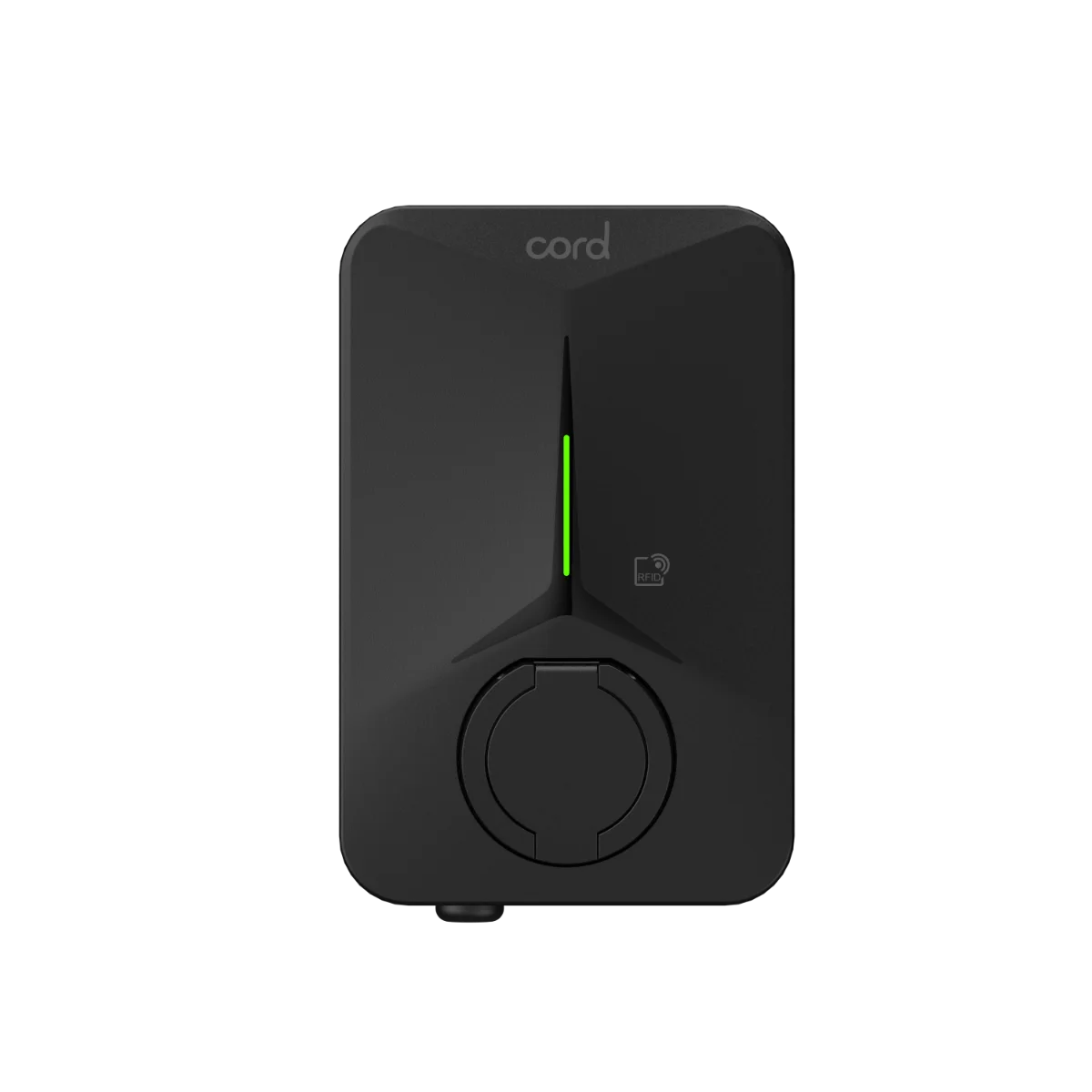
British Grit vs Connected Smarts: Two Mid-Range Chargers Go Head to Head
If you're shopping for a smart home EV charger in the £500–£600 bracket, the Indra Smart PRO and Cord Zero are two names that keep cropping up — and for good reason. Both deliver the full 7.4kW single-phase charging speed, both integrate with popular UK smart tariffs, and both come in comfortably under £600 before installation. They even share the same 3-year warranty and IP54-level weatherproofing.
So what actually separates them? Quite a lot, as it turns out. The Indra Smart PRO plays the value card with a built-in surge protection device (SPD) that can knock £100–£150 off your installation bill, plus a CT clamp for solar diversion included in the box. The Cord Zero, meanwhile, bets big on connectivity — it's one of the only chargers at this price with dual Wi-Fi and 4G built in, meaning it stays online even if your home broadband drops out. Both are honest, capable chargers, but they suit slightly different priorities.
In a nutshell:
- Indra Smart PRO (£599): A British-made charger whose included SPD and CT clamp genuinely reduce your total installed cost, making it one of the best-value packages on the market.
- Cord Zero (£555): The most reliably connected charger in its class, with dual Wi-Fi + 4G failover and a comprehensive built-in safety suite that simplifies installation.
Spec Comparison
| Feature | Indra Smart PRO | Cord Zero |
|---|---|---|
| Price (unit) | £599 | £555 (5m tethered) |
| Max Power | 7.4kW (single-phase) | 7.4kW (single-phase) |
| Cable Length | 6 metres | 5 metres (8m available for £625) |
| Smart Tariffs | Yes — major UK providers | Yes — Octopus Go, OVO, British Gas, EDF and more |
| Solar Integration | Yes — CT clamp included | Yes — solar compatible |
| Connectivity | Wi-Fi, Bluetooth | Wi-Fi 2.4GHz + 4G (built-in multi-network SIM) |
| Dynamic Load Balancing | Yes | Yes |
| Warranty | 3 years | 3 years (currently free upgrade to 5 years) |
| IP Rating | IP54 | IP54 + IK08 |
| Type | Tethered (Type 2) | Tethered (Type 2) |
| OZEV Approved | Yes | Yes |
| OCPP Support | Not stated | OCPP 1.6J |
Smart Tariff Integration
Both chargers support the smart tariffs that make the biggest difference to your running costs. Pair either with Octopus Intelligent Go (around 7p/kWh off-peak) or Octopus Go (7.5p/kWh between 00:30 and 04:30), and you're looking at roughly 2p per mile in a Tesla Model 3 — a fraction of the 14–16p per mile you'd pay on a standard variable tariff.
The Cord Zero explicitly lists compatibility with Octopus Go, OVO, British Gas, and EDF, while the Indra Smart PRO references integration with major UK providers. Indra's tariff mode, as noted by topcharger.co.uk, lets you input your tariff details so the charger automatically starts when the off-peak rate kicks in — a genuinely useful set-and-forget feature. Both chargers also support scheduled charging through their respective apps, so you can manually set charge windows if you prefer.
For most UK drivers doing 7,400 miles a year, switching from a standard tariff (around 24p/kWh) to Octopus Go's off-peak rate could save roughly £360 annually. Either charger gets you there — the difference is negligible.
App and Connectivity
This is where the Cord Zero pulls ahead. Its dual Wi-Fi and 4G connectivity with automatic failover means your charger stays online even when your router restarts at 3am — exactly when your off-peak charging session needs to begin. The built-in multi-network SIM is a genuine differentiator, particularly if your charger is mounted in a garage or outbuilding with weak Wi-Fi signal.
The Indra Smart PRO offers Wi-Fi and Bluetooth, which is perfectly adequate for most homes but lacks the 4G backup. Historically, the Smart PRO's connectivity was a known weak spot — earlier versions shipped with Ethernet only, requiring a USB dongle for wireless, as topcharger.co.uk noted. The current model has improved with built-in Wi-Fi, but if you've ever cursed a smart device for dropping offline, the Cord Zero's belt-and-braces approach is reassuring.
On the app side, neither charger is going to win design awards. The Cord AI app is functional but basic compared to polished offerings from Ohme or Tesla. The Indra app covers scheduling, locking, and charge monitoring, but reviewers at electriccarguide.co.uk have flagged occasional Wi-Fi connectivity issues. Both apps do the job — just don't expect the slick experience of a Tesla Powerwall dashboard.
Solar Integration
If you have solar panels, the Indra Smart PRO has a meaningful edge: it ships with a CT clamp included in the box. This means your installer can set up solar diversion without sourcing additional hardware, saving both time and money. Indra's solar mode diverts surplus generation to your EV, and electriccarguide.co.uk highlights the Smart PRO's "advanced solar matching" as a key feature.
The Cord Zero is listed as solar compatible, but the data doesn't specify whether a CT clamp is included or what level of solar matching intelligence is built in. If solar diversion is a priority for you, the Indra's out-of-the-box readiness is a clear advantage. That said, neither charger matches the dedicated three-mode solar system you'd find on a myenergi Zappi — if maximising every watt of solar is your goal, that's a different conversation entirely.
Installation Considerations
Here's where the Indra Smart PRO claws back real value. It includes a surge protection device (SPD) as standard — a component that's been required by UK wiring regulations (BS 7671, 18th Edition) for new installations since 2019. Most competing chargers don't include one, meaning your electrician needs to fit a separate SPD in your consumer unit, typically adding £100–£150 to the bill.
The Cord Zero counters with its own comprehensive built-in safety suite — RCD protection, PEN fault detection, and surge and overvoltage protection — which can also simplify the consumer unit work and reduce installation costs. Both chargers support dynamic load balancing to protect your home's electrical supply.
The Cord Zero also boasts a notably fast installation turnaround, typically within two weeks of ordering. Indra's installation service, as described on indra.co.uk, includes a free home survey and hassle-free booking, though turnaround times aren't specified. The Indra's 6-metre tethered cable gives you an extra metre of reach over the Cord Zero's standard 5-metre cable — worth considering if your parking spot is further from the mounting point.
Price and Value
| Indra Smart PRO | Cord Zero | |
|---|---|---|
| Unit Price | £599 | £555 |
| Installation Estimate | £400–£600 | £400–£500 |
| Total Installed Cost | £999–£1,199 | £955–£1,055 |
| After OZEV Grant (if eligible) | £349–£549 | £455–£555 |
On sticker price alone, the Cord Zero is £44 cheaper. But factor in the Indra's included SPD (saving £100–£150 on installation) and CT clamp for solar, and the effective cost gap narrows or even reverses. If your installer would have charged £150 for an SPD, the Indra's true cost is closer to £449 — making it arguably the better deal.
The Cord Zero's current promotional upgrade to a 5-year warranty is worth noting, though. That's two extra years of cover at no additional cost, which adds genuine peace of mind — especially since the promotion may not last indefinitely.
Who Should Buy Which?
Buy the Indra Smart PRO if:
- You have solar panels and want solar diversion ready out of the box with the included CT clamp
- You want to minimise total installation cost thanks to the built-in SPD
- You prefer buying British-designed and manufactured products
- A 6-metre cable better suits your parking and mounting arrangement
- You're interested in Indra's broader ecosystem and potential future V2G developments
Buy the Cord Zero if:
- Reliable connectivity is your top priority — the dual Wi-Fi + 4G failover is unmatched at this price
- Your charger will be mounted in a garage or area with poor Wi-Fi signal
- You want the security of a 5-year warranty (while the free upgrade promotion lasts)
- You need OCPP 1.6J support for future flexibility or energy management systems
- You want the option of an untethered socket version (£475) or longer 8-metre cable (£625)
Our recommendation: For most UK Tesla owners, the Cord Zero edges it — its dual connectivity virtually eliminates the dropped-connection headaches that plague many smart chargers, and the current 5-year warranty promotion is genuinely generous. But if you have solar panels, the Indra Smart PRO becomes the smarter pick thanks to its included CT clamp and SPD, which can make it the cheaper option once installation costs are totalled up. Both are solid, honest chargers that punch above their weight in a crowded market.
For the full specs-level breakdown, see our Indra Smart PRO vs Cord Zero comparison page.
Read our full Indra Smart PRO review or Cord Zero review.
If you have solar panels, see our best EV charger for solar panels guide.
We’ll handle the installation
We’ll match you with vetted UK electricians — up to 3 free quotes, no obligation.