Hypervolt Home 3 Pro vs Sync Energy Wall Charger 2: Premium Polish or Budget Brilliance?
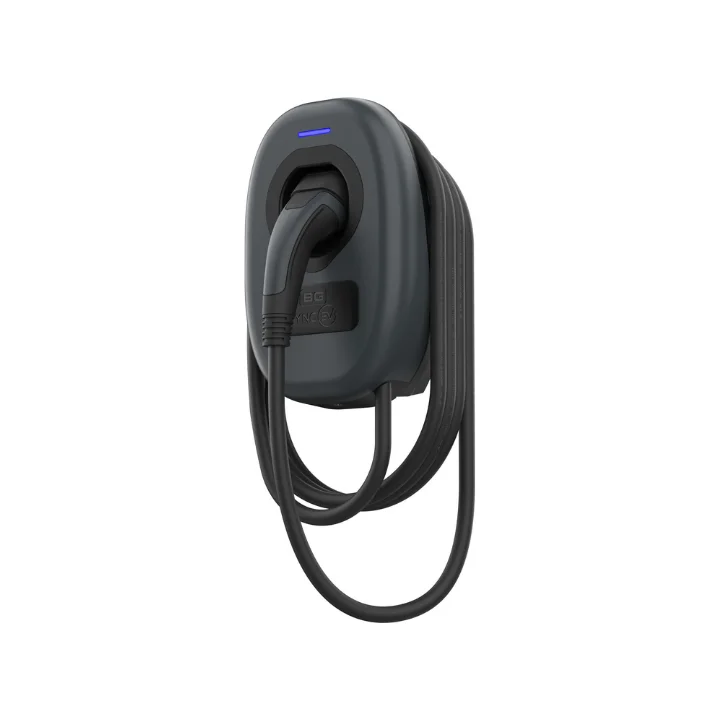
Premium Polish or Budget Brilliance? Two UK-Made Chargers Go Head to Head
Choosing a home EV charger used to be simple — you picked whatever your installer recommended and got on with your life. But the UK market has matured dramatically, and now you're faced with genuinely difficult decisions between chargers that, on paper, do very similar things at very different price points.
The Hypervolt Home 3 Pro and the Sync Energy Wall Charger 2 are a perfect example. Both are designed and backed by UK companies. Both charge at 7.4kW on single-phase. Both offer smart tariff scheduling, solar diversion, and app control. Yet one costs nearly twice as much as the other. So where does that extra money actually go — and does it matter to you?
In a nutshell:
- Hypervolt Home 3 Pro (£690): The polished all-rounder with exceptional build quality, slick design, and industry-leading customer support — the charger you buy when you want everything to just work.
- Sync Energy Wall Charger 2 (£362): A feature-packed budget contender with built-in PEN fault protection, OCPP support, and solar diversion — remarkable value backed by listed UK company Luceco PLC.
Spec Comparison
| Feature | Hypervolt Home 3 Pro | Sync Energy Wall Charger 2 |
|---|---|---|
| Price (unit only) | £690 | £362 (socketed Wi-Fi/LAN); from £302 tethered |
| Max Power | 7.4kW (single-phase) | 7.4kW (single-phase) |
| Cable | 5m / 7.5m / 10m tethered | 7.5m tethered (or untethered) |
| Smart Tariffs | Yes — smart tariff integration | Yes — TariffSense scheduling |
| Solar Diversion | Yes — CT clamp included | Yes — SolarCharge with CT clamp |
| Connectivity | Wi-Fi, Bluetooth | Wi-Fi, Ethernet, Bluetooth |
| OCPP Support | No | Yes — OCPP 1.6J |
| Warranty | 3 years (extendable to 5 for £100) | 3 years |
| IP / IK Rating | IP66 + IK10 | IP65 + IK10 |
| Type | Tethered (Type 2) | Tethered or Untethered (Type 2) |
| PEN Fault Protection | External (earth rod typically required) | Built-in |
| Colour Options | Interchangeable covers | 9 interchangeable fascia plates |
Smart Tariff Integration
Both chargers support scheduling around cheap overnight electricity, which is where the real savings lie for most UK EV drivers. On a tariff like Octopus Go (7.5p/kWh off-peak, 00:30–04:30), a typical Tesla Model 3 owner driving 7,400 miles per year could spend as little as £160 annually on charging — compared to over £1,200 on petrol.
The Hypervolt Home 3 Pro offers smart tariff integration through its app, letting you set schedules that align with off-peak windows. It works reliably, though it lacks the direct tariff API integration that chargers like the Ohme Home Pro offer. The Sync Energy Wall Charger 2 takes a similar approach with its TariffSense feature, which allows you to schedule charging around your tariff's cheapest periods.
Neither charger is the absolute best in class for tariff optimisation — that crown still belongs to Ohme with its direct Octopus Intelligent Go integration. But both will comfortably save you hundreds of pounds a year compared to charging on a flat-rate tariff, and for most drivers, manual scheduling around a fixed off-peak window like Octopus Go is perfectly adequate.
Solar Diversion
If you have solar panels, both chargers can divert surplus generation to your EV rather than exporting it to the grid for a few pence per kWh. This is genuinely valuable — charging from your own solar is essentially free motoring.
The Hypervolt Home 3 Pro includes a CT clamp for solar integration with no extra hardware needed. As heatable.co.uk notes, it offers three solar modes — Boost, Eco, and Super Eco — giving you granular control over how aggressively it prioritises solar energy. That said, topcharger.co.uk observes that the solar diversion, while effective, isn't quite as sophisticated as what you'd get from a dedicated solar-first charger like the Zappi.
The Sync Energy Wall Charger 2 offers its own SolarCharge feature, also using a CT clamp. It's a capable system for the price, though with fewer documented charging modes than the Hypervolt. For most solar panel owners generating 3–4kW of surplus on a good day, either charger will do the job — but the Hypervolt gives you slightly more fine-tuned control.
Build Quality and Design
This is where the price gap becomes most visible. The Hypervolt Home 3 Pro is a genuinely beautiful piece of kit — compact at 270mm × 170mm × 110mm, available in three colours (Ultra White, Space Grey, Ultra Black), and built to an IP66 + IK10 standard. That IP66 rating means it's fully protected against powerful water jets, one step above the Sync Energy's IP65. As electriccarguide.co.uk puts it, it's "pretty hard to damage." The charger is manufactured at Hypervolt's facility in Rainham, Essex, with each unit photographed and logged for traceability — a level of quality control that's genuinely impressive.
The Sync Energy Wall Charger 2 is slightly larger at 305mm × 201mm × 115mm and takes a more functional design approach. It's perfectly presentable, and the nine interchangeable fascia plates actually give you more colour options than the Hypervolt. But it doesn't have quite the same premium feel. The IP65 rating is still fully weatherproof for UK conditions — you'd need to be pressure-washing your charger directly to notice the difference from IP66.
One area where the Sync Energy genuinely wins on build considerations is connectivity: it includes an Ethernet port alongside Wi-Fi and Bluetooth. If your charger is in a garage with poor Wi-Fi signal, a wired connection is invaluable. Some users have reported Wi-Fi reliability issues with the Sync Energy, making that Ethernet option more than just a nice-to-have.
Installation Considerations
Here's where the Sync Energy Wall Charger 2 has a genuinely meaningful advantage: built-in PEN fault protection. Most UK chargers require an external earth rod to be installed as part of the electrical safety requirements, which adds cost and complexity — particularly if you have a tarmacked or paved driveway. The Sync Energy eliminates this entirely, which can save £50–150 on installation and avoids the unsightly earth rod poking out of the ground.
The Hypervolt Home 3 Pro typically requires an earth rod, though viablepower.co.uk notes that Hypervolt's customer support — with a claimed 5-second average call response time — makes the installation process smoother if any issues arise. Both chargers are OZEV-approved, so eligible renters and flat owners can claim up to £500 off the installation cost.
The Sync Energy also supports OCPP 1.6J, an open communication protocol that future-proofs it for third-party energy management platforms. If you're planning a broader smart home energy setup, this is a genuine technical advantage.
Price and Value
| Cost Element | Hypervolt Home 3 Pro | Sync Energy Wall Charger 2 |
|---|---|---|
| Unit price | £690 | £362 (socketed); from £302 (tethered) |
| Installation estimate | £400–600 | £300–600 |
| Total installed | £1,090–1,290 | £602–962 |
| After OZEV grant (if eligible) | £590–790 | £102–462 |
The numbers speak loudly here. At the lower end, you could have a Sync Energy Wall Charger 2 fully installed for roughly half the cost of a Hypervolt Home 3 Pro. The built-in PEN fault protection further tilts the installation cost in the Sync Energy's favour.
That said, the Hypervolt commands its premium through superior build quality, a more refined app experience, extendable warranty (5 years for an additional £100), and that exceptional customer support. As wepoweryourcar.com notes, the Hypervolt is an evolution of an already well-loved charger. If you value the reassurance of a premium product with a proven track record, the extra spend is justifiable.
Who Should Buy Which?
Buy the Hypervolt Home 3 Pro if:
- You want the most polished, premium-feeling charger on your wall
- Customer support matters to you — Hypervolt's responsiveness is genuinely best-in-class
- You want to extend your warranty to 5 years for long-term peace of mind
- You need a longer cable option (up to 10m) for tricky parking arrangements
- You prefer a charger with a proven track record and strong installer familiarity
Buy the Sync Energy Wall Charger 2 if:
- Budget is a primary concern — you could save £300–500 on the total installed cost
- You want built-in PEN fault protection to simplify installation and avoid an earth rod
- You value OCPP 1.6J support for future energy management flexibility
- You need an Ethernet connection for reliable connectivity in a garage or outbuilding
- You want the untethered (socketed) option for a cleaner wall-mounted look
Our recommendation: For most buyers, the Sync Energy Wall Charger 2 represents outstanding value. It does everything the average EV owner needs — smart scheduling, solar diversion, load balancing — at a price that's hard to argue with. The built-in PEN fault protection alone can save enough on installation to make the total cost difference even more dramatic. However, if you're the sort of person who buys quality once and expects it to last a decade without fuss, the Hypervolt Home 3 Pro's superior build, extendable warranty, and exceptional support make it a worthwhile investment. Both are solid choices — but the Sync Energy makes the stronger case pound-for-pound.
For the full specs-level breakdown, see our Hypervolt Home 3 Pro vs Sync Energy Wall Charger 2 comparison page.
Read our full Hypervolt Home 3 Pro review or Sync Energy Wall Charger 2 review.
If you have solar panels, see our best EV charger for solar panels guide.
For total installed cost rankings, see our cheapest EV charger guide.
We’ll handle the installation
We’ll match you with vetted UK electricians — up to 3 free quotes, no obligation.