GivEnergy EV Charger vs VCHRGD Seven Pro: Battery Specialist or Budget All-Rounder?
The Battery Specialist vs the Feature-Packed Newcomer
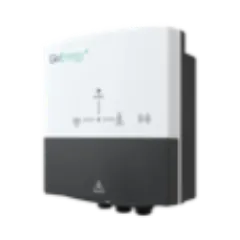
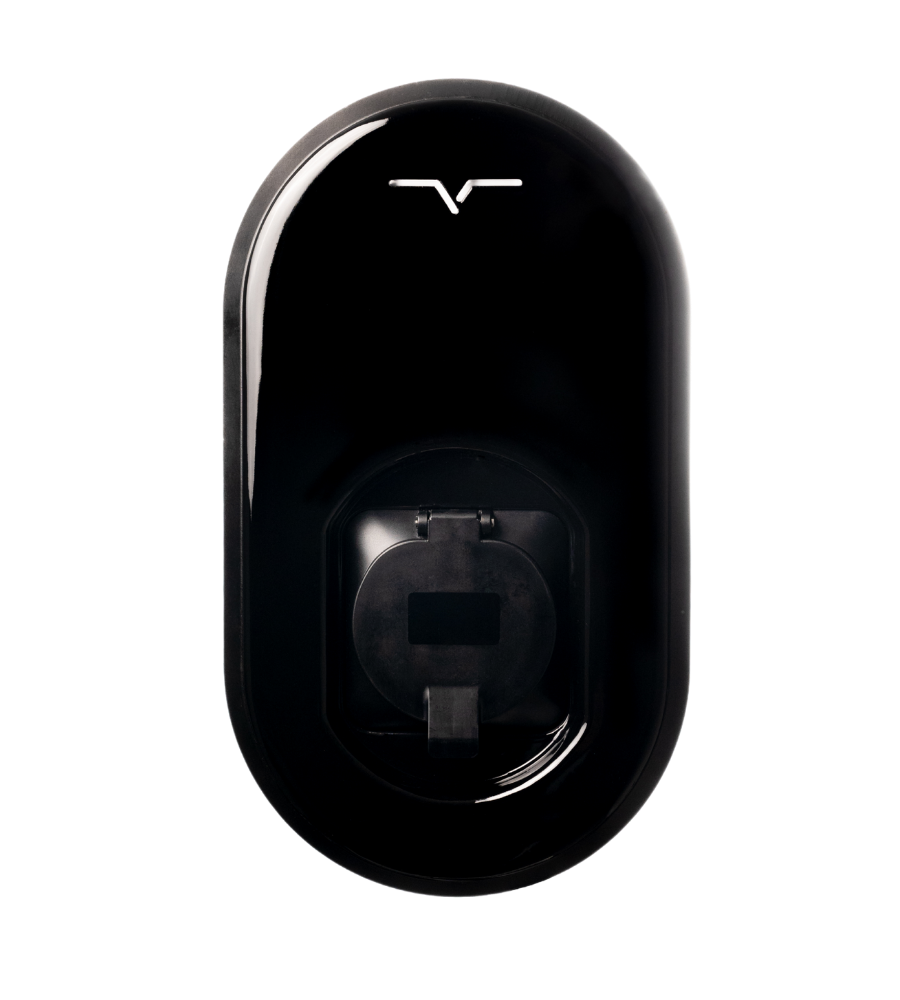
Here's a comparison you probably weren't expecting to make. The GivEnergy EV Charger and the VCHRGD Seven Pro are both budget-friendly smart chargers that undercut the big names on price — yet they take fundamentally different approaches to saving you money. One is designed from the ground up to work with home battery storage, letting you charge your Tesla from energy you banked earlier in the day. The other crams virtually every smart feature going into a compact box that costs less than £450.
If you've got solar panels — or you're planning to install them — both chargers deserve your attention. But the right choice depends heavily on whether you have a home battery system and how much you value smart tariff integration over energy storage flexibility. Let's dig into the details.
In a nutshell:
- GivEnergy EV Charger (£478): The standout choice if you have a home battery, capable of charging your EV from stored solar energy — a trick most rivals simply can't do.
- VCHRGD Seven Pro (£432): Arguably the most feature-rich charger under £450, with smart tariff support, two solar modes, dynamic load balancing and a 7.5m cable all included.
Spec Comparison
| Feature | GivEnergy EV Charger | VCHRGD Seven Pro |
|---|---|---|
| Price | £478 | £432 (tethered 7.5m) / from £395 untethered |
| Power | 7kW | 7.4kW |
| Cable Length | 5 metres | 7.5 metres |
| Smart Tariff Support | Limited | Octopus Intelligent Go integration |
| Solar Features | Solar divert + battery-to-EV | Solar Export + Solar Only modes |
| Connectivity | Wi-Fi | Wi-Fi, Bluetooth (optional 4G) |
| Dynamic Load Balancing | Not specified | Yes (CT clamp included) |
| RFID | Yes | Yes (2 cards included) |
| OCPP | Not specified | OCPP 1.6J |
| Warranty | 3 years | 3 years |
| IP Rating | IP65 | IP54 + IK10 |
| Type | Tethered only | Tethered or untethered |
| Weight | ~4.5 kg | ~4 kg |
Smart Tariff Integration
This is where the VCHRGD Seven Pro pulls ahead convincingly. It integrates directly with Octopus Intelligent Go — one of the UK's most popular EV tariffs offering electricity at around 7p/kWh during off-peak hours. As viablepower.co.uk notes, smart tariff integration is now one of the most important features in a home charger, and the ability to schedule charging automatically around cheap rate windows can save hundreds of pounds a year.
The GivEnergy EV Charger, by contrast, has limited smart tariff integration. You can schedule charging sessions manually, but it doesn't have the deep API-level connection to energy providers that chargers like the VCHRGD or Ohme Home Pro offer. If you're on a standard flat-rate tariff this won't matter much, but if you're on Octopus Intelligent Go, Octopus Go, or Octopus Agile, the VCHRGD is far better equipped to exploit those cheap overnight rates automatically.
For context, charging a Tesla Model 3 with a 60kWh battery at 7p/kWh costs roughly £4.20 — compared to around £16.80 at the current average standard rate of 28p/kWh. Over a year of typical UK driving (~7,400 miles), that difference adds up to well over £200 in savings. Having a charger that handles this automatically, rather than relying on you to set timers manually, is genuinely valuable.
Solar Diversion and Battery Integration
Both chargers offer solar charging, but they approach it very differently — and this is where the GivEnergy truly shines if you have the right setup.
The GivEnergy EV Charger's headline feature is battery-to-EV charging. If you have a home battery system (GivEnergy's own or any compatible third-party battery), the charger can draw stored energy to charge your car. That means solar energy captured during the afternoon while you're at work can be used to top up your Tesla when you get home in the evening. This is a genuinely unique capability that most rival chargers — including the VCHRGD — simply cannot replicate. The GivEnergy also offers a standard solar divert mode for direct panel-to-car charging when the sun is shining.
The VCHRGD Seven Pro takes a different but still impressive approach with two distinct solar modes: Solar Export, which diverts surplus solar generation to your car rather than exporting it to the grid, and Solar Only, which ensures your EV charges exclusively from solar power. The included CT clamp makes setup straightforward. For households with solar panels but no battery storage, this is an excellent solution — and arguably more practical than the GivEnergy's offering in that specific scenario, since you're not paying for battery-to-EV capability you can't use.
App, Connectivity and Build Quality
The VCHRGD Seven Pro uses the Powerverse app, which includes a Raya AI assistant and supports OTA (over-the-air) updates — meaning the charger can gain new features over time. It connects via Wi-Fi and Bluetooth, with optional 4G available. OCPP 1.6J compliance also means it can connect to third-party energy management platforms, giving you flexibility if you switch providers or want to integrate with a broader smart home ecosystem. The main caveat, as evenergyhub.com highlights, is that app reliability matters enormously for long-term satisfaction — and the Powerverse platform is a third-party dependency that VCHRGD doesn't fully control.
The GivEnergy charger connects via Wi-Fi to the GivEnergy monitoring portal, which is excellent for whole-home energy management — especially if you already have GivEnergy solar inverters or batteries. However, the app is acknowledged to be more basic compared to rivals from Ohme, Tesla, or Hypervolt. For day-to-day charge scheduling it's perfectly functional, but don't expect the polished experience of a dedicated EV charging app.
On build quality, the GivEnergy boasts an IP65 rating — fully weatherproof and dust-tight — which edges ahead of the VCHRGD's IP54 rating. However, the VCHRGD counters with IK10 impact resistance, meaning it can withstand significant knocks — handy if your charger is mounted near a tight driveway. The VCHRGD is also notably more compact at 300mm × 180mm × 90mm versus the GivEnergy's 320mm × 220mm × 115mm, and its 7.5-metre cable is a significant practical advantage over the GivEnergy's 5-metre tether, particularly if you don't always park in exactly the same spot.
Price and Value
| Cost Element | GivEnergy EV Charger | VCHRGD Seven Pro |
|---|---|---|
| Unit price | £478 | £432 (tethered) / from £395 (untethered) |
| Typical installation | £400–£600 | £400–£600 |
| Total installed cost | £878–£1,078 | £832–£1,032 |
| After OZEV grant (if eligible) | £378–£578 | £332–£532 |
Both chargers sit firmly in budget territory, but the VCHRGD Seven Pro is £46 cheaper at the tethered price point while offering a longer cable, dynamic load balancing with included CT clamp, smart tariff integration, and OCPP compliance. On a pure features-per-pound basis, the VCHRGD is remarkably hard to beat — as tinyeco.com notes, smart functionality and solar integration are now key differentiators in this price bracket, and the VCHRGD ticks both boxes convincingly.
The GivEnergy's value proposition is more conditional. At £478, it's a competitive price for a solar-capable charger, but its real worth only becomes apparent when paired with a home battery system. Without one, you're paying a small premium for a feature you can't use, while missing out on smart tariff integration that the VCHRGD includes as standard.
Who Should Buy Which?
Buy the GivEnergy EV Charger if:
- You already have a GivEnergy home battery system (or plan to install one)
- You want to charge your EV from stored solar energy captured during the day
- You use the GivEnergy monitoring portal and want a single ecosystem for solar, battery and EV
- You prioritise weatherproofing (IP65) over impact resistance
- You value battery-to-EV capability over smart tariff automation
Buy the VCHRGD Seven Pro if:
- You want the most features for the least money — full stop
- You're on Octopus Intelligent Go or plan to switch to a smart EV tariff
- You have solar panels but no home battery and want effective solar diversion
- You need a longer cable (7.5m vs 5m) or prefer the option of an untethered unit
- You want future flexibility through OCPP 1.6J and OTA updates
Our recommendation: For the majority of UK Tesla owners without a home battery system, the VCHRGD Seven Pro is the stronger buy. It costs less, charges marginally faster at 7.4kW, includes a longer cable, and — crucially — offers smart tariff integration that can save you hundreds of pounds annually on charging costs. The dynamic load balancing with included CT clamp is a genuinely useful bonus that many rivals charge extra for. However, if you have a home battery setup, the GivEnergy EV Charger unlocks a capability that no amount of smart tariff trickery can replicate: charging your car from energy you've already stored for free. For that specific use case, it remains a brilliant specialist tool.
For the full specs-level breakdown, see our GivEnergy EV Charger vs VCHRGD Seven Pro comparison page.
Read our full GivEnergy EV Charger review or VCHRGD Seven Pro review.
If you have solar panels, see our best EV charger for solar panels guide.
For total installed cost rankings, see our cheapest EV charger guide.
We’ll handle the installation
We’ll match you with vetted UK electricians — up to 3 free quotes, no obligation.