GivEnergy EV Charger vs Ohme ePod: Battery Storage Brains vs Tariff Smarts
The Battery Specialist vs the Tariff Genius
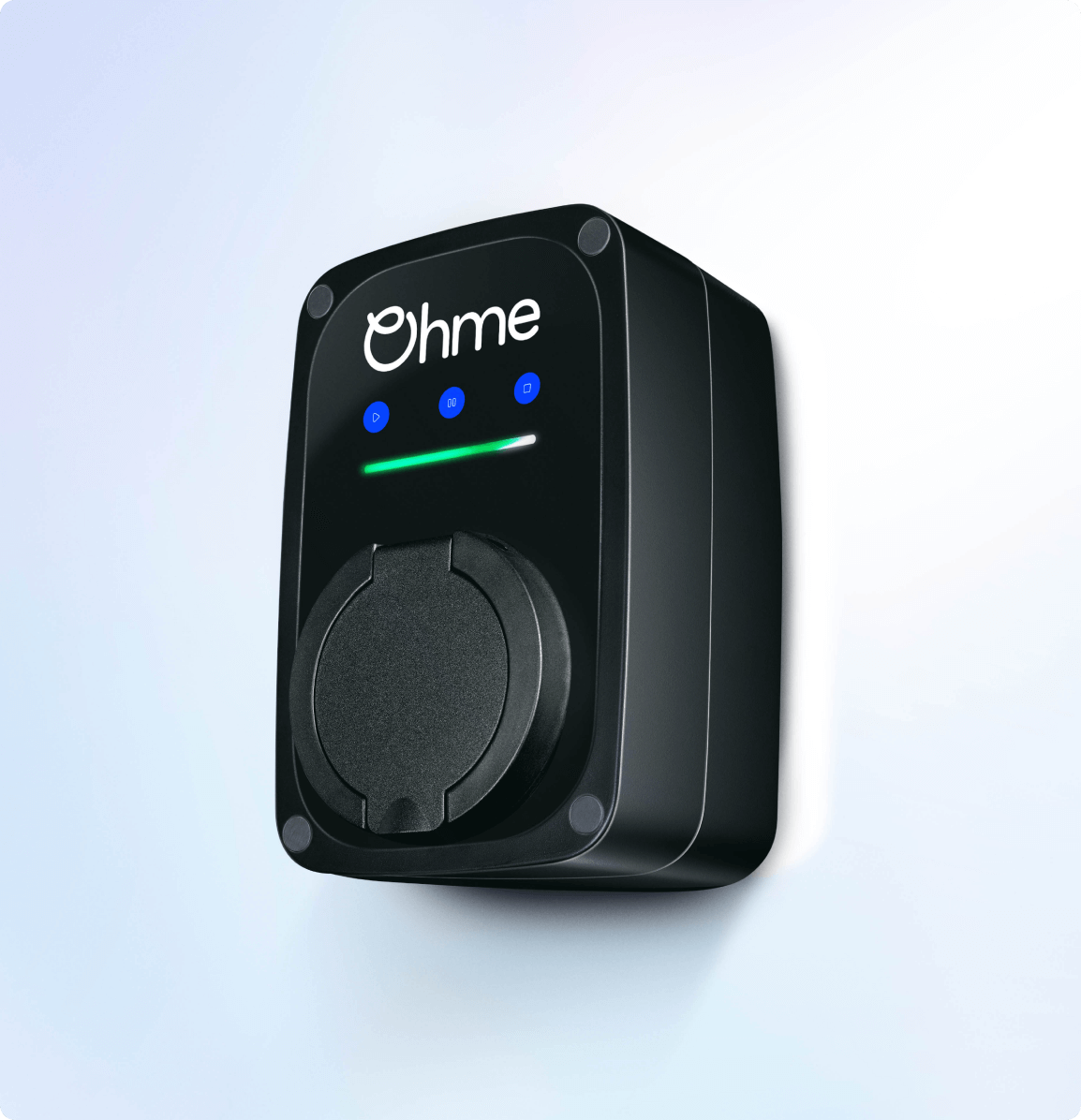
These two chargers sit at a similar price point but solve completely different problems. The GivEnergy EV Charger is purpose-built for homeowners who already have — or plan to install — a home battery system, letting you charge your Tesla from stored solar energy rather than drawing from the grid. The Ohme ePod, on the other hand, is the UK's smartest untethered charger, designed to squeeze every last penny out of time-of-use tariffs like Octopus Intelligent Go and Agile.
If you're choosing between these two, you're probably asking one of two questions: "I've got solar panels and a battery — which charger makes the most of that?" or "I just want the cheapest possible charging with the least hassle." The answer depends entirely on your home energy setup, and the price difference between them is small enough that it shouldn't be the deciding factor. Let's dig in.
In a nutshell:
- GivEnergy EV Charger (£478): The only charger at this price that can charge your EV directly from a home battery — a genuine game-changer if you have storage.
- Ohme ePod (£409): Industry-leading smart tariff integration in a tiny, untethered package that can cut charging costs by up to 70%.
Spec Comparison
| Feature | GivEnergy EV Charger | Ohme ePod |
|---|---|---|
| Price (inc. VAT) | £478 | £409 (charger only; from £949 installed) |
| Max Power | 7kW | 7.4kW |
| Cable | 5m tethered (Type 2) | Untethered — cable not included |
| Smart Tariffs | Limited integration | Octopus Intelligent Go, Agile, OVO, British Gas |
| Solar | Solar divert + battery-to-EV | Solar Boost / Solar Only modes |
| Connectivity | Wi-Fi | Built-in 3G/4G SIM |
| Warranty | 3 years | 3 years |
| IP Rating | IP65 | IP54 |
| Weight | ~4.5 kg | 1.48 kg |
| Type | Tethered | Untethered |
Smart Tariff Integration
This is where the Ohme ePod absolutely runs away with it. Ohme has built its entire reputation on tariff intelligence, and the ePod delivers the full suite. It integrates directly with Octopus Intelligent Go (around 7p/kWh off-peak), Octopus Agile (variable 30-minute pricing slots), OVO Smart Charge, and British Gas Electric Driver. The "Ready By" feature lets you tell the app when you need the car charged, and it automatically finds the cheapest slots overnight — no manual scheduling required. As viablepower.co.uk notes, Ohme can even postpone charging in real time if energy prices spike unexpectedly during your usual window.
The GivEnergy charger, by contrast, offers scheduled charging through its monitoring portal but has limited smart tariff integration. You can set timers to charge during off-peak hours, but it won't dynamically respond to half-hourly pricing or automatically optimise around your tariff the way Ohme does. If you're on a simple off-peak tariff like Octopus Go (7.5p/kWh between 00:30 and 04:30), manual scheduling works fine. But if you want Agile or Intelligent Go integration, the GivEnergy simply can't compete.
For a typical UK driver covering 7,400 miles a year in a Tesla Model 3, the difference between charging at 7p/kWh (Intelligent Go via Ohme) and a standard rate of around 24p/kWh is roughly £360 per year in savings. The GivEnergy can get you some of that with manual scheduling, but the Ohme makes it effortless.
Solar and Battery Integration
Here's where the tables turn. The GivEnergy EV Charger's killer feature is battery-to-EV charging. If you have a GivEnergy home battery (or indeed any compatible home battery system), you can store cheap overnight electricity or surplus solar generation in your battery during the day, then discharge it into your car in the evening. This is genuinely unique at this price point and means you could charge your Tesla almost entirely from solar energy — even after the sun has gone down.
The Ohme ePod does support solar charging through its Solar Boost and Solar Only modes, which use a CT clamp to monitor your solar generation and divert surplus energy to your car. Solar Boost tops up from the grid when solar isn't enough; Solar Only charges exclusively from your panels. These are solid features, but they only work while the sun is shining. There's no battery integration, so once your panels stop generating, so does your charging.
If you've invested in a home battery system, the GivEnergy charger transforms your entire energy ecosystem. You're not just charging from solar — you're charging from stored solar, which is a fundamentally different proposition. Without a battery, though, the Ohme's solar modes are perfectly capable and arguably easier to set up.
App and Connectivity
The Ohme app is one of the best in the business. It provides detailed session breakdowns, cost tracking, and full control over scheduling, price caps, and solar modes. As evergy.co.uk highlights, the ePod is app-only with no on-unit display, so you're entirely dependent on your phone — but the app is polished enough that this rarely feels like a limitation.
Crucially, the Ohme ePod uses a built-in 3G/4G SIM rather than Wi-Fi. This means it works reliably even if your home broadband drops or your garage is beyond Wi-Fi range — a common headache in UK homes with detached garages or long driveways. The GivEnergy charger relies on Wi-Fi only, which is fine if your router reaches your charging location but could be problematic otherwise.
The GivEnergy monitoring portal offers whole-home energy management — solar generation, battery state of charge, grid import/export, and EV charging all in one dashboard. If you're already in the GivEnergy ecosystem, this unified view is genuinely useful. But as a standalone EV charging app, it's more basic than Ohme's offering.
Build Quality and Design
The Ohme ePod is astonishingly small — just 1.48 kg and roughly the size of a paperback book. It's the most compact smart charger on the UK market by a considerable margin, which makes it ideal if you want a discreet installation. However, its IP54 rating means it's splash-proof rather than fully weatherproof, so a sheltered mounting location is advisable.
The GivEnergy unit is a more conventional size at 4.5 kg with a 5-metre tethered cable, and its IP65 rating means it can handle direct rain and hose-downs without issue. If your charger will be fully exposed to the elements on a front driveway, the GivEnergy's weatherproofing gives greater peace of mind.
Being untethered, the Ohme ePod requires you to purchase a separate Type 2 cable (typically £100–200), which adds to the overall cost but gives you flexibility — you can carry the cable in your boot for destination charging and choose whatever length suits your setup.
Price and Value
| Cost | GivEnergy EV Charger | Ohme ePod |
|---|---|---|
| Unit price (inc. VAT) | £478 | £409 |
| Cable cost | Included (5m tethered) | £100–200 (separate purchase) |
| Typical installation | £400–600 | £300–600 |
| Total installed cost | £878–1,078 | £809–1,209 |
| After OZEV grant (if eligible) | £378–578 | £309–709 |
On paper, the Ohme ePod looks cheaper at £409, but once you factor in a decent Type 2 cable (around £150), the total unit cost rises to roughly £560 — making it slightly more expensive than the GivEnergy. Installation costs are comparable for both, though Ohme quotes from £949 fully installed.
The real value calculation depends on your setup. If you have a home battery, the GivEnergy pays for itself through stored-energy charging. If you're on Octopus Intelligent Go or Agile, the Ohme's automatic tariff optimisation could save you hundreds per year without any manual effort.
Who Should Buy Which?
Buy the GivEnergy EV Charger if:
- You have a home battery system (GivEnergy or otherwise) and want to charge your EV from stored energy
- You've invested in solar panels and want the deepest possible integration with your home energy setup
- You prefer a tethered charger with cable included and no extras to buy
- Your charger will be fully exposed to weather (IP65 rated)
- You're already using the GivEnergy monitoring portal for your home energy
Buy the Ohme ePod if:
- You want the smartest tariff integration available — especially with Octopus Intelligent Go or Agile
- Your garage or charging location has poor Wi-Fi coverage (built-in 4G solves this)
- You want the most compact, discreet charger possible
- You value the flexibility of an untethered socket and carrying your own cable
- You don't have a home battery and want the lowest possible running costs from smart tariffs
Our recommendation: For most UK Tesla owners without a home battery, the Ohme ePod is the better buy. Its automatic tariff integration is genuinely best-in-class, the built-in 4G connectivity eliminates Wi-Fi headaches, and the potential savings of up to £360 per year on a smart tariff dwarf the small price difference between these chargers. However, if you have a home battery — particularly a GivEnergy system — the GivEnergy EV Charger becomes the obvious choice. Charging your car from stored solar energy is a capability that almost no other charger at this price offers, and it transforms the economics of home charging entirely. It's a specialist tool, but for the right home, it's brilliant.
For the full specs-level breakdown, see our GivEnergy EV Charger vs Ohme ePod comparison page.
Read our full GivEnergy EV Charger review or Ohme ePod review.
If you have solar panels, see our best EV charger for solar panels guide.
For smart tariff integration rankings, see our best smart EV charger guide.
We’ll handle the installation
We’ll match you with vetted UK electricians — up to 3 free quotes, no obligation.