EO Mini Pro 3 vs Sync Energy Wall Charger 2: Tiny & Premium vs Big Value
The Smallest Charger on the Market vs the Best Budget Buy
These two chargers sit at opposite ends of the UK home EV charging market, yet they share a surprising amount of common ground. Both offer smart tariff scheduling, solar diversion via CT clamp, and triple connectivity options (Wi-Fi, Bluetooth, and Ethernet). Both carry OZEV approval and a 3-year warranty. So why the near-£340 price gap?
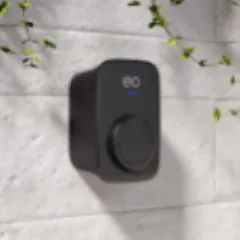
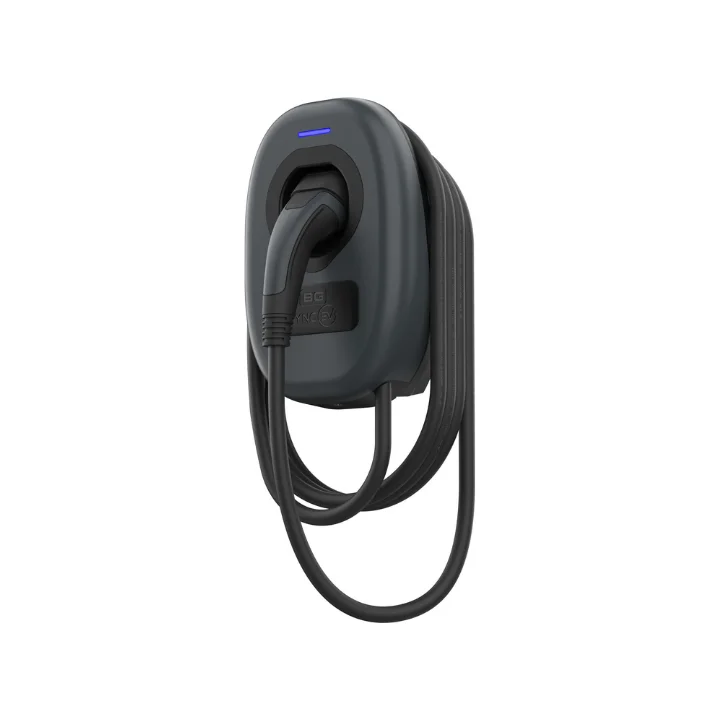
The answer comes down to priorities. The EO Mini Pro 3 is engineered around one killer feature: its extraordinary compactness. At just 215mm × 140mm × 100mm — roughly the size of an A5 notebook — it's the smallest home EV charger you can buy in the UK, making it the go-to choice for tight garages, narrow driveways, or listed properties where visual impact matters. The Sync Energy Wall Charger 2, backed by UK-listed electrical giant Luceco PLC, takes a different approach: pack in as many features as possible — dynamic load balancing, OCPP 1.6J compliance, built-in PEN fault protection, interchangeable colour fascias — and undercut almost everything else on the market.
If you're cross-shopping these two, you're likely asking: is the EO's miniature form factor worth nearly double the price, or does the Sync Energy's feature-per-pound ratio make it the smarter investment?
In a nutshell:
- EO Mini Pro 3 (£550): The smallest charger on the market with solid smart features and British Gas Power+ cashback integration — ideal where space is at an absolute premium.
- Sync Energy Wall Charger 2 (£362): A feature-packed budget charger with built-in PEN fault protection, solar diversion, and OCPP compliance — outstanding value from a reputable UK manufacturer.
Spec Comparison
| Feature | EO Mini Pro 3 | Sync Energy Wall Charger 2 |
|---|---|---|
| Price | £550 | £362 (socketed); from £302 (tethered) |
| Power | 7.2kW | 7.4kW |
| Cable | 5m tethered | 7.5m tethered (or untethered) |
| Smart tariffs | Presets for Octopus Go, EDF Go Electric & others | TariffSense scheduling |
| Solar | CT clamp included (solar diversion) | SolarCharge with CT clamp |
| Connectivity | Wi-Fi, Bluetooth, Ethernet (optional 4G) | Wi-Fi, Ethernet, Bluetooth |
| Warranty | 3 years | 3 years |
| IP Rating | IP54 | IP65 + IK10 |
| Type | Tethered (Type 2) | Untethered (Type 2) / tethered option |
| Dimensions | 215 × 140 × 100mm | 305 × 201 × 115mm |
| Weight | ~2.5 kg | ~4–5 kg |
Smart Tariff Integration
Both chargers support scheduled charging to exploit cheap off-peak electricity — the single biggest money-saver for any UK EV owner. On a tariff like Octopus Go (7.5p/kWh between 00:30 and 04:30), you could charge a Tesla Model 3 Long Range from 20% to 80% for roughly £2.70 instead of £8–9 at standard rates. Over a year of average UK mileage (~7,400 miles), that difference adds up to hundreds of pounds.
The EO Mini Pro 3 comes with built-in smart tariff presets for popular UK EV tariffs including Octopus Go and EDF Go Electric, which simplifies setup — you pick your tariff and the charger handles the scheduling. It also integrates with British Gas's Hive Power+ feature, which credits back 25% of your charging costs, though you'll need to be within the Hive ecosystem to benefit. As autochain.co.uk notes, chargers with direct Octopus integration tend to offer the smoothest experience for those on time-of-use tariffs.
The Sync Energy Wall Charger 2 uses its own TariffSense scheduling system and adds OCPP 1.6J compliance — an open protocol that lets the charger communicate with third-party energy management platforms. This is genuinely forward-thinking: as the smart energy market evolves, OCPP support means the Sync Energy could integrate with platforms and services that don't even exist yet. For most buyers today, both chargers will handle off-peak scheduling perfectly well, but the Sync Energy's OCPP support gives it a slight edge on future-proofing.
Solar Diversion
Both chargers include CT clamp-based solar diversion, letting you route surplus solar generation into your EV rather than exporting it to the grid for a few pence per kWh. If you have a typical 4kW solar array and your EV is parked during the day, you could harvest 10–15 kWh of free charging on a decent summer day — enough for 35–50 miles in a Tesla Model 3.
The EO Mini Pro 3 includes the CT clamp as standard, which is a welcome touch at this price point. Its solar diversion works, though EO themselves acknowledge it isn't as sophisticated as the myenergi Zappi's dedicated eco modes. The Sync Energy Wall Charger 2 offers its SolarCharge feature, also CT clamp-based, and pairs it with dynamic load balancing — meaning it can automatically adjust your EV's charge rate based on total household demand, not just solar surplus. That's a meaningful practical advantage if you're running high-draw appliances alongside your charger.
For serious solar households, neither charger matches a dedicated solar-first unit like the Zappi, but both offer competent surplus diversion that will meaningfully reduce your charging costs between April and September.
Build Quality and Design
This is where the two chargers diverge most dramatically. The EO Mini Pro 3 weighs just 2.5 kg and measures smaller than most hardback books. It's genuinely remarkable engineering — you could mount it inside a cramped garage, on a narrow pillar, or anywhere a full-sized charger simply wouldn't fit. The trade-off is an IP54 rating, which means it's splash-proof but not fully weatherproof. It'll handle a British drizzle, but if your charger is fully exposed to driving rain, you may want to consider a small canopy.
The Sync Energy Wall Charger 2 is a more conventionally sized unit at 305 × 201 × 115mm and 4–5 kg, but it compensates with a considerably tougher IP65 + IK10 rating — fully jet-wash-proof and impact-resistant. For an exposed driveway installation, that's a significant advantage. The interchangeable fascia plates in nine colours are a nice touch too, letting you match the charger to your property's exterior. The design is functional rather than head-turning, but it's solidly built by Luceco PLC, a well-established UK electrical products company.
Installation Considerations
The Sync Energy has a clear advantage here thanks to its built-in PEN fault protection, which eliminates the need for an earth rod. This can save £50–150 on installation costs and avoids the hassle of drilling into concrete or tarmac — a genuine relief if your consumer unit is far from soft ground. The EO Mini Pro 3 doesn't include this, so your installer may need to fit an earth rod depending on your property's earthing arrangement.
Cable length is another practical difference. The Sync Energy's 7.5-metre tethered cable gives you considerably more reach than the EO's 5-metre cable, which can make the difference between a straightforward install and needing to reposition the charger or extend the cable run.
Price and Value
| EO Mini Pro 3 | Sync Energy Wall Charger 2 | |
|---|---|---|
| Unit price | £550 | £362 (socketed) / from £302 (tethered) |
| Typical installation | £400–600 | £300–600 |
| Total installed cost | £950–£1,150 | £602–£962 |
| After OZEV grant (if eligible) | £450–£650 | £102–£462 |
The numbers favour the Sync Energy convincingly. The Sync Energy's built-in PEN fault protection should push its installation costs towards the lower end too. You could realistically save £200–350 by choosing the Sync Energy — money that could go towards a smart tariff switch or, frankly, several months of off-peak charging.
The EO Mini Pro 3's British Gas Power+ 25% cashback on charging costs does claw back some value over time, but you'd need to be a Hive customer and charge consistently to see meaningful returns. At average UK mileage, you might save £40–60 per year through that scheme — it would take three to five years to close the gap.
Who Should Buy Which?
Buy the EO Mini Pro 3 if:
- You have a genuinely constrained installation space where a standard-sized charger won't fit
- You're already in the British Gas/Hive ecosystem and want the 25% Power+ cashback
- You value the optional 4G add-on for locations with poor Wi-Fi coverage
- Ethernet connectivity for maximum reliability is important to you
- You want the lightest, most discreet charger possible on your wall
Buy the Sync Energy Wall Charger 2 if:
- Value for money is your priority — it's nearly half the price with more features
- You want built-in PEN fault protection to simplify installation and reduce costs
- A longer 7.5m cable suits your parking setup better than 5m
- You need dynamic load balancing for a busy household electrical system
- Future-proofing via OCPP 1.6J compliance matters to you
- Your charger is fully exposed to weather (IP65 + IK10 vs IP54)
Our recommendation: For the vast majority of UK Tesla owners, the Sync Energy Wall Charger 2 is the better buy. It's significantly cheaper, more weatherproof, comes with a longer cable, includes PEN fault protection to reduce installation costs, and matches or exceeds the EO on smart features including solar diversion and tariff scheduling. The EO Mini Pro 3 earns its place on a very specific shortlist — if you genuinely need the smallest possible charger for a tight space, it's essentially your only option, and thankfully it's a capable one. But if your wall can accommodate a standard-sized unit, the Sync Energy delivers far more for far less.
For the full specs-level breakdown, see our EO Mini Pro 3 vs Sync Energy Wall Charger 2 comparison page.
Read our full EO Mini Pro 3 review or Sync Energy Wall Charger 2 review.
If you have solar panels, see our best EV charger for solar panels guide.
For total installed cost rankings, see our cheapest EV charger guide.
We’ll handle the installation
We’ll match you with vetted UK electricians — up to 3 free quotes, no obligation.